Sid Meier's Civilization

Lead a tribe from one settler through several thousand years of history, one turn at a time, in the 1991 MicroProse game that Computer Gaming World called "more addictive than crack" and then named the best game ever made. Civilization II (1996) is the version most people lost their nights to.
Sid Meier co-founded MicroProse in 1982 with Bill Stealey to make flight simulators, and by 1989, having finished F-19 Stealth Fighter, he wanted something else. He took on Bruce Shelley, a board-game designer from Avalon Hill, as his assistant; the two made Railroad Tycoon in 1990, then started trading ideas about their beloved Empire games. Meier challenged Shelley to name ten things he would change about Empire; Shelley gave him twelve. Around May 1990 Meier handed over a floppy disk with the first prototype.
That prototype ran in real time, with the player zoning land as in SimCity, and it didn't work. Stealey, nervous about a game that fit nothing in MicroProse's military catalog, had them finish Covert Action first; the break let them see the problem, and the rework, "like tossing the clay in the trash," made it turn-based. Meier's rules became famous. No civilization could collapse on its own, because whenever the plague or Krakatoa struck "all anybody wanted to do was reload from a saved game," and "if you've got a feature that makes the AI look stupid, take it out."
Released in September 1991 for DOS, Civilization drew a Computer Gaming World review comparing its importance to the wheel and a 1992 survey calling it "more addictive than crack." The magazine made it Game of the Year, then in 1996 the best game of all time, describing the moment you tell yourself "just one more game" as the sun comes up. It sold over 850,000 copies by 1996 and 1.5 million eventually; the sequel outdid it. Civilization II (March 1996), designed by Brian Reynolds, Douglas Caspian-Kaufman and Jeff Briggs with Meier mostly brainstorming, rebalanced the game toward trade and diplomacy, added Doom-style modding over Meier's objections, and sold about three million copies.
The genre it founded got a name in 1993, when Alan Emrich coined "4X" (explore, expand, exploit, exterminate) to promote Master of Orion. Its most famous bug never existed: the tale that Gandhi's aggression rating wrapped around to maximum and turned him into a nuclear warmonger was, Reynolds said in 2019, "99.99%" apocryphal, and Meier's memoir traces it to a story made up in 2012 that spread from a wiki to Reddit to the news sites. Meier, Briggs and Reynolds left MicroProse after a 1996 consolidation to found Firaxis, which still makes the series.
Similar items
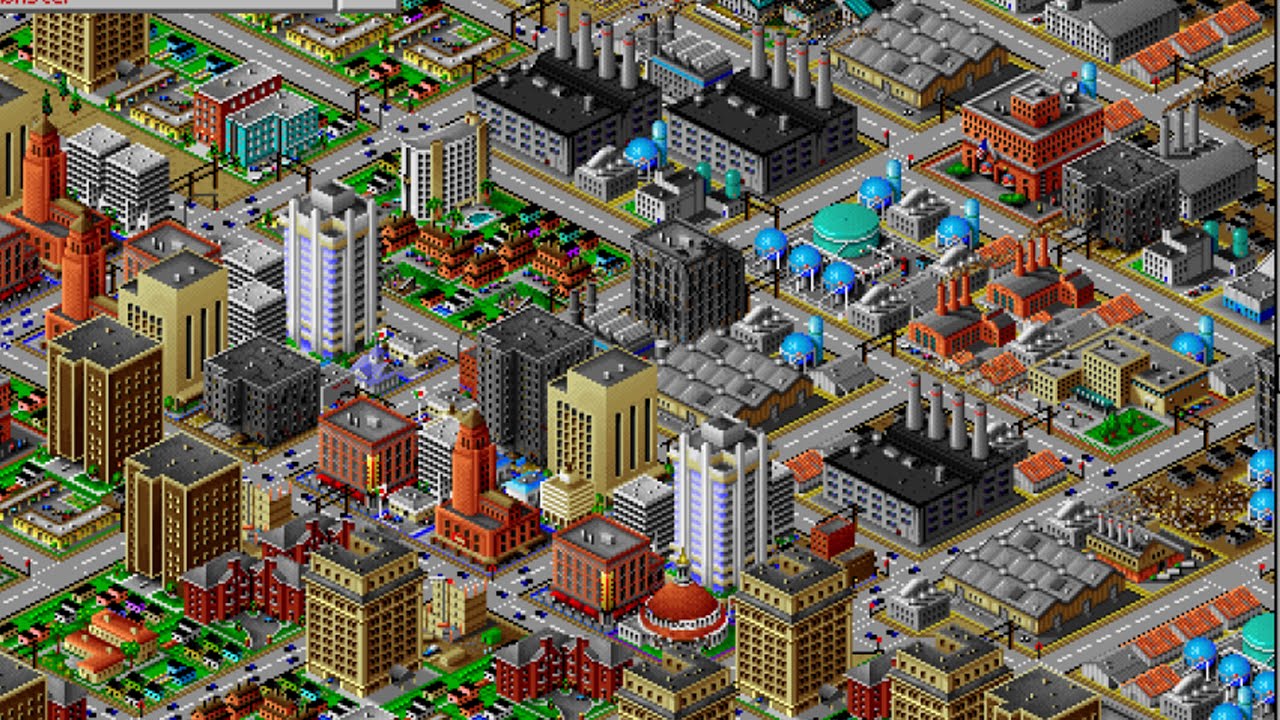
SimCity 2000
The city-building game that made zoning feel like destiny. SimCity 2000 traded the original's flat grid for a gorgeous isometric view with terrain elevation, underground layers, and a tech tree capped by arcologies — massive self-contained future cities that could blast into space. For a generation of 90s kids on the family PC, it was equal parts urban-planner simulator and disaster-unleashing sandbox.

Age of Empires II
Age of Empires II was the medieval real-time strategy game that defined the genre for a generation. Released in 1999, it put 13 civilizations at your command across historical campaigns spanning Joan of Arc to Genghis Khan. The Conquerors expansion (2000) became the definitive version, adding five new civilizations and cementing the game's legacy. Nearly three decades later, HD remasters and competitive esports tournaments prove this masterpiece never went out of style.

RollerCoaster Tycoon
You designed roller coasters and managed an amusement park in this beloved strategy sim. Created almost single-handedly by Chris Sawyer and released in 1999, RollerCoaster Tycoon became a sandbox classic — famous for coaster design and infamous for the player habit of trapping guests. RollerCoaster Tycoon 2 followed in 2002.

The Oregon Trail
The computer-lab game that taught westward expansion through dysentery and desperation. Every 90s kid named their wagon party after friends, overhunted buffalo, gambled on river crossings, and died of unexpected causes while technically learning American history.