Burnout 3: Takedown

Racing as a contact sport: shunt a rival into the wall, watch the wreck in slow motion, then steer your own flaming chassis into the next car for another Takedown. Criterion's September 2004 racer and its hundred-junction Crash mode took Game of the Year from both the official PlayStation and Xbox magazines, ahead of San Andreas and Halo 2.
Criterion Games of Guildford nearly never made it. In 2002 the studio had agreed to remake EA's Skate or Die!, then cancelled the project when EA's design changes pulled it away from the team's vision, souring the relationship. At E3 2003 EA executive Bruce McMillan approached design director Alex Ward to patch things up and suggested Burnout 3; Ward refused at first, then agreed on the condition that EA stay out of the creative process. Work began that June. The team floated subtitles like Fuel Injection, Crash and Burn, Seek and Destroy and See You in Hell; they didn't love Takedown, but EA's focus testing did. At the end of July 2004, with the game nearly finished, EA bought Criterion and the Burnout name outright.
Ward described the design as "fighting through traffic" rather than racing through it, with EA's snowboarding series SSX as a model for its brasher tone. Takedowns, slamming opponents until they crash, filled the boost meter and stretched it to four times its size; Impact Time slowed your own crash so Aftertouch could steer the wreck into a rival. The Crash mode from Burnout 2 grew into a hundred traffic junctions with ramps, power-ups and a Crashbreaker detonation. A World Tour of 173 events unlocked 67 cars. The RenderWare engine held 60 frames per second in races and dropped to 30 for the crashes to throw more debris around, and more than forty licensed songs came introduced by KROQ's DJ Stryker.
The game launched on PlayStation 2 and Xbox in September 2004, the PlayStation 2 disc carrying a demo of Need for Speed: Underground 2. Metacritic rated it the second-best game of 2004 on both consoles and the highest-scoring Xbox racer ever. GameSpot's Jeff Gerstmann opened by calling it one of the best racing games of all time; Official US PlayStation Magazine and Official Xbox Magazine each named it Game of the Year over Grand Theft Auto: San Andreas and Halo 2 respectively, and it collected three BAFTA Games Awards, the Academy of Interactive Arts & Sciences' Racing Game of the Year and Spike's Best Driving Game. The main complaints were the DJ and the song list. It debuted at number one in Britain and passed a million copies in Europe within the month.
Burnout Revenge followed a year later, and Ward later conceded that the sequels never quite recaptured this one; it remained the game he was proudest of. IGN in 2015 called it "the most perfect arcade racer ever conceived." The official online servers closed in April 2010.
Similar items
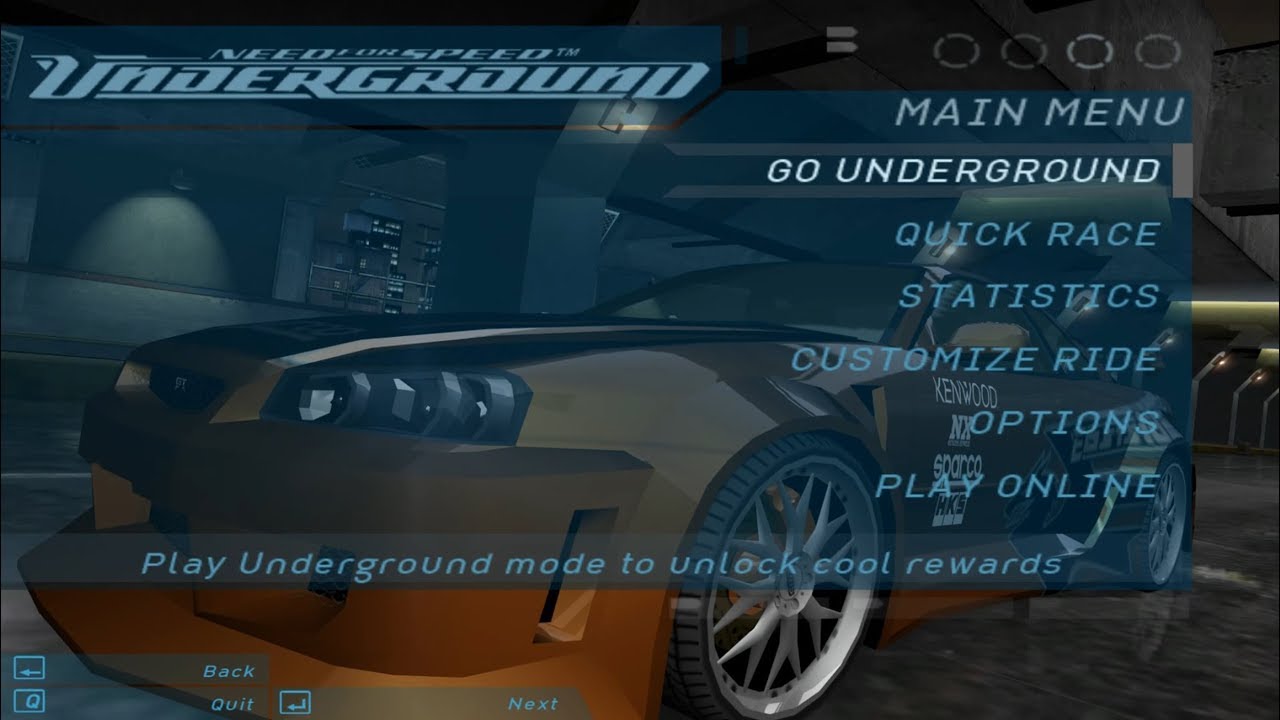
Need for Speed: Underground
The reboot that ditched exotic supercars for neon-lit tuner street racing — body kits, underglow, and a spoiler you could see from space. Every 2003 sleepover had a souped-up Civic saved on the memory card.

PlayStation 2
The black rectangle that invaded living rooms worldwide as an affordable DVD player and happened to pack the best game library ever assembled. With over 155 million sold—the best-selling console of all time—the PlayStation 2 didn't just dominate gaming; it became the era's default home entertainment hub.

Original Xbox
Microsoft's first console was a giant black box that held a Pentium III and changed online gaming forever. Launched November 15, 2001, the Xbox arrived with the Duke controller (instantly mocked for its size), a built-in hard drive, and Ethernet port. Halo: Combat Evolved was the system seller, but Xbox Live (November 2002) was the revolution: console gaming went online with a headset in the box and broadband required.

Gran Turismo
The Real Driving Simulator — and it meant it. Gran Turismo made PS1 owners grind license tests, obsess over gear ratios, and fall in love with a used Nissan they tuned into a monster. Suddenly a racing game wasn't about power-ups; it was about the cars.