Need for Speed: Underground
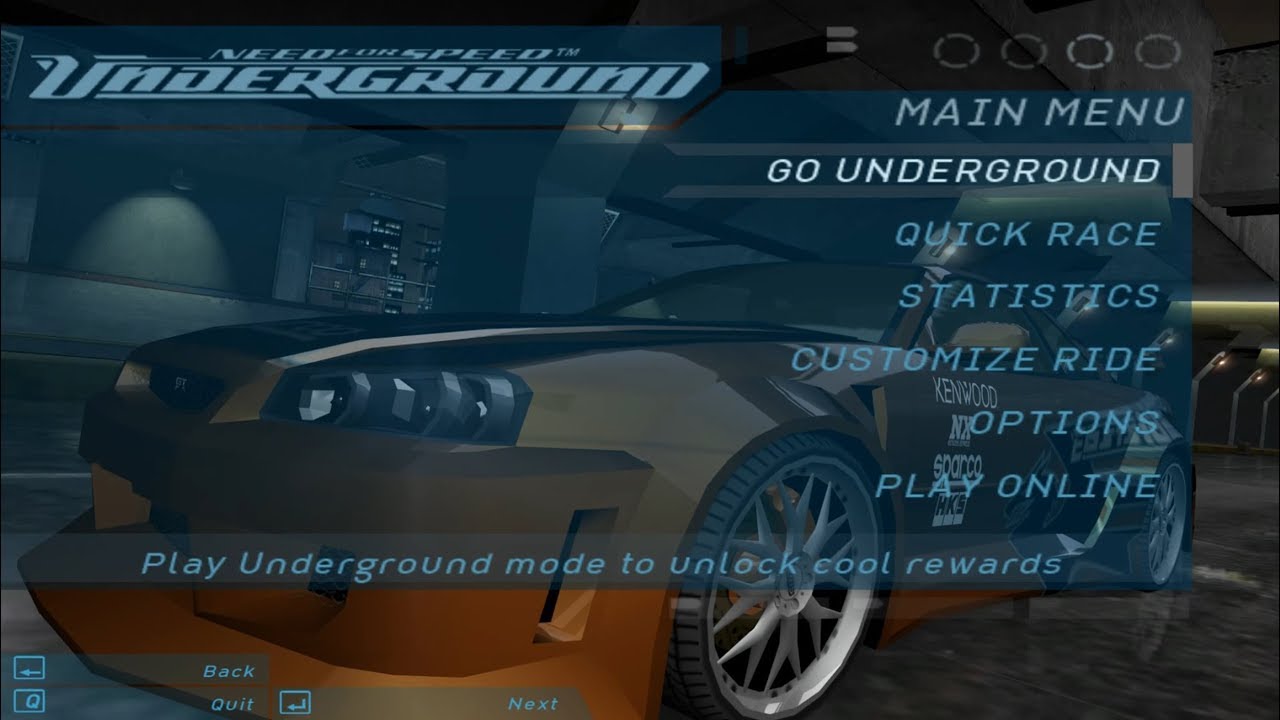
The reboot that ditched exotic supercars for neon-lit tuner street racing — body kits, underglow, and a spoiler you could see from space. Every 2003 sleepover had a souped-up Civic saved on the memory card.
Need for Speed: Underground arrived November 17, 2003, on PlayStation 2, GameCube, Xbox, and Windows — EA Black Box's full reboot of the franchise. Out went the exotic supercars of the series' early years; in came import-and-tuner street racing at night, all neon underglow, vinyls, body kits, and wings. The timing was perfect: The Fast and the Furious had turned import car culture into a mainstream fantasy, and Underground handed a generation the virtual garage to live it.
The appeal was the depth. Brand-name performance and visual upgrades let players build genuinely personal machines, and a Style Points system rewarded pure showing off. The soundtrack leaned into the moment — Lil Jon & The East Side Boyz's "Get Low" as the theme, BT's "Kimosabe" opening the game. Critics scored it 77–85 on Metacritic across platforms, and players did the rest: roughly 15 million copies sold worldwide, with the PS2 version alone moving 2.6 million in the US by July 2006.
Need for Speed: Underground 2 followed in 2004, and the two games together own a very specific memory: a friend's basement, a divided couch, and an endless argument over whether the giant wing actually made the Civic faster.
Similar items

The Fast and the Furious
Paul Walker's undercover cop, Vin Diesel's Toretto, NOS buttons, neon underglow, and "I live my life a quarter mile at a time." The $38 million sleeper that made import-tuner street racing the defining car culture of the decade.

Pimp My Ride
Xzibit takes your hopeless beater to the shop and it comes back with a fish tank, seven screens, and flames. MTV's most gloriously absurd makeover show — and the birthplace of "yo dawg, I heard you like…"

Gran Turismo
The Real Driving Simulator — and it meant it. Gran Turismo made PS1 owners grind license tests, obsess over gear ratios, and fall in love with a used Nissan they tuned into a monster. Suddenly a racing game wasn't about power-ups; it was about the cars.

DeathTrack
Racing, but with machine guns. DeathTrack put you on a futuristic circuit where winning meant crossing the line first — or being the only car left that could. Prize money went straight into bigger weapons, and the next city's grid found out.