Bugle Boy

"Excuse me, are those Bugle Boy jeans you're wearing?" A woman in a black Ferrari, a hitchhiker in the desert, and a 1988 commercial that made a Simi Valley pants company a household name. Bugle Boy rode parachute pants and then baggy cargo pants to roughly half a billion dollars in annual sales and outsold Levi's with boys and young men by 1990, then spent the decade sliding toward the discount rack and a 2001 liquidation.
William C. W. Mow was an engineer who had been forced out of his semiconductor test-equipment company, Macrodata, when he went into the garment trade. In 1977 he and a jeans executive named Stanley "Bucky" Buchthal started Buckaroo International, named for Buchthal's nickname. In 1980 Mow renamed it Bugle Boy Industries, a name chosen from a public-relations firm's list in reference to the boy buglers of the Civil War, and refocused it on moderately priced casual pants, with Vincent Nesi running sales from New York, president from 1981, and Mow running finance and operations from Simi Valley, California.
The first hit was zippered nylon parachute pants in the early 1980s, a craze that collapsed in 1984 and left the company about $5 million underwater. Bugle Boy came back within months with a new line, and then baggy cargo pants drove a four-year boom that peaked in its 1990 fiscal year. In 1988 came the commercial: conceived by Mow himself and produced by the agency Rubin Postaer, it put the Welsh model Annabel Schofield behind the wheel of a black Ferrari in the desert, pulling over to ask a young hitchhiker whether those were Bugle Boy jeans. Sales went from $189 million in fiscal 1987 to about $480 to $500 million by fiscal 1990, with about $44 million in profit; the company grew at an average of about 90 percent a year through the decade, and by 1990 it outsold Levi's in the boys' and young men's categories.
When the cargo trend faded after 1990, sales slid and the company nearly failed. "We could have gone out of business, we really could have," Mow said later. He rebuilt Bugle Boy as a full-line maker for men, boys and children, added women's lines, and kept sales near $500 million through the 1990s, but the brand was drifting. Department stores, including Federated, dropped it by the mid-1990s as it pushed more goods through discount and mid-priced chains like Walmart, Sears and Mervyn's, and the glamorous-model ads gave way to a wholesome red-white-and-blue "Classic" line for value-conscious families. Nesi was forced out in 1995 after eighteen years, Mow's wife and daughter took senior roles, and by the late 1990s one industry figure described it as a tired, bargain-basement brand.
Bugle Boy filed for Chapter 11 on February 1, 2001 with more than $100 million in debt, a week after Mow resigned. In March, after 22 rounds of bidding against Perry Ellis and Tropical Sportswear, Schottenstein Stores bought the trademark and wholesale inventory for $68.6 million, and the stores were liquidated. Schottenstein planned a spring 2002 relaunch aimed at young men through chains like Kohl's and J. C. Penney, and the label has been largely dormant since. The Ferrari line outlived all of it.
Similar items
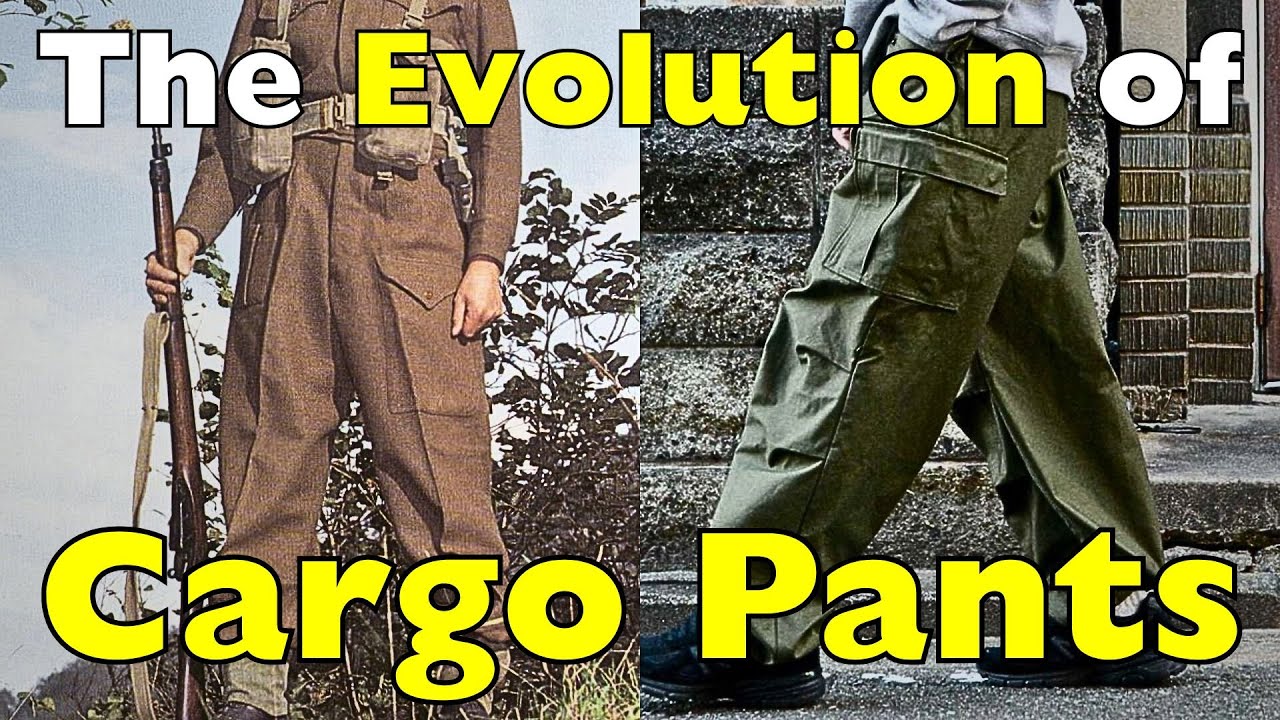
Cargo Pants
Baggy, khaki, and covered in pockets you never put anything in. Six to eight compartments, minimum, most of them flapping empty against your thigh. For a few years in the early 2000s they were simply what pants were, and then everyone agreed to never mention it again — until they came back.

Girbaud Jeans
The baggy, stone-washed French jeans with the loud "M+FG" tabs and straps on the leg. Marithé + François Girbaud were the designer denim of early-90s hip-hop, name-checked by Biggie and worn backwards by Kris Kross, before the brand slid from every mall to the thrift rack.

Guess Jeans
Before the mall had logos, it had THE logo: the triangle with the question mark. Guess jeans were the begged-for denim of late-80s and 90s cool, sold by smoldering black-and-white ads that invented the whole idea of the "Guess Girl."

JNCO Jeans
JNCO jeans were the uniform of 90s youth rebellion: outrageously baggy denim with cavernous pockets so deep you could lose a Walkman, decorated with zipper details and an attitude that rejected traditional fit. If you weren't tripping over your cuffs or making those pockets jingle, you weren't dressed for the decade.