Cargo Pants
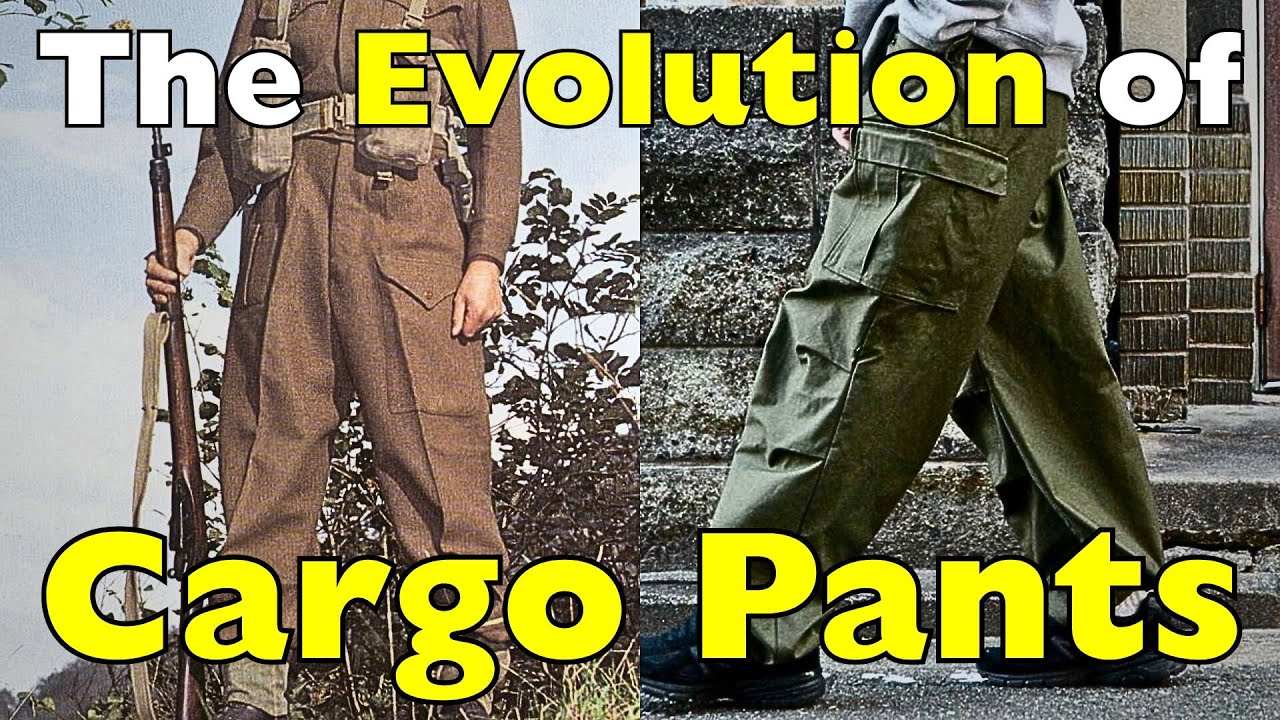
Baggy, khaki, and covered in pockets you never put anything in. Six to eight compartments, minimum, most of them flapping empty against your thigh. For a few years in the early 2000s they were simply what pants were, and then everyone agreed to never mention it again — until they came back.
The pockets were not a fashion decision. Cargo pants descend from battle dress first worn by the British Armed Forces in 1938, where the large thigh pockets existed to hold field dressings, maps, and other items a soldier needed to reach without taking off a pack. The design came to the United States during the Second World War, where the concept was copied into the U.S. paratrooper uniform to make room for K rations and extra ammunition. Every empty pocket slapping against a suburban teenager's leg sixty years later was, structurally speaking, meant for ammunition.
The civilian version took its time. Cargo shorts got there first — marketed in 1980 as ideal for the sportsman or fisherman, then breaking into mainstream men's fashion by the mid-to-late 1990s — but the full-length pants were a distinctly early-2000s phenomenon. They arrived as the enormous baggy jeans of the '90s receded, offering roughly the same volume with an engineering justification, and for a stretch of the decade they were unavoidable: on skaters, on boy bands, on dads, in every mall from the surf-branded end to the department store. Nobody carried anything in the pockets. That was never the point.
The backlash was thorough enough that cargo pants spent well over a decade as a punchline, the standard shorthand for a man who had stopped trying. Then the wheel turned: they returned in the 2020s as part of the Y2K revival, worn by people young enough to find them genuinely novel and marketed explicitly as a 2000s artifact — which, in fairness, is exactly what they are.
Similar items

JNCO Jeans
JNCO jeans were the uniform of 90s youth rebellion: outrageously baggy denim with cavernous pockets so deep you could lose a Walkman, decorated with zipper details and an attitude that rejected traditional fit. If you weren't tripping over your cuffs or making those pockets jingle, you weren't dressed for the decade.
Low-Rise Jeans
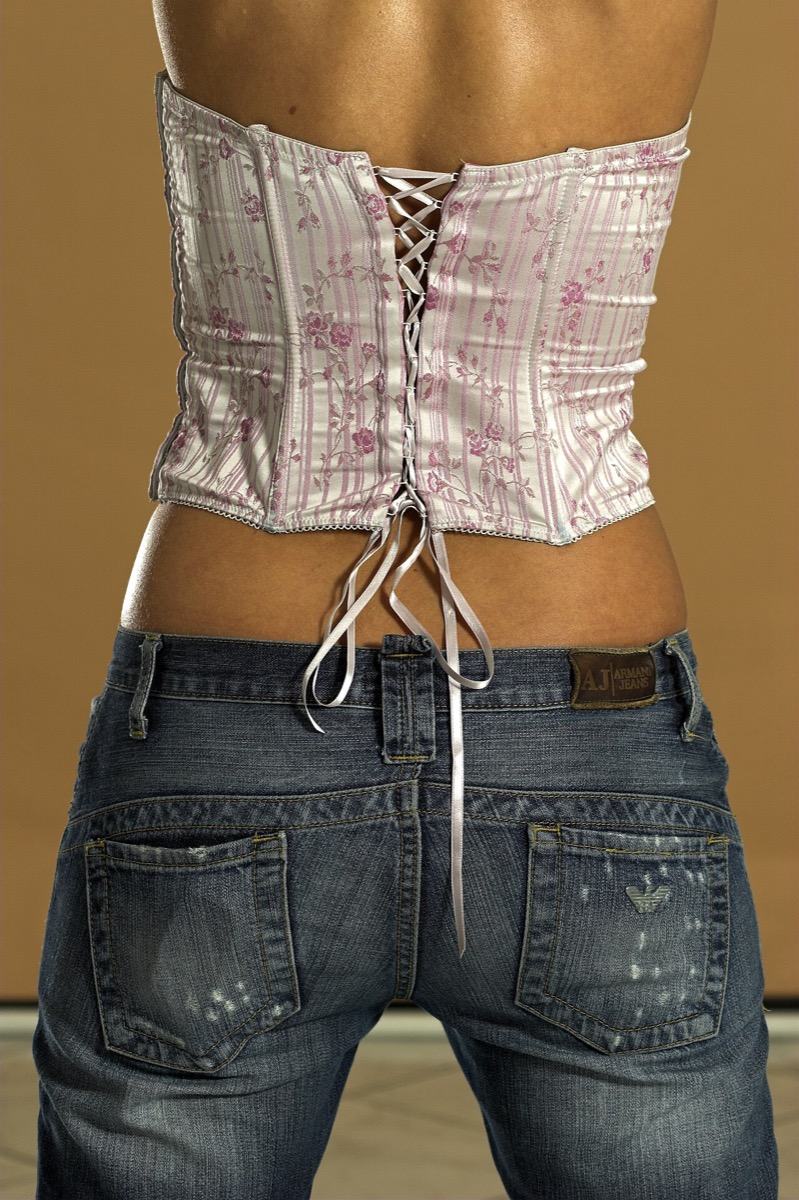
The denim silhouette that exposed everything — waistbands that barely qualified as clothing. Low-rise jeans paired with visible thongs and belly-button rings was THE Y2K uniform, and photos from this era still make you cringe.

Hot Topic
The black-walled store at the end of the mall where the music was too loud and the T-shirts had bands your parents had never heard of. Studded belts, band merch, hair dye, and a smell of incense you could identify from thirty feet away. For a certain kind of teenager, walking in felt like finding your people.
Chain Wallets
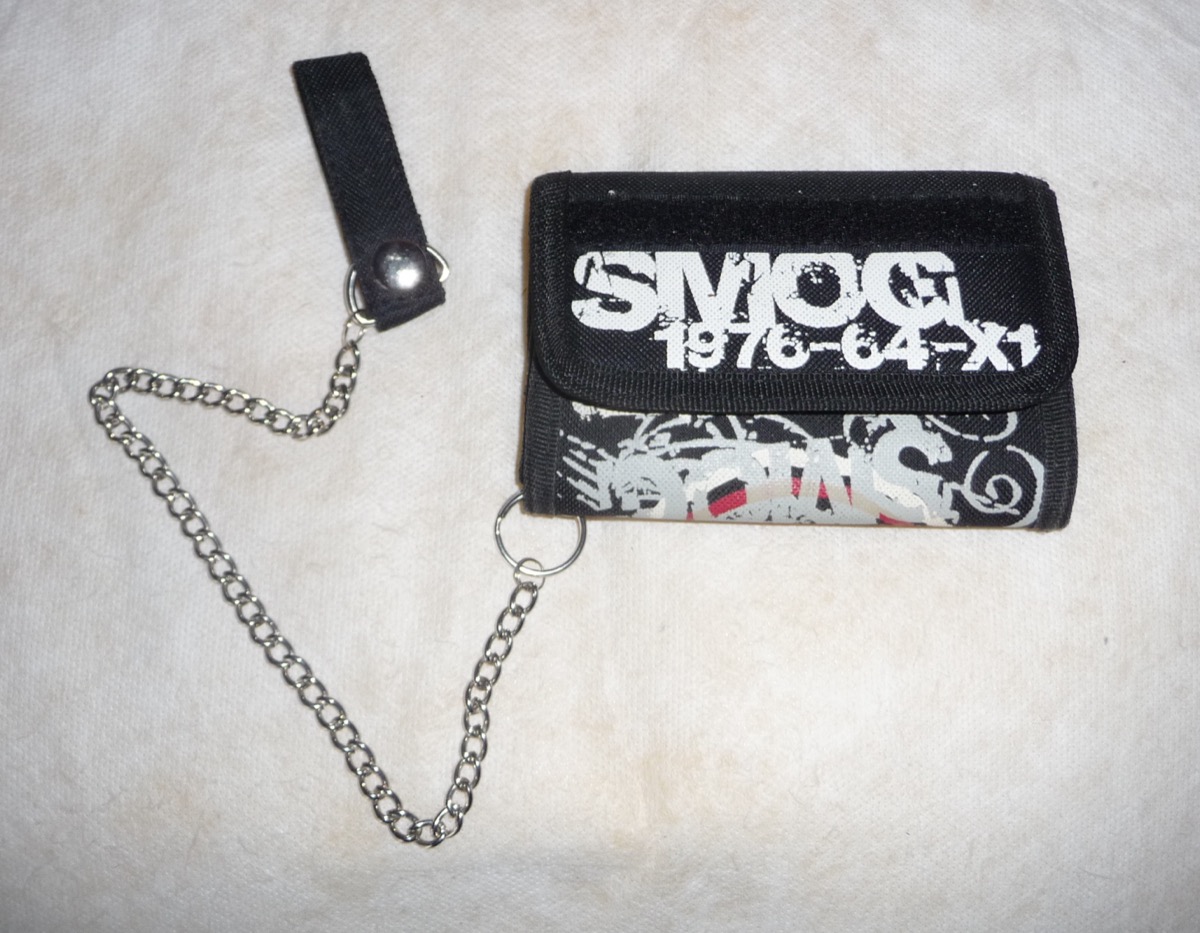
A metal chain connecting your trifold wallet to your belt loop—the ultimate 90s mall accessory that nobody actually needed for security but everyone desperately wanted anyway. Biker chic meets suburban shopping mall.