Guess Jeans

Before the mall had logos, it had THE logo: the triangle with the question mark. Guess jeans were the begged-for denim of late-80s and 90s cool, sold by smoldering black-and-white ads that invented the whole idea of the "Guess Girl."
Guess was founded in Los Angeles in 1981 by the four Marciano brothers — Georges, Maurice, Armand, and Paul — who broke through selling jeans in a light, form-fitting denim with zippers at the ankles, each pair carrying the small triangle patch with its trademark question mark. In the mall hierarchy of the late 80s and 90s, that triangle did a lot of talking: Guess sat at the exact intersection of attainable and aspirational, the pair you begged your parents for and then wore until the knees gave out.
What set Guess apart wasn't just the denim — it was the advertising. Starting in 1985, the brand ran moody black-and-white campaigns that won design awards and functioned as a star-making machine. Being a "Guess Girl" became a launchpad: Claudia Schiffer first posed for the brand around 1989 and became the face of its golden era, and in 1993 Anna Nicole Smith replaced her — adopting the stage name Anna Nicole during the campaign — in a run of sultry photographs that deliberately channeled 1950s bombshell Jayne Mansfield. The ads sold a fantasy so effectively that the jeans almost felt like merchandise for them.
By the end of the 1990s, sales had slipped as mall denim loyalties scattered toward newer logos, but the brand never went away — and its 90s artifacts never lost their pull. The triangle patch, the high-waisted washes, and those black-and-white campaigns remain instantly recognizable shorthand for the decade, and vintage Guess still moves briskly on the resale racks for exactly that reason.
Similar items

JNCO Jeans
JNCO jeans were the uniform of 90s youth rebellion: outrageously baggy denim with cavernous pockets so deep you could lose a Walkman, decorated with zipper details and an attitude that rejected traditional fit. If you weren't tripping over your cuffs or making those pockets jingle, you weren't dressed for the decade.
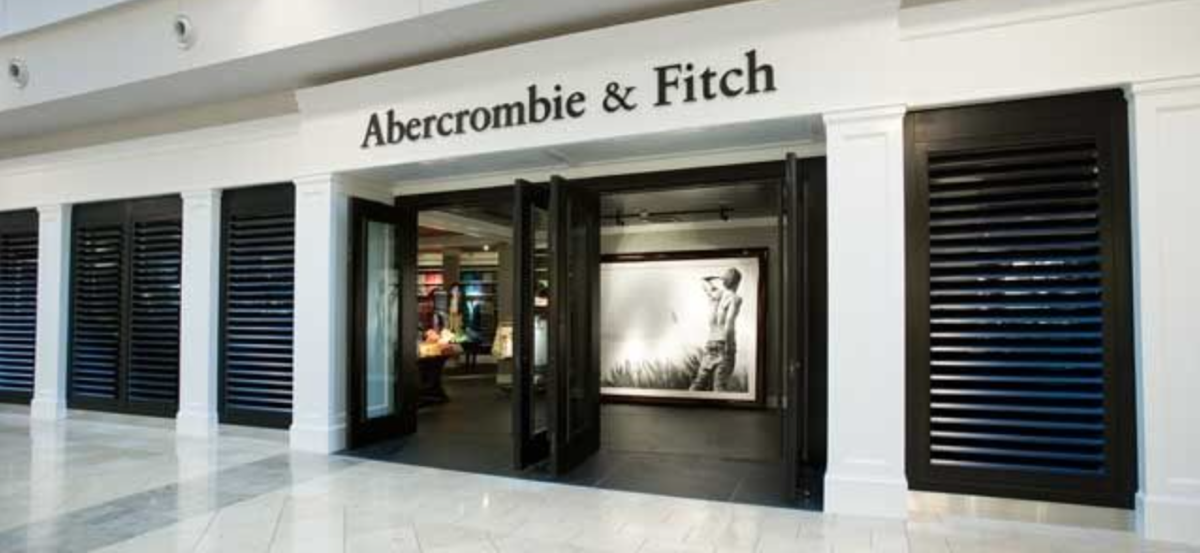
Abercrombie & Fitch
The dim-lit mall temple with impossibly loud music, a signature cologne so thick it hit you at thirty paces, and shopping bags plastered with shirtless male models. The Abercrombie & Fitch moose logo on polos and tees became a middle-school currency of cool in the 2000s. Wearing it meant you had money, taste, or both—or at least that's what everyone pretended to think. The brand launched its spinoff, Hollister, in 2000, spreading the gospel even wider.
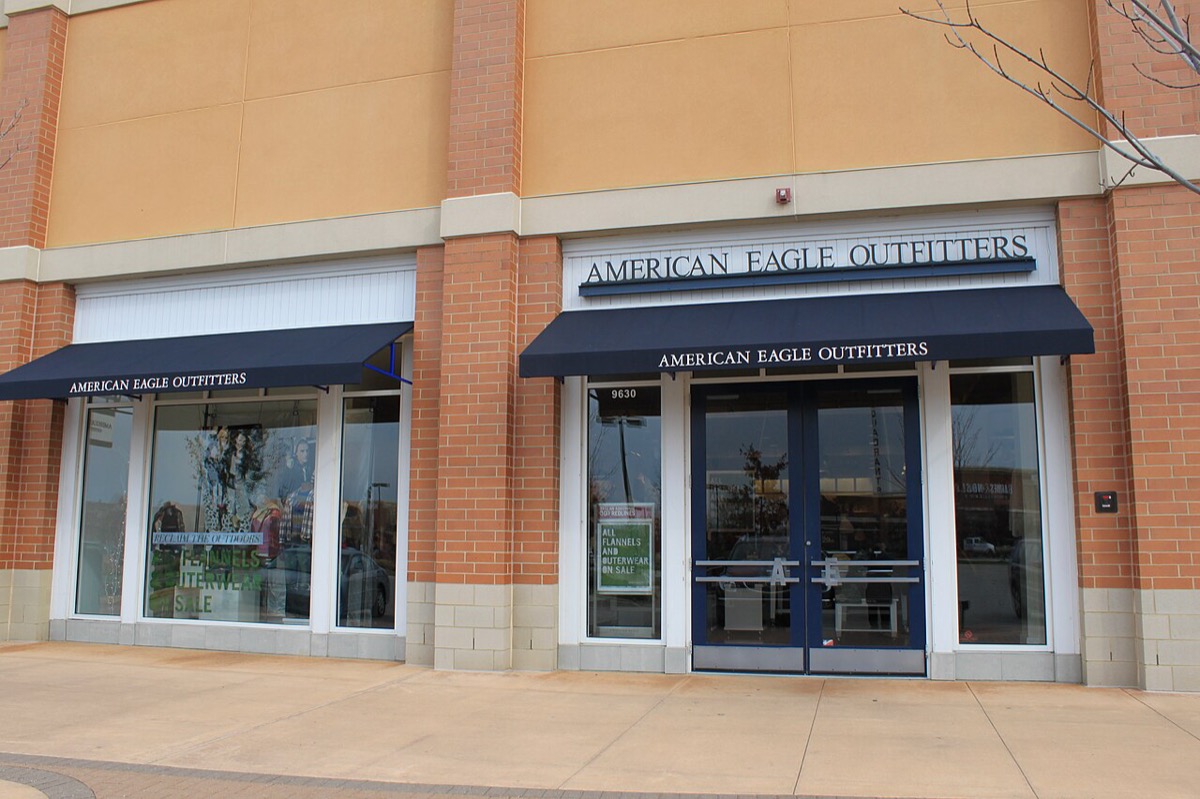
American Eagle
The dependable middle of the 2000s mall — graphic tees, bootcut jeans, and eagle-emblazoned hoodies pitched right between Abercrombie's attitude and the clearance racks. For millions of teenagers, American Eagle was simply where you shopped.
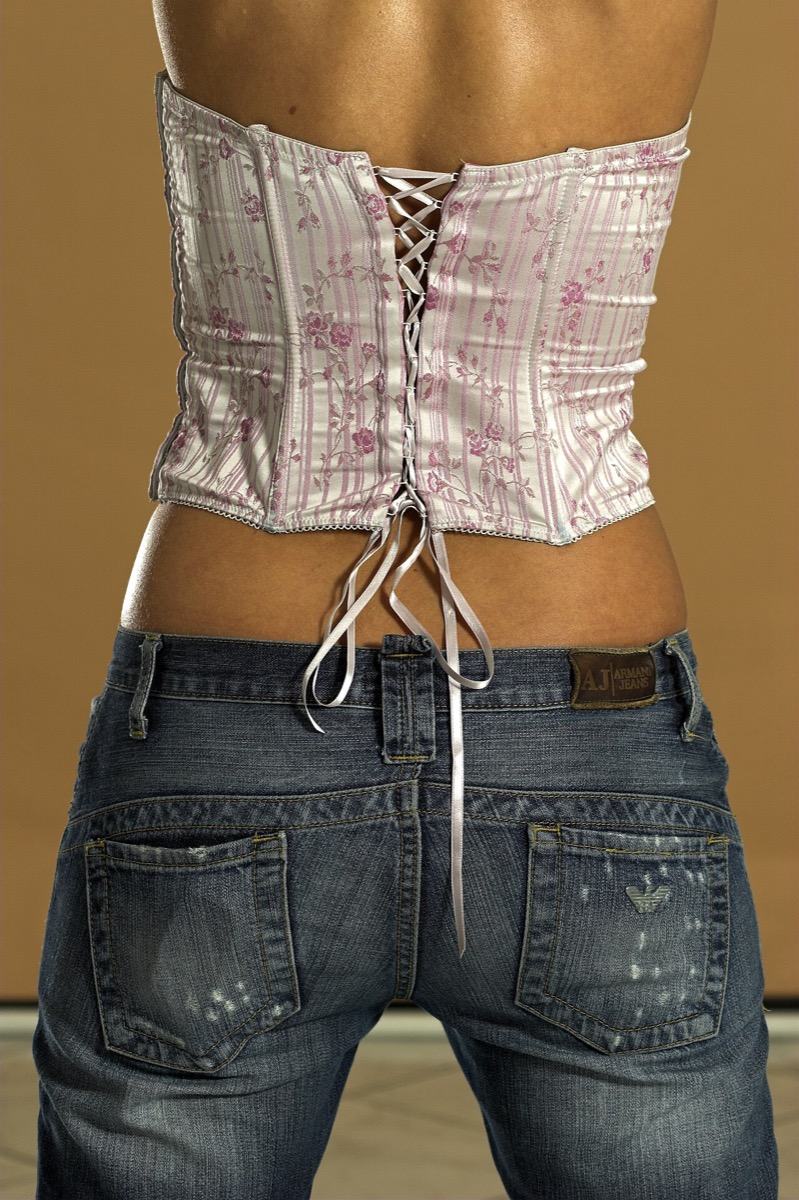
Low-Rise Jeans
The denim silhouette that exposed everything — waistbands that barely qualified as clothing. Low-rise jeans paired with visible thongs and belly-button rings was THE Y2K uniform, and photos from this era still make you cringe.