Baby Ruth

The peanuts-caramel-nougat log of every checkout lane and Halloween haul — over a century old, with an identity mystery baked into the name. The company swore it honored a president's daughter; everyone else noticed a certain slugger's fame exploding at exactly that moment. No one has ever settled it.
Baby Ruth was born in 1920, when the Curtiss Candy Company refashioned its existing Kandy Kake bar into a log of peanuts, caramel, and nougat under a chocolate coating. It was a juggernaut almost immediately: by the late 1920s, Baby Ruth was the best-selling confection in the entire five-cent category. But the name has been contested nearly as long as the bar has existed. Curtiss always claimed it honored Ruth Cleveland, daughter of President Grover Cleveland — a girl who had died of diphtheria in 1904, at age twelve, sixteen years before the candy appeared. Skeptics have always read that story as a legal convenience: Babe Ruth's fame was exploding at precisely that moment, and a bar named for the president's late daughter owed the slugger nothing in royalties.
Then came the almost-too-perfect twist. In 1931, Curtiss won a trademark fight that shut down a rival candy bar — one Babe Ruth had personally approved and lent his name to — on the grounds that the names were too similar. The real Babe Ruth lost the right to put his own name on a candy bar, beaten by a company that insisted it had never been using it. Whatever the truth of the original christening, the courtroom outcome made the suspicion permanent.
The bar itself carried on regardless, leaving the Curtiss fold when Standard Brands bought the company in 1964, then riding a 1981 merger into Nabisco, a 1990 sale to Nestlé, and a 2018 deal to Ferrero, where it now sits in the Ferrara Candy portfolio. It kept turning up in the culture along the way — the infamous pool scene in Caddyshack, Sloth's beloved bar in The Goonies — and in every 90s Halloween pillowcase and checkout lane in America. What Baby Ruth sells, more than peanuts and caramel, is the argument itself: a hundred-year-old candy bar that is also an unsolved case.
Similar items
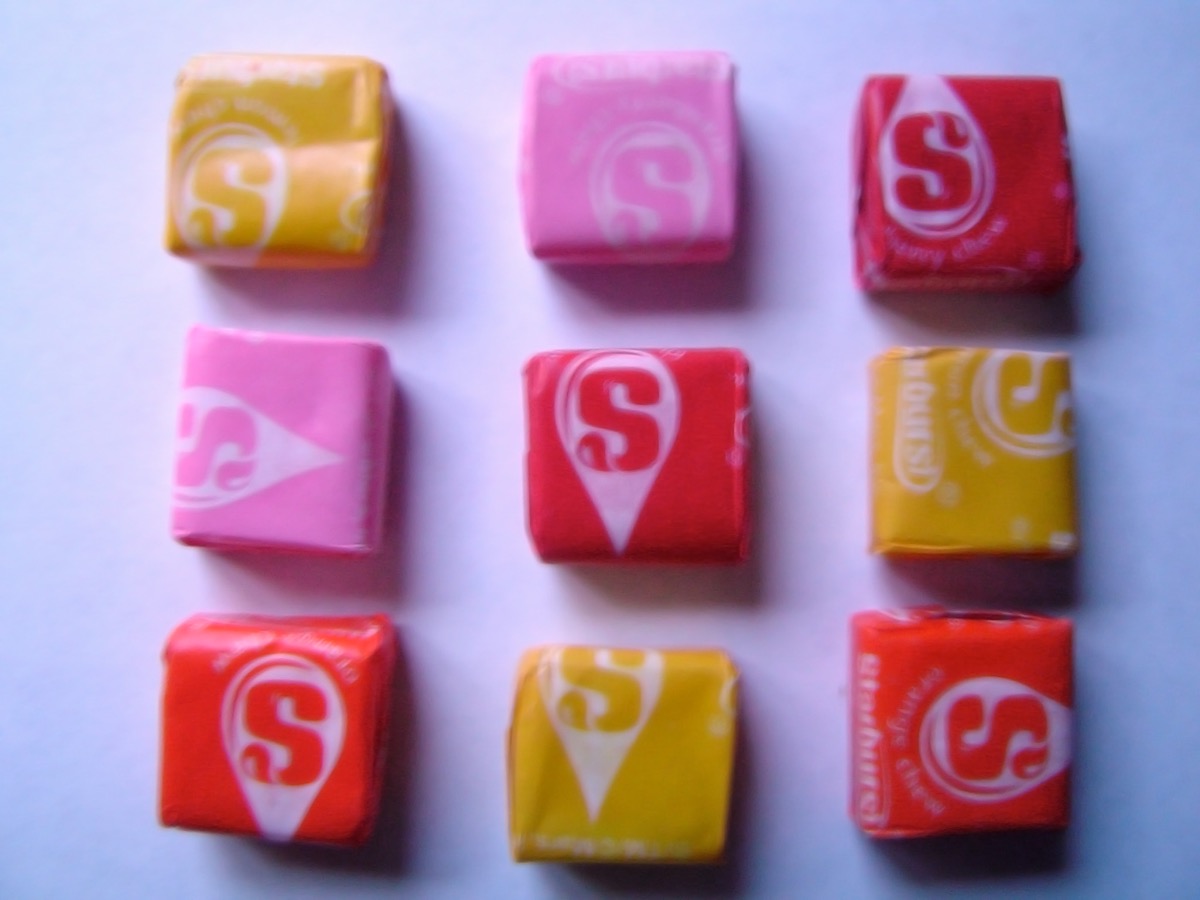
Starburst
Juicy square fruit chews in individual twist wrappers, with a transatlantic double identity — Opal Fruits in Britain, Starburst in America — and a lunchroom economy all their own, in which pink was a personality trait and the wrappers became origami.
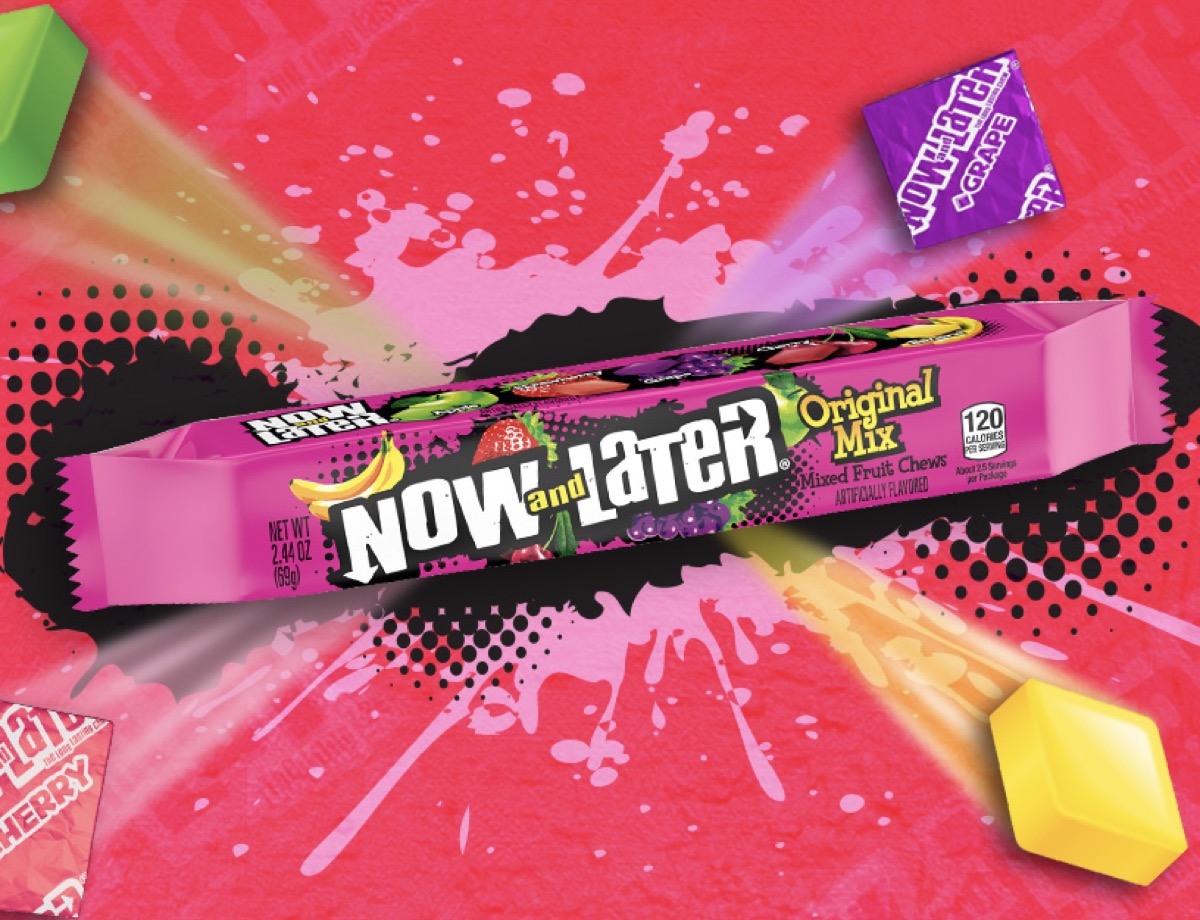
Now and Later
The corner-store fruit squares that started out jaw-breakingly stiff and only gave in after honest work — think Starburst, but way harder. The name was the sales pitch: eat some now, save some for later. Whether any kid ever actually saved some is another matter.

Spree
The tart candy discs that came rattling out of every bowling-alley and skating-rink vending machine in the 90s — a roll of fruit-shelled dots that outlasted a few games or a few laps around the rink. A mid-1960s invention that a later generation claimed completely.
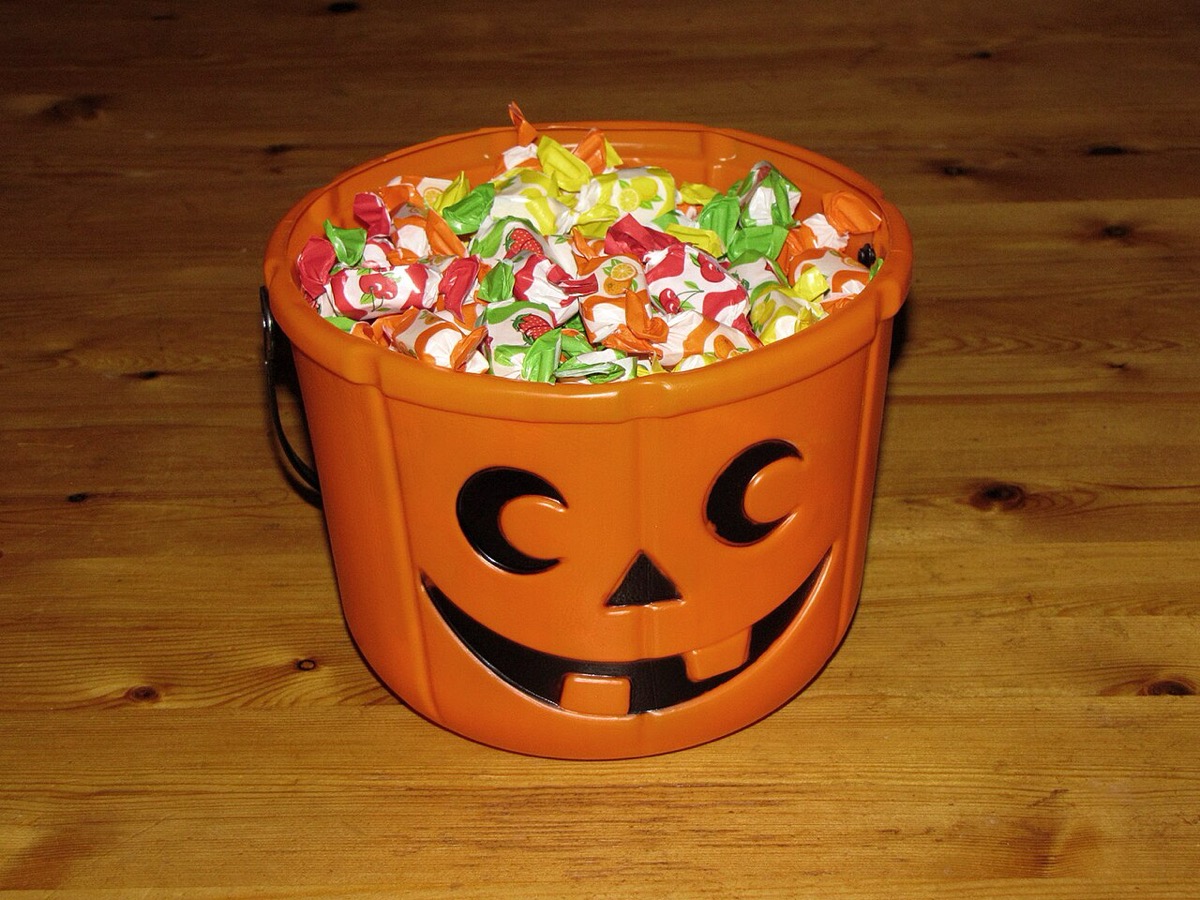
The Halloween Candy Haul
The real event started after trick-or-treating: dumping the pillowcase onto the living-room floor and sorting the haul into a personal taxonomy — chocolate aristocracy, fruity middle class, the circus-peanut underclass. Then came the trading floor: sibling negotiations with exchange rates everyone understood (one full-size anything was worth a fistful of anything else). And the parental 'safety inspection' tax: unwrapped candy confiscated, suspicious pinholes examined, a few 'tested' Snickers never seen again.