Starburst

Juicy square fruit chews in individual twist wrappers, with a transatlantic double identity — Opal Fruits in Britain, Starburst in America — and a lunchroom economy all their own, in which pink was a personality trait and the wrappers became origami.
Starburst was born twice. In the autumn of 1959, Mars introduced its fruit chews in the United Kingdom as Opal Fruits — a name coined by Peter Phillips, the winner of a naming competition — with a tagline that became part of British advertising folklore: "Opal Fruits — made to make your mouth water!" The original four flavors were strawberry, lemon, orange, and lime. America met the same candy in 1967 under a different name entirely: M&M's Fruit Chewies. By 1968 it had been renamed Starburst, at the suggestion of Mars food scientist Aaron L. Brody, and that name stuck.
For American kids the candy was always Starburst: the squares in their individual twist wrappers, the two-to-a-pack suspense of what color came next, and the settled lunch-table consensus that pink was the best flavor — a belief held so widely it turned trading tables into a tiny commodities market. The wrappers had a second life of their own, folded and chained into bracelets and other lunchroom origami. Few candies have ever come with this much ritual attached.
The brand's split identity finally ended in 1998, when the UK retired the beloved Opal Fruits name to standardize on Starburst — a rename Britain has grumbled about ever since, which is its own kind of nostalgia. On either side of the Atlantic, under either name, the thing itself never changed: a juicy square that made your mouth water on schedule, exactly as promised in 1959.
Similar items
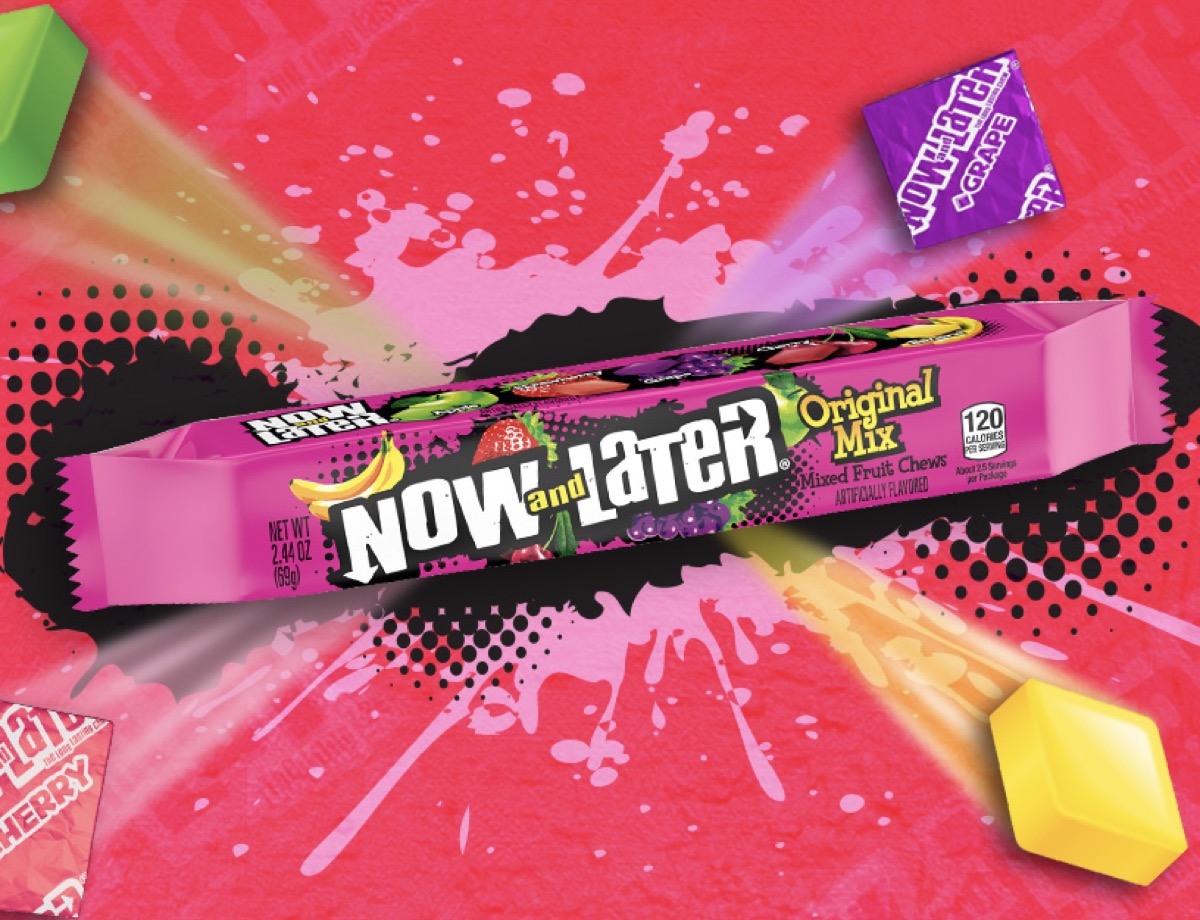
Now and Later
The corner-store fruit squares that started out jaw-breakingly stiff and only gave in after honest work — think Starburst, but way harder. The name was the sales pitch: eat some now, save some for later. Whether any kid ever actually saved some is another matter.

Spree
The tart candy discs that came rattling out of every bowling-alley and skating-rink vending machine in the 90s — a roll of fruit-shelled dots that outlasted a few games or a few laps around the rink. A mid-1960s invention that a later generation claimed completely.

Baby Ruth
The peanuts-caramel-nougat log of every checkout lane and Halloween haul — over a century old, with an identity mystery baked into the name. The company swore it honored a president's daughter; everyone else noticed a certain slugger's fame exploding at exactly that moment. No one has ever settled it.

Airheads
The stretchy, tangy taffy bar in the loud mylar wrapper — Blue Raspberry stained your tongue, and White Mystery was a gamble by design. Fifty cents of pure lunchbox status.