Toys "R" Us Game Ticket Slips
In the Toys "R" Us video-game aisle, you didn't grab the cartridge — you pulled a paper ticket from a plastic pouch under the box art, paid at the register, and traded the receipt at a counter window for the actual game. It was loss prevention that accidentally let you see exactly how many copies were left.
Anyone who bought a game at Toys "R" Us remembers the ritual. The video-game aisle displayed nothing but box art on the wall. Beneath each title hung a plastic pouch stuffed with paper slips — tear one out, and you held a claim ticket that you carried to the register like it was a lottery ticket. You paid there, then walked the receipt to a fulfillment counter or window (kids called it the cage) where a clerk would hand you the actual boxed game from the stock room. An empty pouch meant heartbreak — your game was sold out. Except sometimes the counter attendant would disappear into the back and return with more copies, and you'd get lucky anyway. You never quite knew.
The system was widely understood to be anti-theft architecture — keeping expensive cartridges locked away until a sale was confirmed — but shoppers remember it for an accidental transparency no other retailer offered: count the slips left in a pouch and you knew roughly how many copies the store had. That little window into inventory was oddly satisfying. The practice roughly lasted from the NES era through the late 1990s, fading around the turn of the millennium as video-game sections migrated to locked glass display cases and the ticket-slip world disappeared entirely.
Similar items

Toys "R" Us
The cathedral of childhood shopping. Charles Lazarus's toy superstore — the backwards "R," aisle upon aisle of Christmas lists waiting to happen, and Geoffrey the Giraffe's unmissable jingle — defined how kids experienced wanting. Then a leveraged buyout, five billion in debt, and a 2018 collapse ended the era.

KB Toys
The cramped, stacked-to-the-ceiling toy store tucked into every American mall — smaller and more chaotic than Toys "R" Us, with clearance bins spilling into the aisles. It was the impulse-buy toy stop on any mall trip, right up until it liquidated for good in 2009.

Blockbuster Video
The blue-and-yellow torn-ticket empire where Friday nights meant wandering the new-release wall, hoping the big movie wasn't rented out, and dreading the late fees. At its peak in 2004, Blockbuster dominated home entertainment with 9,094 stores worldwide—until Netflix and streaming dismantled the whole business model.
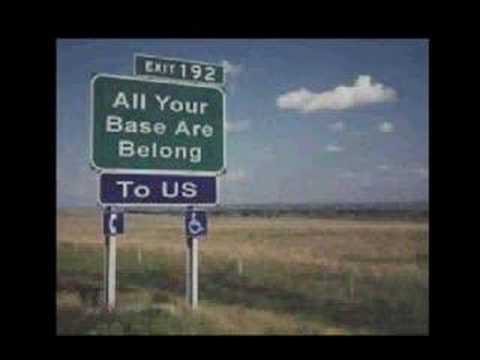
All Your Base Are Belong to Us
A hilariously broken line of video-game English that became one of the internet's first true memes. In February 2001, a techno remix and a Newgrounds video put 'All your base are belong to us' on forum signatures, Photoshopped billboards, and eventually YouTube's own maintenance page.