The Crow

Brandon Lee in black-and-white face paint, a crow on his shoulder, Detroit on Devil's Night. The 1994 gothic revenge film became a legend for the saddest reason: Lee was killed by a prop gun with days of shooting left, and the movie was finished without him. The soundtrack topped the charts.
James O'Barr wrote The Crow to cope with the death of his fiancée, killed by a drunk driver, and the 1989 comic's first studio meeting ended with a pitch for a musical starring Michael Jackson. Writer John Shirley and producer Jeff Most workshopped a script with O'Barr instead, Edward Pressman came aboard, David J. Schow rewrote, and Australian director Alex Proyas was hired. Christian Slater and River Phoenix were considered for Eric Draven, the murdered musician who comes back from the grave; O'Barr doubted Brandon Lee at first, then was won over. Lee, the son of Bruce Lee, dropped twenty pounds for the part, choreographed his fights with Jeff Imada, did most of his own stunts and had a subplot cut for its East Asian stereotyping. Shooting began in Wilmington, North Carolina, in February 1993.
On March 31, 1993, with most of his scenes done and three days of them left, Lee filmed the moment Eric is shot by the gang member Funboy. The prop crew, short on time and money, had earlier made their own dummy cartridges from live rounds, leaving the primers in; one had quietly driven a bullet into the barrel. For the fatal take the gun was loaded with blanks, the firearms specialist had been sent home, and nobody checked the barrel. The lodged bullet fired with nearly the force of a live round and struck Lee in the abdomen. He died after six hours of surgery. He was 28. The death was ruled an accident caused by negligence, and he was buried beside his father in Seattle. His fiancée Eliza Hutton and his mother backed Proyas's decision to finish; the remaining scenes were rewritten, stunt double Chad Stahelski stood in with Lee's face digitally composited on, Paramount walked away from distribution, and Miramax picked it up with another $8 million. O'Barr said losing Lee was like losing his fiancée all over again.
The Crow opened at number one on May 13, 1994, with $11.8 million, Miramax's biggest opening to that point, and finished with about $94 million worldwide on a $23 million budget. Rolling Stone called it a "dazzling fever dream of a movie," Roger Ebert "a stunning work of visual style," and the Washington Post's Desson Howe wrote that Lee "haunts every frame." The soundtrack album went to number one, built around the Cure's "Burn" with Stone Temple Pilots, Rage Against the Machine, Helmet and the Jesus and Mary Chain.
It was the eighth best-selling video of 1995 and a goth touchstone for the rest of the decade. Three sequels, a TV series and a 2024 reboot followed, none of which came close. On Lee's tombstone is the passage from Paul Bowles's The Sheltering Sky that he had chosen for his wedding invitations.
Similar items
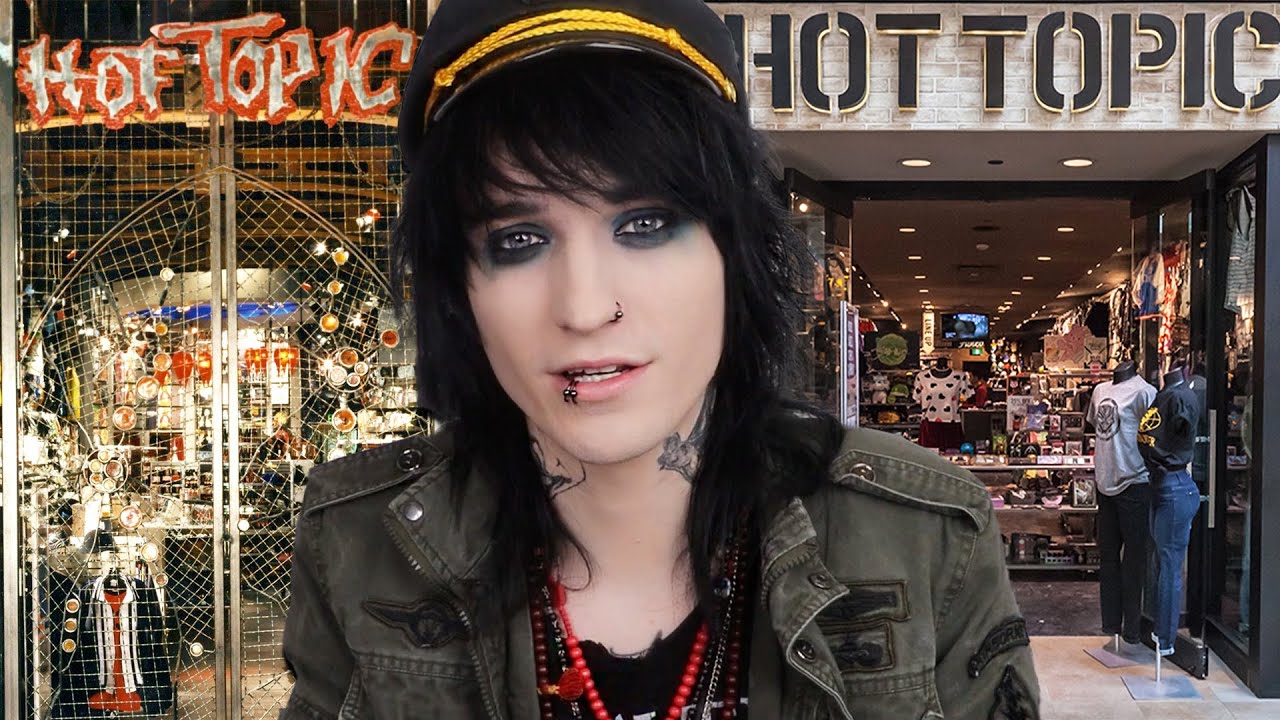
Hot Topic
The black-walled store at the end of the mall where the music was too loud and the T-shirts had bands your parents had never heard of. Studded belts, band merch, hair dye, and a smell of incense you could identify from thirty feet away. For a certain kind of teenager, walking in felt like finding your people.

Nine Inch Nails
Trent Reznor's one-man industrial-rock project that put "Head Like a Hole" on MTV, rented the Manson murder house to make The Downward Spiral, and played Woodstock '94 caked in mud. Nine Inch Nails made the mid-90s loud, bleak and strangely catchy, and the censored "Closer" became one of the decade's signature singles.

Stone Temple Pilots
The San Diego band behind "Plush," "Interstate Love Song" and "Vasoline." Some critics called them grunge imitators, and one Rolling Stone poll named them the critics' worst new band and the readers' best. They became one of the biggest-selling rock bands of the '90s.

Rage Against the Machine
Four guys from Los Angeles whose eight-line chant of refusal became a rite of passage for every suburban kid with a Discman. Rage Against the Machine fused metal, rap and funk to revolutionary politics, tried to hang upside-down flags on Saturday Night Live, charged the New York Stock Exchange for a video, and broke up in 2000 at the height of it.