TFLN (Texts From Last Night)

Anonymous, out-of-context text messages — labeled only by area code — capturing the previous night's worst decisions. It was the drunk-text hall of fame, and half the fun was reconstructing the disaster around each single message.
Texts From Last Night launched in February 2009, created by Ben Bator and Lauren Leto — it grew out of a sorority email chain Leto had been forwarding. Users submitted real text messages, stripped of everything but the sender's area code, and the site posted the most shocking, scandalous, and gloriously regrettable ones.
Each text was a tiny mystery: a three-digit area code and one message with no context, leaving you to imagine the whole story around it. Readers voted the entries good or bad, and the site became a defining piece of late-2000s internet culture, browsed in the same breath as FMyLife.
About six months in, the creators signed with Gotham Books (part of Penguin) for a trade paperback — Texts from Last Night: All the Texts No One Remembers Sending, released in 2010 — and apps followed for iPhone, Android, and BlackBerry. Hollywood came calling repeatedly, with development deals at Adam Sandler's Happy Madison and Sony in 2009 and again at Fox in 2011 with Ugly Betty developer Silvio Horta, but no TV version ever made it to air.
Similar items

FML (FMyLife)
"Today, [something humiliating happened]. FML." The confessional site where strangers shared their tiny daily disasters as one-sentence anecdotes, and you voted on whether their life truly sucked — or whether they totally deserved it. The three-letter sign-off outgrew the website and became everyday slang.

YTMND
"You're the Man Now, Dog." A whole website built on one dumb, perfect formula: a single looping image, a blaring sound clip, and a line of zooming text — repeated forever until it was either hypnotic or unbearable.
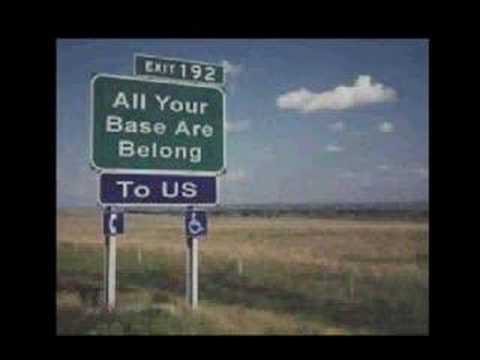
All Your Base Are Belong to Us
A hilariously broken line of video-game English that became one of the internet's first true memes. In February 2001, a techno remix and a Newgrounds video put 'All your base are belong to us' on forum signatures, Photoshopped billboards, and eventually YouTube's own maintenance page.

Badger Badger Badger
Twelve cartoon badgers do calisthenics to a chant that never stops, interrupted by a mushroom and a snake. The joke is that it loops forever and you cannot escape it — one of the great earworms of the early internet.