Motorola StarTAC

A Star Trek communicator finally landed in your hand — the Motorola StarTAC flipped open and changed what everyone thought a phone should be. At 88 grams and a $1,000 price tag, it was impossibly small and impossibly cool.
Motorola released the StarTAC on January 3, 1996 at $1,000 — a flipping, futuristic wedge that was the smallest and lightest cell phone up to that point, at just 88 grams (3.1 ounces). It wasn't technically the world's first clamshell, but it was the first flip phone that mattered, a form factor straight out of the 1960s Star Trek playbook: you snapped it open, you talked, you snapped it shut. Motorola marketed it as a "wearable" phone — something tiny enough to clip to your belt and carry like jewelry.
It looked like the future had already arrived, and the industry spent years catching up to it. In 2005, PC World named the StarTAC the 6th Greatest Gadget of the Past 50 Years, and the Motorola RAZR V3 — the next phone everyone had to have — is considered its spiritual successor, carrying forward the StarTAC's core idea: a phone could be sleek, foldable, and aspirational all at once.
Similar items

Motorola Razr
The Razr V3 launched in late 2004 as the world's thinnest clamshell phone at a shocking $500. Its anodized-aluminum body, laser-etched keypad, and impossible thinness made it a fashion statement. When the price dropped in 2005–2006, everyone had one—and snapping it shut after a call was the whole point.

Nokia 3310
The brick phone that became a meme—Nokia's 3310 was the phone that survived drops that would kill any modern device. Released in 2000 and sold over 126 million times, it was famous for its indestructibility, the built-in Snake II game, interchangeable colored covers, and the iconic Nokia tune ringtone. It was the anti-smartphone years before the smartphone era, representing the peak of durable simplicity.
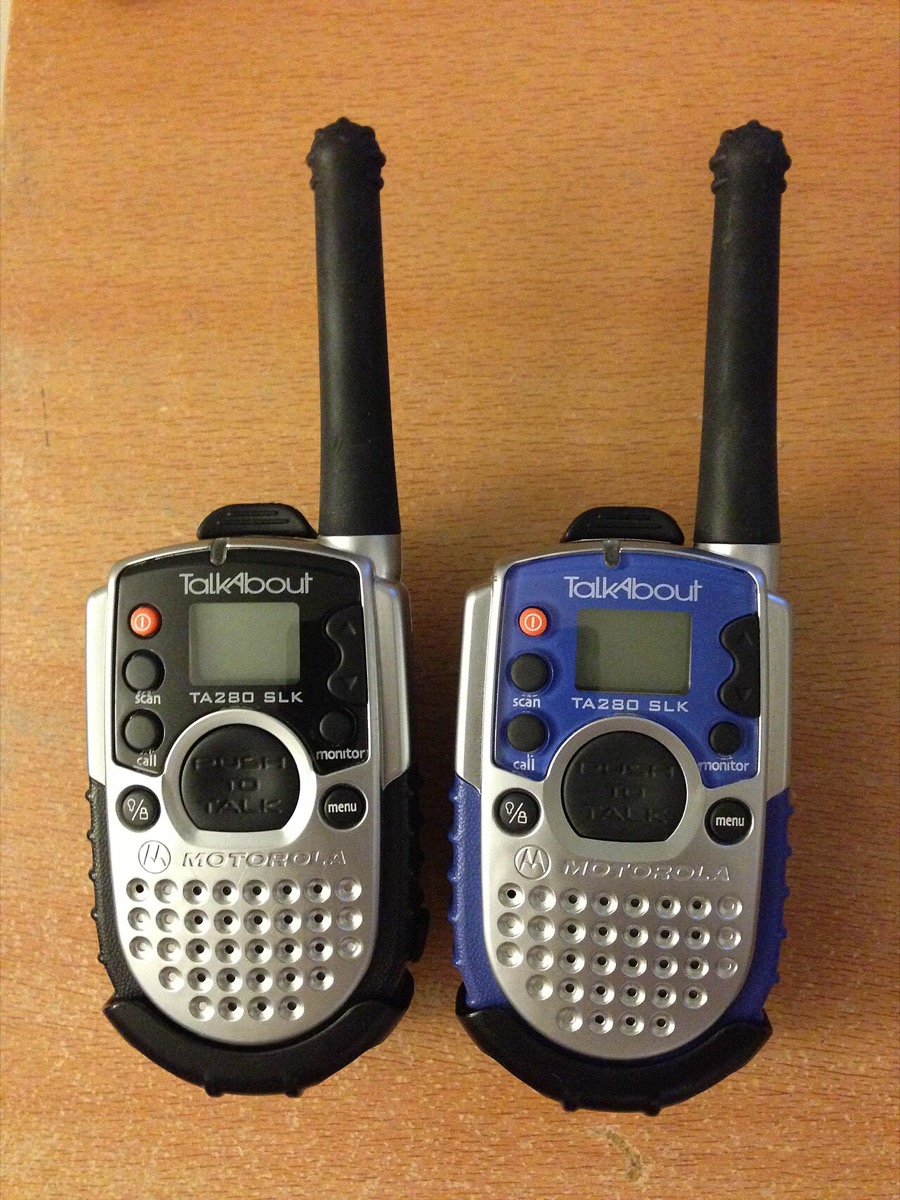
Motorola Talkabout
The chunky yellow walkie-talkies that kept families connected before everyone had a cellphone — two-car road-trip caravans, ski slopes, theme parks, and kids roaming the neighborhood with a two-mile leash. Over.

Dashboard GPS Units
Before your phone knew where you were going, a suction-cupped gadget on the windshield did. Punch in an address, obey the robotic voice, and brace for the deadpan "Recalculating…" every time you missed a turn. It ruled the dashboard for a decade — then evaporated into the phone.