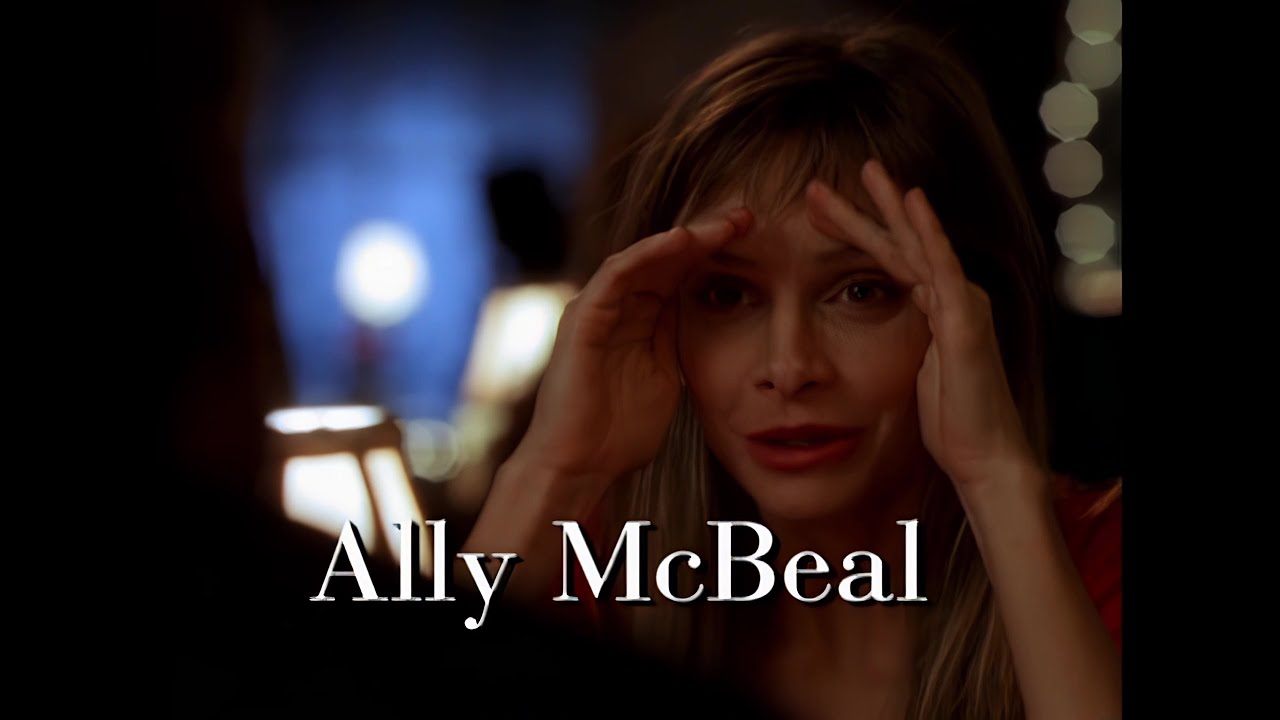
Ally McBeal
A neurotic Boston lawyer's inner life plays out as bizarre fantasies at Fox's weirdly winning legal dramedy. The dancing baby became one of the internet's earliest viral images; the show became a feminist flashpoint.
22 items
A neurotic Boston lawyer's inner life plays out as bizarre fantasies at Fox's weirdly winning legal dramedy. The dancing baby became one of the internet's earliest viral images; the show became a feminist flashpoint.
The lifeguard drama NBC canceled after one season — which then came back in syndication and became the most-watched TV show on Earth. Slow-motion running, red swimsuits, Hasselhoff. A billion people allegedly watched every week, and almost nobody admitted being one of them.

Clarissa Darling talked directly to you from her chaotic 90s bedroom, narrating the endless dramas of school, crushes, and sibling war. Melissa Joan Hart made the fourth-wall break feel like having a best friend's voice in your head — while Sam climbed through the window to a guitar chord and little brother Ferguson schemed downstairs. It proved girls' stories could hook any audience.

Daria Morgendorffer—deadpan, sardonic, and thoroughly unimpressed—became the patron saint of 1990s teen-girl outsiderdom. Spun off from Beavis and Butt-Head, this MTV series followed Daria through the town of Lawndale alongside her artsy best friend Jane Lane, her popularity-obsessed sister Quinn, and her perpetually frustrated parents. Created by Glenn Eichler and Susie Lewis Lynn, Daria captured the 90s teen experience with sharp-edged humor and surprising emotional depth. Two final TV movies, 'Is It Fall Yet?' and 'Is It College Yet?', capped off a beloved five-season run.

Nickelodeon's messiest game show: take the money or take the physical challenge — and the physical challenge always meant getting slimed. Marc Summers, the giant obstacle course, and the human nose you dug through.

A kid with a weird secret talent, a panel of Nickelodeon stars guessing it word by word on Billy the Answer Head, and the ever-looming Secret Slime Action ready to douse someone for "looking to the left." Summer Sanders kept order; nobody stayed dry.

Delivery boy Fry cryogenically freezes and wakes in the year 3000 to join a space-shipping crew led by the sardonic Leela and foul-mouthed robot Bender. Created by Matt Groening, this sci-fi comedy was staffed with Ph.D.s—the writers brought genuine math-smart humor and surprising emotional depth. Fox premiered it in 1999, but it became a cult phenomenon on Comedy Central; episodes like 'Jurassic Bark' showed its tearjerking side, and it won six Emmy Awards over its life.

Disney's dark, Shakespeare-quoting cult classic: stone gargoyles who wake after a thousand years to protect modern Manhattan by night. Half the voice cast came straight from Star Trek: The Next Generation.

An earnest former politician reinvented as ringmaster of daytime chaos: tabloid feuds, on-stage brawls, thrown chairs, and a studio audience chanting "JERRY! JERRY!" at fever pitch. Then, after an hour of bedlam, an incongruously sincere "Final Thought" to send you off.
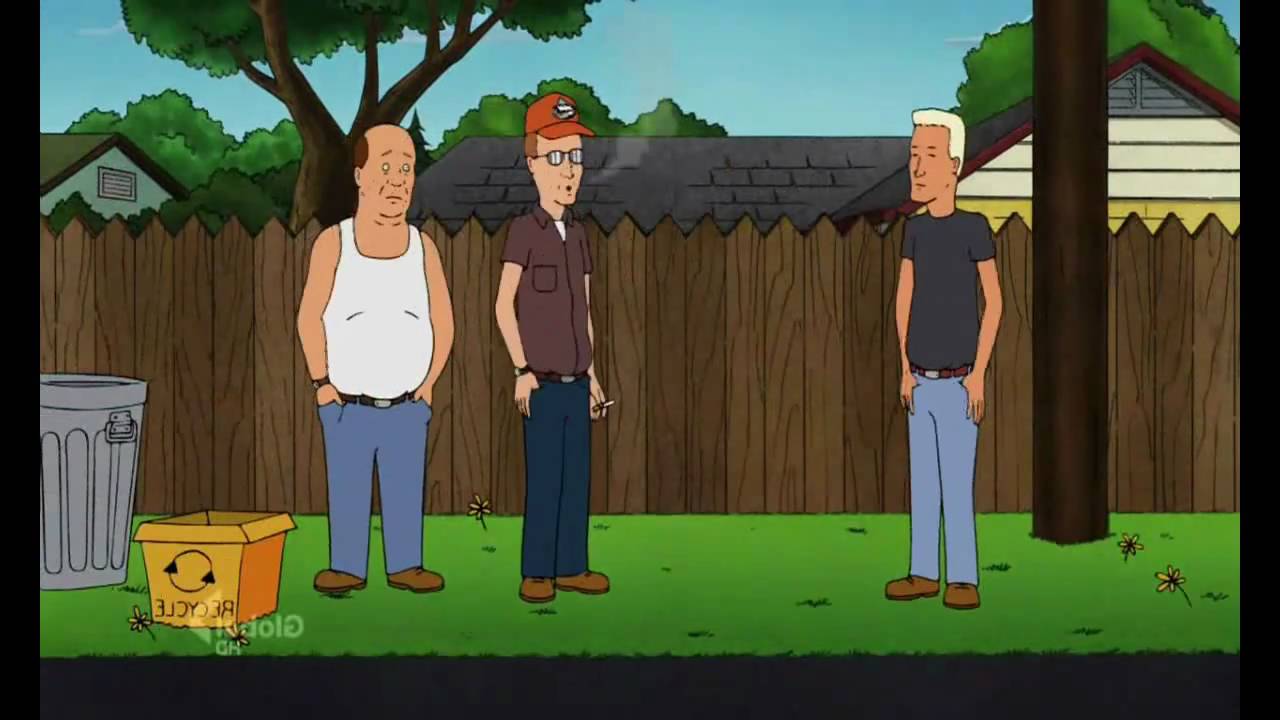
In the fictional Texas suburb of Arlen, Hank Hill tends his post as assistant manager at Strickland Propane—where he sells 'propane and propane accessories' with the understated decency that defines him. Mike Judge and Greg Daniels created a grounded animated comedy that treated its working-class characters with genuine affection, centered on the beer-drinking alley banter of Hank and his neighbors. Premiering on Fox in 1997, King of the Hill won an Emmy in 1999 and became a quiet landmark of late-90s television, proving that a show about a propane salesman could outrun trends and speak to the heart of American ordinariness.

You remember it running for years — it was actually two quick seasons, all in 1992, kept alive by reruns until 1997. Phil Moore sent kids "to the Video Zone!", the green-screen finale where you physically jumped around inside a video game and almost always lost. The dream of every kid with a Genesis and a dream.

Past your bedtime, the TV glowing in the dark, your parents' childhood sitcoms unreeling while you drifted off. Nick at Nite turned Nickelodeon into a time machine after 8 p.m., swapping cartoons for decades-old classics. Those shows didn't belong to you — they belonged to them — and that made watching feel like stolen time.
An extreme-sports game show where three kid athletes competed in over-the-top events, many of them strapped into bungee harnesses. Hosted by Mike O'Malley and refereed by Moira Quirk, it crowned winners with a gold GUTS medal and a glowing piece of the legendary Aggro Crag. That final mountain climb — Aggro Crag, Mega Crag, or Super Aggro Crag — was the holy grail of 90s kids' TV.

The ultimate Nickelodeon dream: win a timed sprint through a toy store and keep everything you can throw in the cart. A few frantic minutes of grabbing toys off shelves — the single most desirable sweepstakes a '90s kid could imagine.

The Nickelodeon sweepstakes that redid a lucky kid's bedroom into a toy-stuffed dream space. Every kid watching the ad did the math on their own boring room and desperately mailed in to win the makeover.

Discovered on a stadium jumbotron in a beer T-shirt, she became the decade's defining pin-up via a red swimsuit and a slow-motion jog. Baywatch's C.J. Parker was less a character than a cultural symbol — and no one on Earth was more 90s-famous.

A 24-year-old Hairspray cult heroine hosting a talk show aimed at teenagers and college kids instead of suburban moms — the anti-Oprah move that redefined daytime TV for Gen X. The studio audience chanting "Go Ricki! Go Ricki!" became the sound of an entire generation feeling seen.

MTV's gloriously unfiltered dating game: a 50-person dating pool eliminated in real time by one picker who couldn't even see them. Chris Hardwick steered the chaos while Jenny McCarthy — and later Carmen Electra — egged everyone on. It was peak mid-90s MTV: loud, hormonal, zero filter.
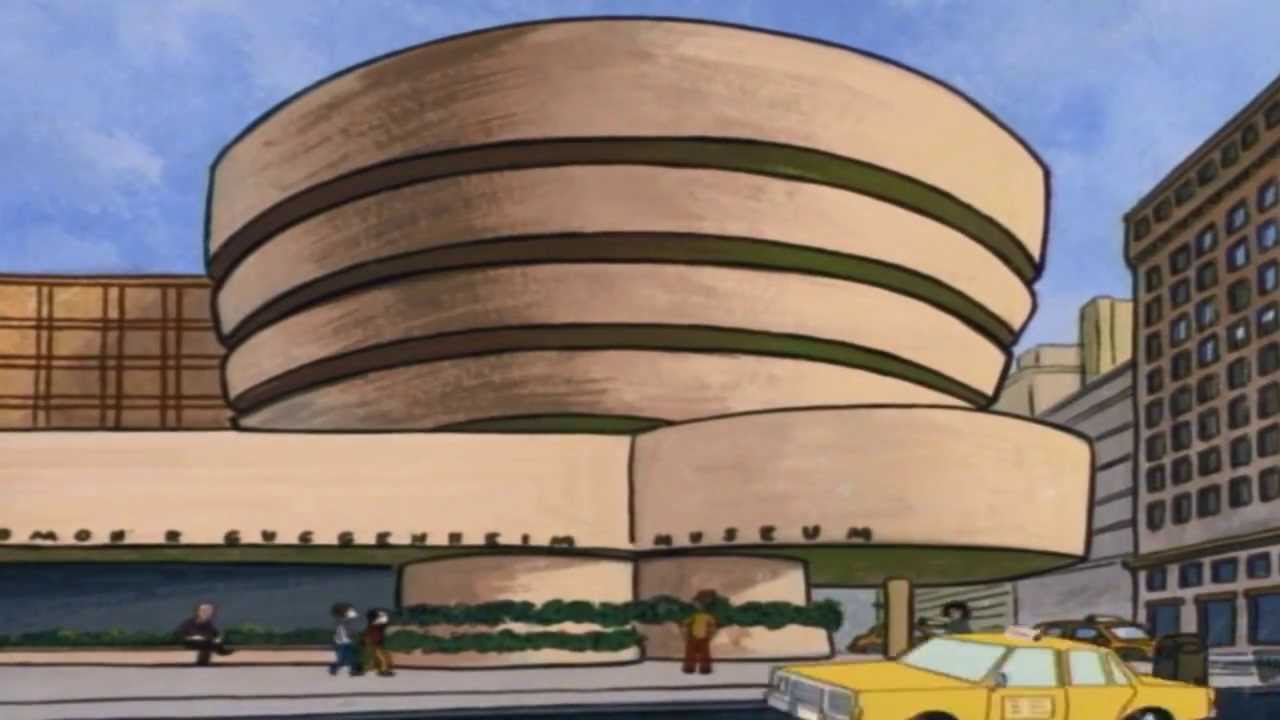
"It stinks!" Jon Lovitz voiced Jay Sherman, a New York film critic — cold and elitist on the air, gentle and self-doubting everywhere else — whose review show tore apart movie parodies like Honey, I Ate the Kids and Abe Lincoln: Pet Detective. Cancelled by two networks in two years, it became one of the 90s' great cult cartoons.

Marc Summers hosting a half hour of pure audience mayhem that was, at its core, an elaborate excuse to pie people. The Pie Pod, the Pie Coaster, the Pie Wash — Nickelodeon built an entire arsenal of whipped-cream machinery and pointed it at anyone standing still.
![Video thumbnail — Wild & Crazy Kids - Intro [HQ]](https://i.ytimg.com/vi/EL5-5NPLeQ4/hqdefault.jpg)
Dozens of kids per team, physical challenges in California parks, pies and slime flying everywhere, teen hosts in matching neon shirts barking encouragement — and absolutely no prizes at the end. Pure chaos for its own sake: the Nickelodeon philosophy, distilled.

When the World Wrestling Federation traded superhero theatrics for raunchy, anything-goes storylines and boundary-pushing characters, it conquered Monday night television. Stone Cold Steve Austin's catchphrase "Austin 3:16 says I just whipped your ass!" and The Rock's trash-talk became playground gospel, and a glass-shatter entrance sound defined a generation's ritual.