Daria

Daria Morgendorffer—deadpan, sardonic, and thoroughly unimpressed—became the patron saint of 1990s teen-girl outsiderdom. Spun off from Beavis and Butt-Head, this MTV series followed Daria through the town of Lawndale alongside her artsy best friend Jane Lane, her popularity-obsessed sister Quinn, and her perpetually frustrated parents. Created by Glenn Eichler and Susie Lewis Lynn, Daria captured the 90s teen experience with sharp-edged humor and surprising emotional depth. Two final TV movies, 'Is It Fall Yet?' and 'Is It College Yet?', capped off a beloved five-season run.
Glenn Eichler and Susie Lewis Lynn created Daria for MTV, premiering on March 3, 1997. The show was a spin-off from Beavis and Butt-Head, taking the character of Daria Morgendorffer—a witty, deadpan observer—and placing her in her own series set in the town of Lawndale. Daria's world included her artsy best friend Jane Lane, her younger sister Quinn (who embodied teen popularity-obsession), and her parents Helen and Jake. The series' theme song, 'You're Standing on My Neck' by Splendora, became an instant alt-teen anthem.
Daria became the defining voice for smart, sarcastic teenage girls who felt removed from the mainstream social hierarchy. The show's humor was sharp and self-aware, yet it also carried genuine emotional weight, treating its characters' anxieties and growth with real respect. It became an MTV staple and a cultural touchstone for the late-1990s alt-teen aesthetic.
The series ran for five seasons and 65 episodes, and two made-for-TV movies capped it: 'Is It Fall Yet?' in 2000 and 'Is It College Yet?' on January 21, 2002 — the true series finale, which followed Daria and her friends as they prepared for the next chapter of their lives. Daria's legacy endures as a show that captured a specific moment in 90s youth culture while remaining genuinely funny and emotionally resonant.
Similar items
![Video thumbnail — Beavis and Butthead Do America (1996) Theatrical Trailer [4K] [5.1] [FTD-1015]](https://i.ytimg.com/vi/RzYWKWtRmzQ/maxresdefault.jpg)
Beavis and Butt-Head Do America
MTV's cackling couch potatoes trade their couch for a cross-country road trip when their TV gets stolen. It's chaotic, it's vulgar, and it opened #1 with the biggest December weekend any film had ever managed at the time. Mike Judge's feature debut turned a controversial TV phenomenon into a theatrical event that felt impossibly big.

MTV
MTV's 1990s golden era transformed the channel from music-video jukebox into a cultural force, with Total Request Live (TRL), The Real World, Beavis and Butt-Head, MTV Unplugged, and a rotation of music videos that defined the decade's soundtrack. Music Television delivered exactly what it promised: a place where youth culture, music, and rebellion converged on cable.
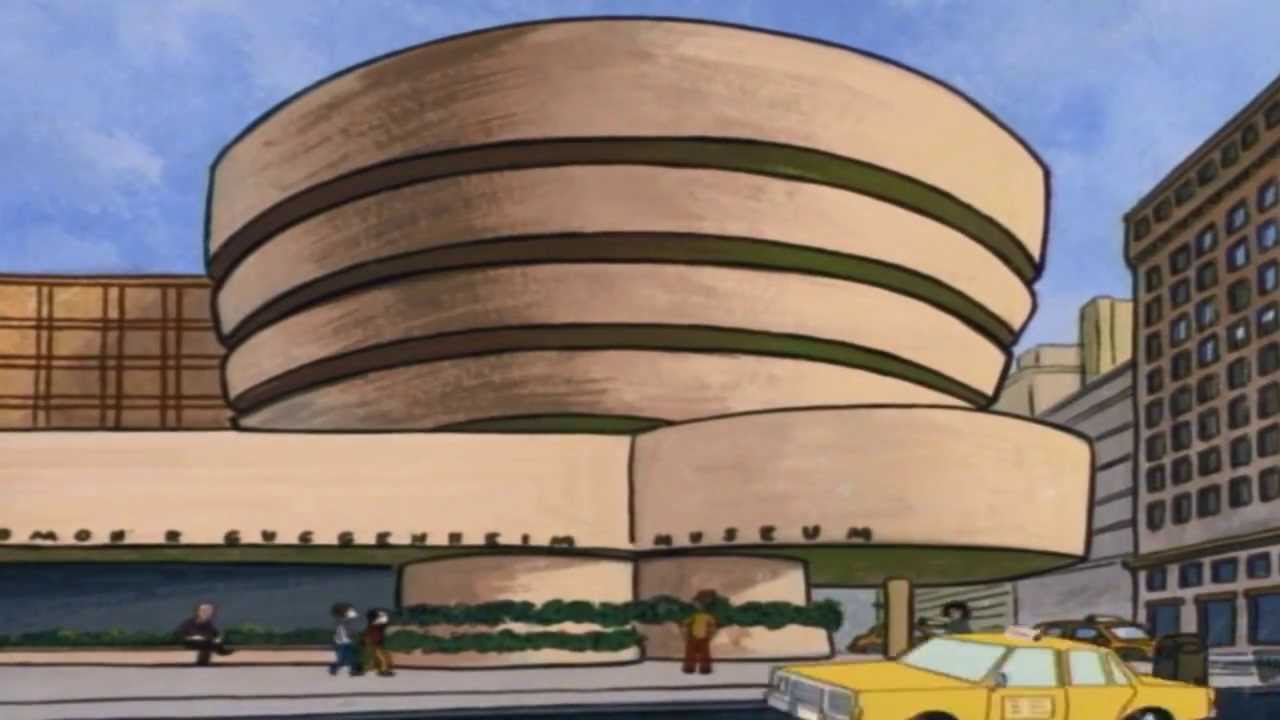
The Critic
"It stinks!" Jon Lovitz voiced Jay Sherman, a New York film critic — cold and elitist on the air, gentle and self-doubting everywhere else — whose review show tore apart movie parodies like Honey, I Ate the Kids and Abe Lincoln: Pet Detective. Cancelled by two networks in two years, it became one of the 90s' great cult cartoons.

My So-Called Life
Nineteen episodes of Angela Chase's unsparing inner monologue — and of Jordan Catalano leaning against things. One season, canceled, and mourned so hard the internet invented the save-our-show campaign for it.