StumbleUpon
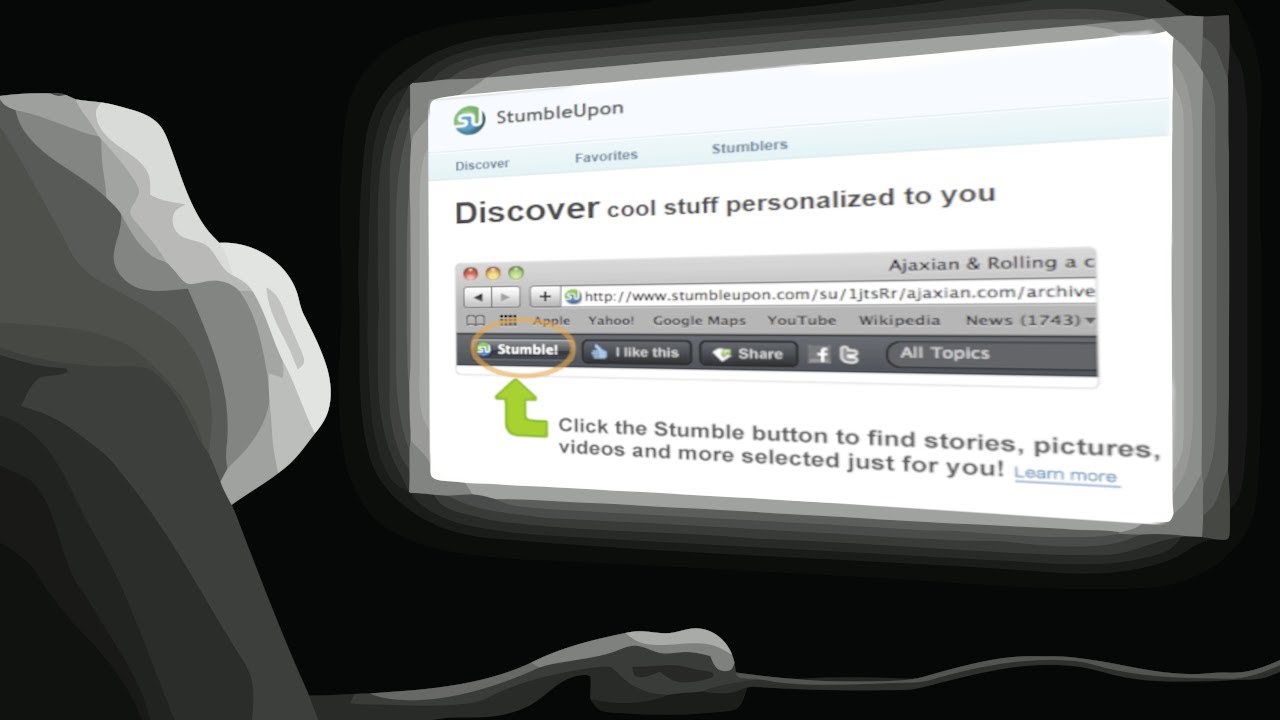
Press the green Stumble button and the toolbar threw you onto a semi-random webpage matched to your interests. Thumbs up or thumbs down, and it learned. StumbleUpon was the platonic ideal of productive procrastination: the perfect tool for losing an entire afternoon, one weird website at a time.
StumbleUpon launched in November 2001, founded by Garrett Camp, Geoff Smith, Justin LaFrance, and Eric Boyd while Camp was a grad student at the University of Calgary. The premise was elegant: a browser toolbar with one job, turning the web into a personalized random walk. For a certain breed of 2000s internet user, that green button was the front door to everything strange and wonderful online.
eBay bought the company in May 2007 for over $75 million, when it had 2.3 million users. The pairing never quite worked, and Camp and Smith bought their company back in April 2009 for $29 million. Growth kept coming for a while — 25 million users by April 2012 — but the social feeds were taking over the job of deciding what you saw next. StumbleUpon shut down in June 2018, migrating accounts to Mix.com, a successor Camp had built. Camp, meanwhile, had gone on to co-found Uber. For millions who grew up stumbling, nothing ever really replaced the feeling of the open web arriving one click at a time.
Similar items

eBaum's World
The early-2000s comedy and media dump every kid browsed instead of doing homework. Flash cartoons, prank-call soundboards, funny clips, and simple games — all stamped with the site's inescapable watermark, which became the running joke and the scandal at once.

MySpace
MySpace launched in August 2003 and became the social network that swallowed the mid-2000s internet — where everyone's first friend was Tom. Top 8 rankings sparked drama, profile songs played on auto-load, and DIY HTML customization meant glitter graphics and autoplay music ruled. Bands broke careers there; it was the most-visited website in the US by 2006.

GeoCities
The free web hosting empire where the internet learned to be chaotic. GeoCities gave millions of people their first webpage, organized into themed neighborhoods, and established the visual language of under-construction GIFs, MIDI soundtracks, and blinking text that defined the early web.
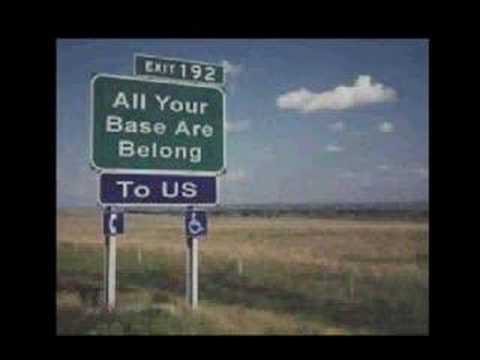
All Your Base Are Belong to Us
A hilariously broken line of video-game English that became one of the internet's first true memes. In February 2001, a techno remix and a Newgrounds video put 'All your base are belong to us' on forum signatures, Photoshopped billboards, and eventually YouTube's own maintenance page.