Square One TV

PBS's answer to math phobia: a half hour of sketches, parody game shows and music videos about percentages, capped every day by Mathnet, the Dragnet spoof whose detectives carried calculators instead of guns. Five seasons, 230 episodes, and a generation of adults who forgot every formula but can still sing the theme.
In 1985 the Children's Television Workshop, the Sesame Street people, asked Tom Lehrer, who had written songs for its earlier series The Electric Company, for a theme for a proposed show called That's Mathematics. Lehrer set his lyrics to "That's Entertainment!", the estate of composer Arthur Schwartz refused permission, and the company went, as the story goes, back to square one. Square One Television premiered on PBS on January 26, 1987, built to attack what CTW saw as a math crisis among American schoolchildren, and it did so in the Electric Company style: short sketches parodying whatever kids were already watching. Mathcourt tried defendants for math crimes before Judge Sandra Day O'Crater. Mathman was Pac-Man with arithmetic, chased by a blue tornado named Mr. Glitch. There were General Mathpital, Late Afternoon with David Numberman, and at least one original music video per episode, with guests like Kid 'n Play and the Fat Boys performing about the topic of the day. Game-show segments like Piece of the Pie and Close Call turned percentages and estimation into contests, with Reg E. Cathey announcing.
The closing segment every day was Mathnet, a straight-faced pastiche of Dragnet in which police mathematicians George Frankly (Joe Howard) and Kate Monday (Beverly Leech) solved thefts, frauds and kidnappings with math. Each case ran five segments, one per weekday, each ending on a cliffhanger, and the parody was meticulous: the detectives carried calculators instead of guns, the unit's motto was "to cogitate and to solve" in place of the LAPD's "to protect and to serve," and James Earl Jones turned up as the chief. The squad started in Los Angeles and later moved to New York, and when Leech left after the third season, Toni DiBuono's Pat Tuesday took the desk. One case was cracked with a parrot and the Fibonacci sequence.
The last new episode aired on November 6, 1992; PBS reran the show until October 1994, and it resurfaced on the Noggin cable channel from 1999 to 2003. What lingers is the trick. The show never pretended math was fun on its own terms. It assumed you were already watching television and smuggled the math in behind the parodies, which is why people who cannot remember how to find a percentage can still tell you what happened to George Frankly.
Similar items

Reading Rainbow
"Butterfly in the sky, I can go twice as high." LeVar Burton spent more than two decades on PBS making one argument, gently and relentlessly: books are where the good stuff is. Then he'd hand the microphone to kids to review them — because you didn't have to take his word for it.
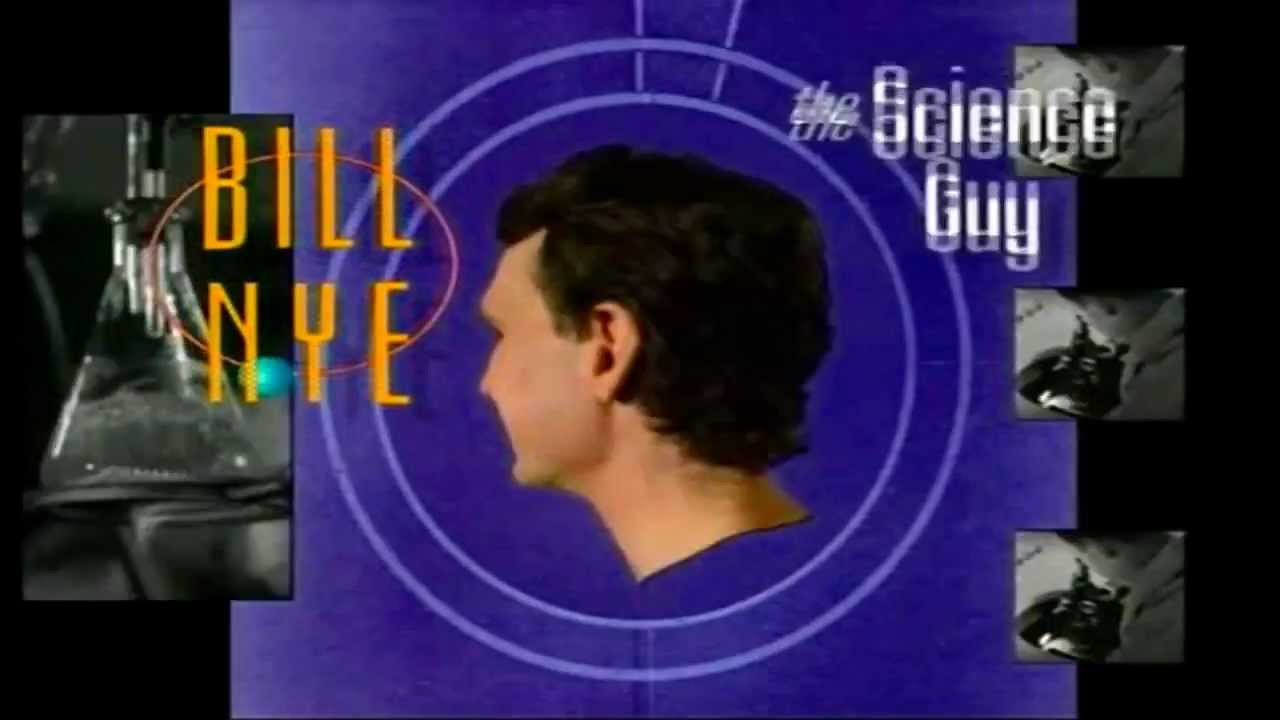
Bill Nye the Science Guy
The beloved PBS/syndication science show that dominated classrooms throughout the '90s. Bill Nye, the bow-tie-wearing mechanical engineer-turned-science-communicator, made physics and chemistry accessible—and fun—with MTV-style energy, wild demonstrations, and an unforgettable theme song. Substitute teachers everywhere knew exactly what to do: wheel out the TV cart and press play. A cultural institution that made science cool before it was cool.

Where in the World Is Carmen Sandiego?
Chase a globe-trotting super-thief and accidentally learn every world capital along the way. Broderbund's detective games sent you tracking Carmen's V.I.L.E. henchmen across real geography, and the PBS game show turned the hunt into after-school appointment TV — complete with the a cappella group Rockapella.

Mister Rogers' Neighborhood
Fred Rogers walked in the door singing "Won't You Be My Neighbor?", traded his jacket for a cardigan and his shoes for blue sneakers, and for 33 years told children they were special exactly as they were. The Trolley to the Neighborhood of Make-Believe, the fish, the traffic light — it was television slowed to the speed of a child, and nothing else has ever felt quite like it.