SnackWell's

The green box of fat-free Devil's Food Cookie Cakes your mom bought because they were healthy, and the sleeve you ate in one sitting because they were fat-free. Nabisco's SnackWell's launched in 1992 into the low-fat panic, sold out so hard the company printed its own SOLD OUT signs, and gave the language a phrase for eating more of something because it is supposedly better for you.
SnackWell's came out of Nabisco in 1992, the work of the company's principal food scientist, Sam Porcello, at the moment U.S. dietary guidelines were telling Americans to cut fat. Most low-fat products until then had been fruit-based; Nabisco's new-business director Sharon Rothstein said the opportunity was to deliver mainstream low-fat products like chocolate cookies and cheese crackers. The line launched with fat-free cookies including creme, shortbread and devil's food.
It was an instant shortage. Nabisco ran out three months after the launch; the first five months brought in $57 million and the first full year, 1993, $150 million. The devil's food cookie cakes were the ones nobody could find, and Nabisco leaned into it, supplying grocery stores with green SOLD OUT signs in the brand's color and building an ad campaign around the scarcity. From 1993 to 1997 actor Perry Anzilotti played the Cookie Man, a small, easily frightened fellow forever being chased by women who wanted his cookies, across 23 commercials with the tagline "Can we ever make enough?" Sales climbed to about $490 million in 1995.
The fall was nearly as fast. By October 1996 cookie sales were down 27 percent, with complaints about the taste and a crowd of fat-free imitators; the Cookie Man was dropped after 1997 for a new campaign, and the Atkins and South Beach era turned the whole premise upside down by making sugar the villain instead of fat. SnackWell's cookies carried more carbohydrates than the ones they replaced, and the brand became the emblem of a low-fat era that coincided with rising obesity, the poster child for what became known as the SnackWell effect: eating more of a thing because it is labeled healthier.
The brand was sold on to Back to Nature, which reformulated it; B&G Foods bought Back to Nature, SnackWell's included, for $162.5 million in 2017, and by 2019 the Devil's Food Cookie Cakes had three grams of fat per serving and were no longer fat-free at all. SnackWell's was retired in 2022.
Similar items

WOW! Chips (Olestra)
Fat-free Lay's, Ruffles and Doritos that tasted like the real thing, and a warning on the bag that they "may cause abdominal cramping and loose stools." Frito-Lay's WOW! chips went national in 1998, sold hundreds of millions of dollars' worth in a year, and became the 90s snack everyone remembers for what happened afterward.

Rainbow Chips Ahoy!
The Chips Ahoy! variant where the chocolate chips wore candy shells — rainbow-colored, mini-M&M-style — turning Nabisco's flagship cookie into a lunchbox event. TV commercials survive from around 1990 and 1993, proving it existed, but Nabisco never documented a launch or discontinuation date. At some point after its 90s run it quietly vanished from US shelves with no press release, no farewell.

Slim-Fast
The milkshake-that-isn't in a can, sold to a whole country as "a shake for breakfast, a shake for lunch, and a sensible dinner," with a Dodgers manager who actually went on the plan as its first famous face. Slim-Fast dates to 1977, but the late '80s and '90s were when it was everywhere.
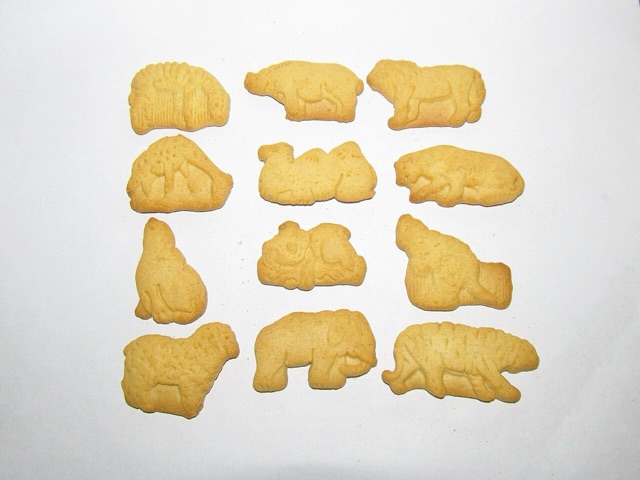
Barnum's Animals Crackers
The little circus-wagon box of animal-shaped cookies with the string handle — worn around the neck like a tiny snack pendant by generations of kids. Nabisco's Barnum's Animals date to 1902, when the string was added so the box could hang on a Christmas tree, and they never left the grocery shelf.