Service Merchandise

The catalog showroom where you wrote item numbers on a slip, paid at the counter, and waited by the conveyor belt for your order to roll out of the back. More than 400 stores at its peak, gone by 2002.
Service Merchandise grew out of a five-and-dime that Harry and Mary Zimmerman opened in Pulaski, Tennessee, in 1934. After years in wholesale, the family opened its first catalog showroom on Broadway in downtown Nashville in 1960, and the format they settled on became the company's whole identity. Customers walked a showroom of display models and catalogs, wrote the catalog numbers of what they wanted on a carbon-paper order form, and handed it to a clerk who keyed it to the stockroom and took payment. The goods then emerged near the exit on a conveyor belt at the "Merchandise Pickup Area." The company's stated logic was that it cut theft and spared shoppers from dragging purchases around the store.
The chain became the leading catalog-showroom retailer of the 1970s and 1980s, opening showrooms near the malls that were springing up nationwide. Jewelry was the engine: in 1975 it took three percent of the floor space and a quarter of the sales. Revenue passed $1 billion in 1981, $3 billion in 1988 and, according to the International Directory of Company Histories, topped $4 billion by the mid-1990s, with 391 stores in 1993 and 406 by 1995. Along the way it bought the H.J. Wilson chain in 1985, moved its headquarters to Brentwood, Tennessee, and supplied prizes to Wheel of Fortune and The Price Is Right into the 1990s. Self-service ordering kiosks nicknamed "Silent Sam" and later "Service Express" let customers skip the clerk.
The 1990s were the peak and the beginning of the end at once. Walmart and Bed Bath & Beyond ate the housewares business, then Best Buy and Circuit City took electronics, and the whole ritual of the order slip started to feel slow. Gary Witkin arrived as president in 1994 and became CEO in 1997 with a plan to close about 60 underperforming stores. The company put a 7,000-item catalog online in late 1996, early for a retailer, but the sales it generated could not offset the big-box damage. Restructuring dropped electronics, toys and sporting goods to refocus on jewelry, gifts and home decor.
Creditors forced the company into Chapter 11 on March 15, 1999, the largest bankruptcy in Tennessee history at the time, according to The Tennessean. Raymond Zimmerman, the founders' son who had run the company for decades, resigned as chairman in November 2000. A reorganization attempt in 2001 collapsed after September 11 knocked out consumer confidence in a weak retail year, and on January 4, 2002, the company announced it would close all 218 remaining stores in 32 states, putting about 9,300 people out of work.
Similar items
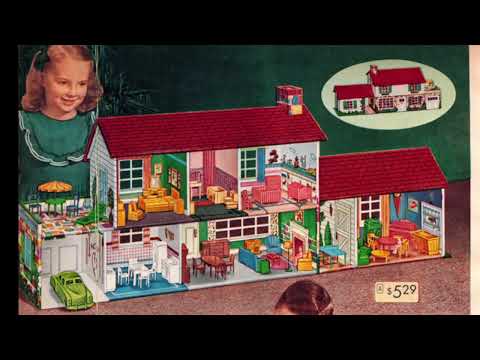
Sears Wish Book
It showed up in late summer, thick as a phone book, and you went straight to the toy pages with a pen: circle, initial, dog-ear, repeat, until the list for Santa was basically the whole section. The Sears Christmas catalog had been doing this to kids since 1933 — 90s kids caught the last years of the big one, right before it started to shrink.

Toys "R" Us
The cathedral of childhood shopping. Charles Lazarus's toy superstore — the backwards "R," aisle upon aisle of Christmas lists waiting to happen, and Geoffrey the Giraffe's unmissable jingle — defined how kids experienced wanting. Then a leveraged buyout, five billion in debt, and a 2018 collapse ended the era.
Kmart Blue Light Special
"Attention, Kmart shoppers." A rotating blue police light on a pole, a voice on the PA, and a stampede toward whatever aisle it was parked in. It ran from 1965 until 1991, so early-90s kids caught the tail end, and then Kmart spent the next two decades trying to bring it back.
Claire's
The ear-piercing rite of passage: the window chair, the piercing gun, picking starter studs while your friends pressed against the glass. Claire's claims more ear piercings than any other retailer — over 100 million — and for generations of tween girls it was the reason the mall existed: bins of cheap earrings, chokers, butterfly clips, and best-friend necklaces made to be split in half.