Sea-Monkeys
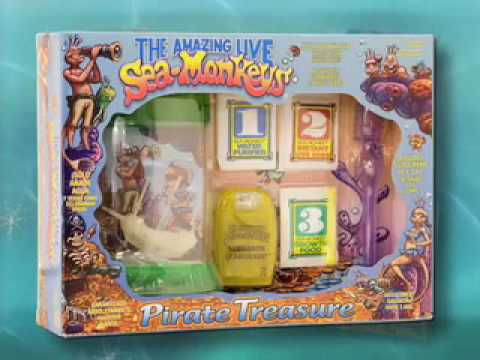
The comic-book ad promised a smiling pink family of underwater people in a castle. What arrived in the mail was three foil packets and, eventually, a cloud of barely visible brine shrimp. Sea-Monkeys were the great bait-and-switch of childhood — and somehow everyone forgave them, generation after generation.
Novelty inventor Harold von Braunhut launched the product in 1957 as "Instant Life" for 49 cents, renaming it Sea-Monkeys in 1962. The creatures are brine shrimp (Artemia), sold as a claimed hybrid breed dubbed "Artemia NYOS" and packaged as a three-pouch ritual: a water purifier packet, an "Instant Life Eggs" packet, and growth food — dried eggs engineered to hatch on cue, a process von Braunhut patented on July 4, 1972. Under ideal conditions they can live for years; in the average kid's care, a few months was a good run.
The real genius was the advertising. Von Braunhut blanketed comic books with them — by his own estimate buying millions of pages of comic-book ad space a year — and illustrator Joe Orlando's artwork sold the fantasy: smiling humanoid aquatic people who bore no resemblance whatsoever to the actual crustaceans. The gap between the ad and the murky aquarium became a rite of passage, and the kits kept selling anyway, straight through the 90s toy aisle in ever-fancier themed tanks. Von Braunhut's other novelties — X-Ray Specs, Crazy Crabs, the Invisible Goldfish — worked the same playful-scam vein. His legacy carries a genuinely dark footnote, though: before his death in 2003, reporting going back to a 1988 Washington Post exposé documented his deep ties to white-supremacist organizations.
Sea-Monkeys are still sold today, essentially unchanged — same packets, same overpromising ad art, same tiny translucent shrimp — a 1950s mail-order gag that simply never stopped working.
Similar items

Tamagotchi
The egg-shaped digital pet that lived on a keychain and died if you ignored it during math class. Bandai's Tamagotchi demanded constant feeding, cleaning, and attention, sparking a global craze — and a wave of school bans.

Giga Pets
The keychain virtual pet you fed, cleaned, and played with between classes — America's answer to the Tamagotchi craze. Neglect it and it got sick; ignore it too long and it died right there in your backpack.

Chia Pets
Ch-ch-ch-Chia! Smear seed paste on a terracotta ram, water it, and watch it grow a green afro. Nobody ever asked for a Chia Pet — they materialized under Christmas trees anyway, summoned by a jingle that aired every December like clockwork.

Zoobooks
The glossy wildlife magazine that arrived in your mailbox, each issue a deep dive into a single animal. But the TV commercial — promising a free elephant issue and a tiger poster if you called the 1-800 number — ran on infinite repeat in 90s kids' blocks, embedding itself in the memory of everyone who never got that poster.