Quantum Leap

"Oh, boy." Every week Dr. Sam Beckett woke up in someone else's life with only a cigar-chomping hologram named Al to tell him what had gone wrong. NBC moved it around the schedule for five seasons, and it never did get Sam home.
Quantum Leap premiered on NBC on March 26, 1989, created by Donald P. Bellisario. Scott Bakula played Dr. Sam Beckett, a physicist who theorized that time travel was possible within a person's own lifetime; with the government ready to pull the plug after $43 billion, he stepped into his own accelerator to prove it. He came out in the past, inside other people's lives, with his memory in pieces. Dean Stockwell was Al Calavicci, a womanizing Navy admiral who appeared only as a hologram Sam could see, fed information by a supercomputer called Ziggy — "a parallel hybrid computer with a massive ego." The narration laid out the deal each week: Sam was "striving to put right what once went wrong and hoping each time that his next leap will be the leap home."
Bellisario took the idea from films like Here Comes Mr. Jordan and Heaven Can Wait and from the 1960s series The Time Tunnel, and he understood what he was really selling: an anthology show in disguise, at a time when networks wanted nothing to do with anthologies. Every episode dropped Sam into a new period, a new cast and a new genre. He crossed paths with Buddy Holly, Michael Jackson and Marilyn Monroe, and Dr. Ruth Westheimer played herself. The ratings started slowly and the show was shuffled between Fridays, Wednesdays and Tuesdays, but it held the 18-to-49 audience NBC cared about, and the network ran "Quantum Leap Week" marathons of repeats in the summers of 1990 and 1991. Both leads won Golden Globes for the roles.
Bellisario wrote the fifth-season finale, "Mirror Image," so it could close either a season or the series. When NBC didn't renew, two title cards were added to the May 5, 1993 broadcast: Al's first wife Beth never remarried, and Sam "never returned home." The abrupt goodbye left viewers divided, and the ending has been argued over ever since — Bakula confirmed in 2019 that alternate endings had been shot, after footage surfaced online. TV Guide later ranked it among the top 20 cult shows of all time, and a revival ran on NBC from 2022 to 2024 without Bakula, who called passing on it "a very difficult decision."
Similar items

Sliders
A band of travelers trapped sliding through parallel universes, each one stranger than the last, racing against a countdown timer to find their way home. Jerry O'Connell led this 1990s cult sci-fi favorite through five seasons and two networks.

The X-Files
Fox's paranoia engine: FBI agents Mulder and Scully investigating UFOs, monsters, and government cover-ups one case file at a time. Created by Chris Carter, The X-Files turned "I Want to Believe" into a mantra and proved that prime-time TV could do serialized mythology decades before the streaming age demanded it.

Star Trek
The franchise that started in 1966 hit its cultural zenith in the 1990s, when two series aired simultaneously, a film franchise thrived alongside them, and Trek's technobabble and ethics debates penetrated the mainstream. From TNG's syndication dominance to Voyager's network-launching premiere, Star Trek was inescapable.
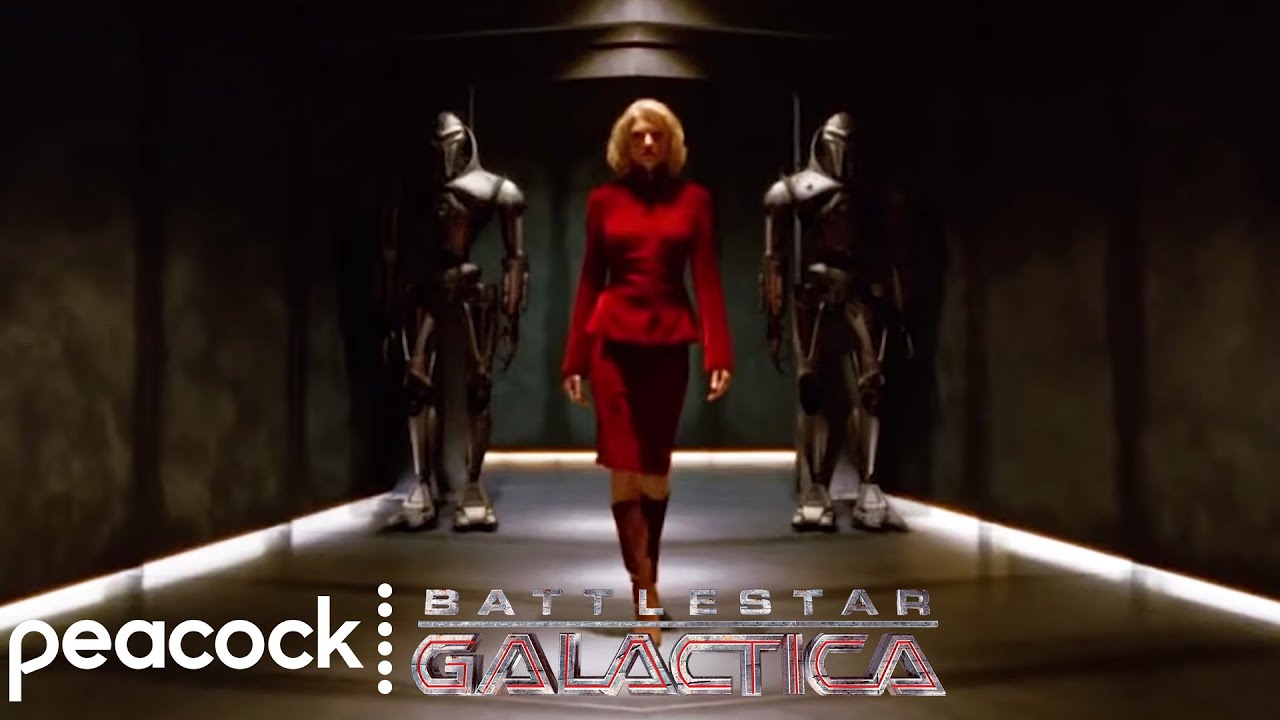
Battlestar Galactica (2004)
Ronald D. Moore took a cheesy 1978 space opera and rebuilt it as the darkest drama on television: fifty thousand survivors, Cylons who look human, no aliens, no lasers, and a war on terror allegory the United Nations eventually hosted a panel about. So say we all.