Battlestar Galactica (2004)
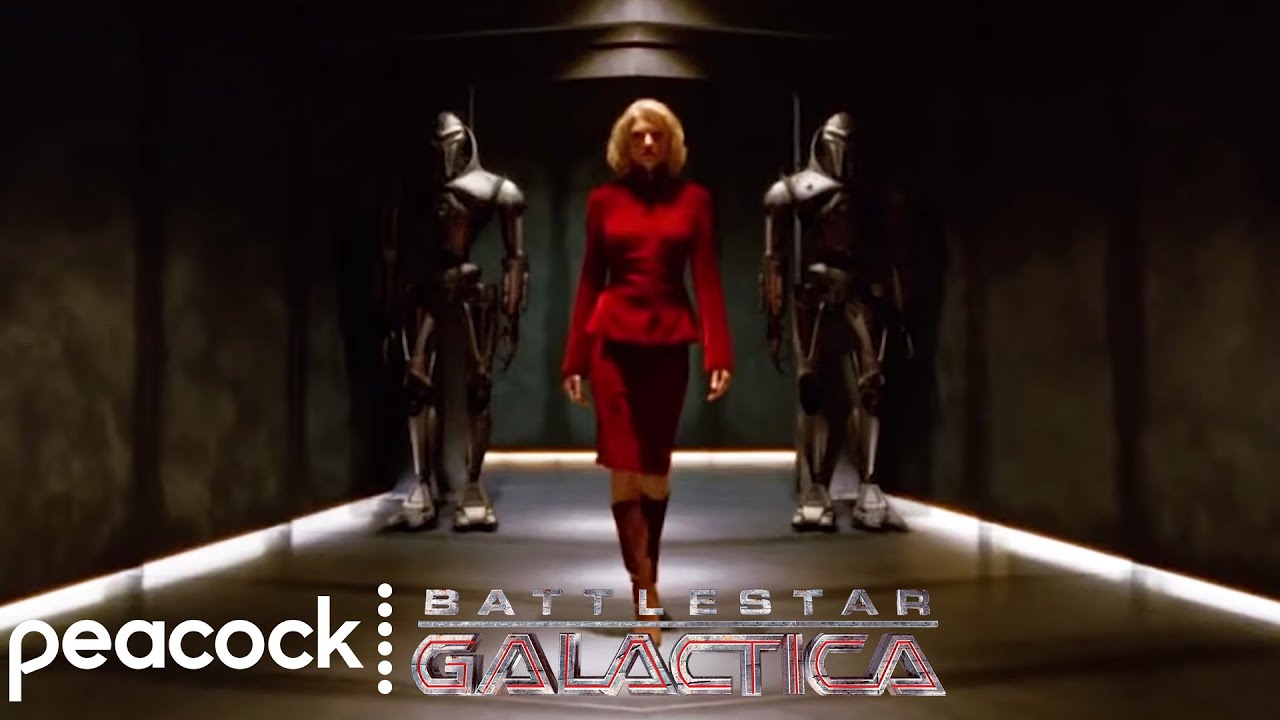
Ronald D. Moore took a cheesy 1978 space opera and rebuilt it as the darkest drama on television: fifty thousand survivors, Cylons who look human, no aliens, no lasers, and a war on terror allegory the United Nations eventually hosted a panel about. So say we all.
Glen A. Larson's original Battlestar Galactica ran a single season starting in 1978. Ronald D. Moore and David Eick's "re-imagining" kept the premise — the Cylons, machines of humanity's own making, wipe out the Twelve Colonies of Kobol with the unwitting help of scientist Gaius Baltar, and the old warship Galactica, about to be retired as a museum, leads a ragtag fleet of about 50,000 survivors in search of a fabled thirteenth colony called Earth — and changed nearly everything about how it was told. The three-hour miniseries aired on the Sci-Fi Channel beginning December 8, 2003, and its most famous moment was not planned: Edward James Olmos's Commander Adama had "So say we all" written as a single line at the end of his speech, and Olmos repeated it, unscripted, until the scene became the show's call-and-response.
The rules were the point. There were no humanoid aliens, the guns fired bullets and missiles rather than lasers, the scripts avoided technobabble, and some Cylons now looked human — Tricia Helfer's Number Six, and Grace Park's Boomer, a Galactica pilot who did not know she was a Cylon until the sleeper in her shot Adama at the end of the first season. Katee Sackhoff played the hotshot pilot Starbuck, a role the original series had given to Dirk Benedict, who answered in a May 2004 magazine essay titled "Starbuck: Lost in Castration." Mary McDonnell's Laura Roslin, the education secretary sworn in as president aboard Colonial One in a scene that cited Lyndon Johnson's oath after the Kennedy assassination, became the show's other pole. Time called it "a gripping sci-fi allegory of the war on terror," complete with sleeper cells, civil-liberties crackdowns and a prisoner-torture scandal; by the third season the humans were the suicide bombers.
The first season premiered in Britain on Sky1 in October 2004 before its American debut on January 14, 2005, when 3.1 million viewers made it one of Sci-Fi's highest-rated programs ever. The show won a Peabody and the Television Critics Association's Program of the Year, landed on Time's list of the 100 best TV shows of all time, and collected 19 Emmy nominations with three wins for visual effects and sound editing. Entertainment Weekly credited it with putting "frak" into the national lexicon.
The fourth season was announced as the last, and the finale aired on March 20, 2009: the survivors reached a new Earth, settled among early humans in Africa and flew the fleet into the sun. Three days earlier the United Nations had hosted a Battlestar Galactica retrospective with McDonnell, Olmos, Moore and Eick, moderated by Whoopi Goldberg, on human rights, terrorism and reconciliation. In 2019 The New York Times put it among the 20 best TV dramas since The Sopranos.
Similar items
Firefly
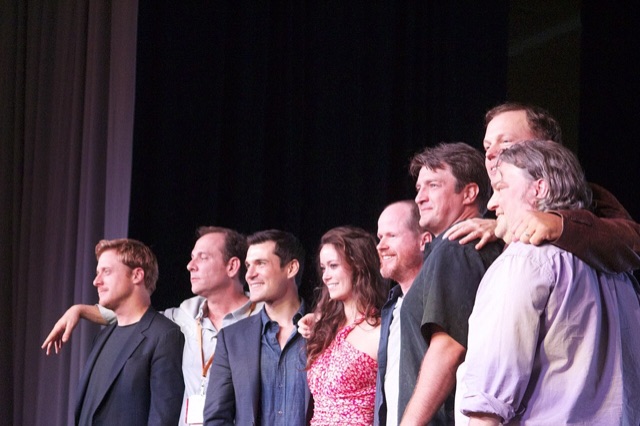
Joss Whedon's space western lasted eleven episodes on Fox, aired out of order on Friday nights, and became one of the most beloved cancelled shows of its generation. The Browncoats bought the DVDs, raised the money, mailed the postcards and got a movie, Serenity, out of a network that never wanted the pilot.

Lost
The ABC serial drama that turned network TV into a mystery box for six seasons. When Oceanic Flight 815 crashed on a mysterious island, survivors discovered that their new home held impossible secrets—a smoke monster, a hidden hatch, a shadowy group called "the Others"—and a mythology so complex that fans spent years theorizing about every detail.

The X-Files
Fox's paranoia engine: FBI agents Mulder and Scully investigating UFOs, monsters, and government cover-ups one case file at a time. Created by Chris Carter, The X-Files turned "I Want to Believe" into a mantra and proved that prime-time TV could do serialized mythology decades before the streaming age demanded it.
24
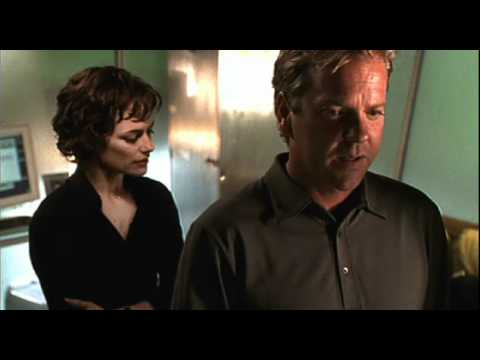
A high-octane Fox thriller that premiered November 2001, starring Kiefer Sutherland as CTU (Counter-Terrorism Unit) agent Jack Bauer. Each season depicts a single continuous 24-hour day with one episode per hour, complete with a ticking on-screen clock and split-screen "meanwhile" shots. The show's relentless pacing, cliffhangers, and post-9/11-era terrorism plots made it a cultural phenomenon that redefined the thriller format for television.