Pop Rocks

The fizzing candy that sparked an urban legend and somehow survived it. Pop Rocks were an instant hit in the '70s — until rumors claimed they'd explode your stomach if mixed with soda. The myth was completely false, but it didn't matter: by the '90s, the legend was half the reason kids wanted them.
Pop Rocks weren't a spontaneous invention — they were engineered. General Foods chemists William A. Mitchell and Leon T. Kremzner patented the carbonated-candy concept on December 12, 1961, and it took over a decade to reach stores. Test markets appeared in Canada in spring 1974, followed by the US retail launch in 1976. The candy hit immediately, at one point outselling competitors by as much as ten to one.
Success bred the legend. Pop Rocks' distinctive crackle came from the carbonation — the whole point — but that sensation became fuel for an urban myth that spread through school lunchrooms. The rumor claimed that Pop Rocks mixed with soda would cause a fatal explosion in your stomach, with the most famous version naming 'Mikey,' the kid from the Life cereal commercials, as a victim. The story was entirely false — Mikey (John Gilchrist) lived on — but it persisted because it almost made sense: two sources of carbonation sounded dangerous.
General Foods fought back in 1979 with letters to school principals, open letters to parents, and newspaper ads, pointing out that a package of Pop Rocks contains less gas than half a can of soda. The facts didn't matter. The rumor had weight, and demand collapsed anyway. Production ended in 1980, the candy seemingly killed by a false story.
Pop Rocks returned in 1986 when Carbonated Candy Ventures licensed the rights and brought it back to shelves, where it has remained since. But the legend returned with it. By the '90s, a new generation of kids was hearing the Mikey story whispered at lunch tables, always sworn to be true, always secondhand.
What lasted was the sensation: the crackle, the fizz, the foil packet, the moment of shared daring. Today owned and manufactured by Zeta Espacial S.A., Pop Rocks still carries the ghost of a myth that never killed anyone, still crackling on shelves, still part of the lunchroom ritual.
Similar items
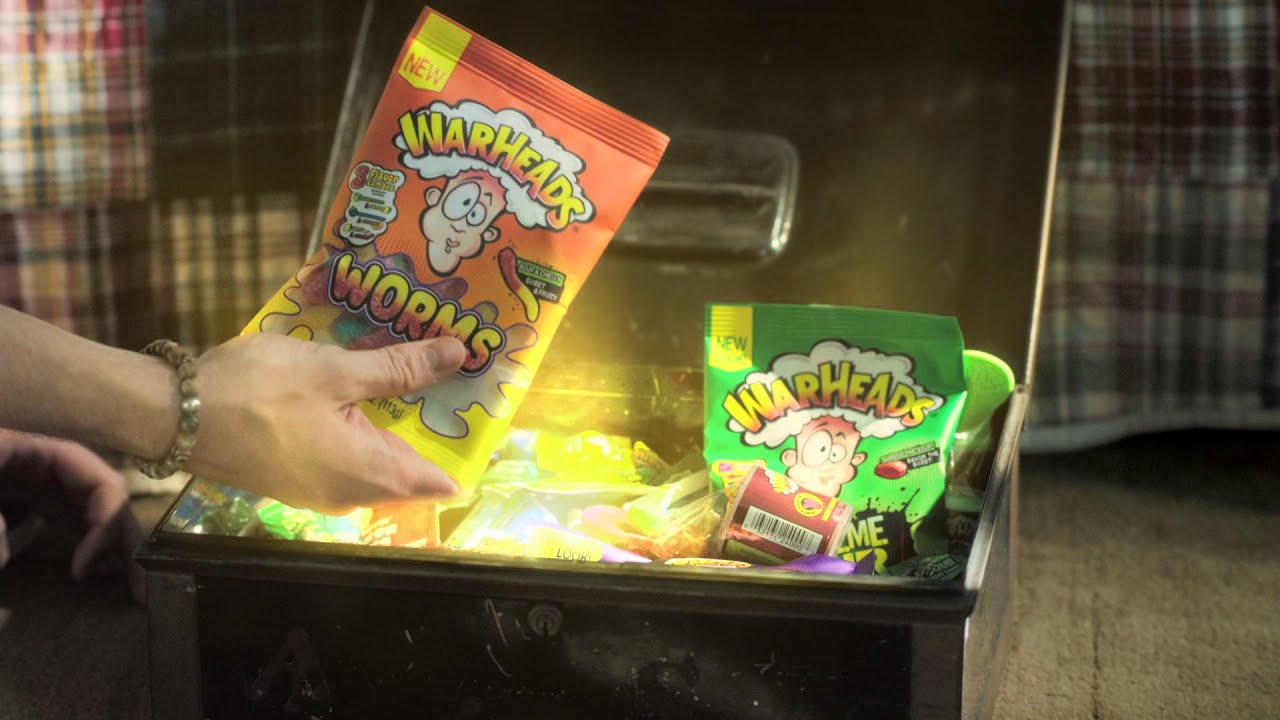
Warheads
The sour candy that burned your face off for five glorious seconds. Warheads turned the playground dare into a $40 million industry — keeping a straight face through the first ten seconds made you playground royalty.

Chain Emails
"FORWARD THIS TO 10 PEOPLE OR..." — the chain letter reborn at internet speed in 90s inboxes. Bad-luck threats, sick-kid legends, glurge poems, free-money hoaxes and virus panics, all forwarded with a wall of ">>>" quote marks and a hundred strangers' email addresses.

Airheads
The stretchy, tangy taffy bar in the loud mylar wrapper — Blue Raspberry stained your tongue, and White Mystery was a gamble by design. Fifty cents of pure lunchbox status.

Amazin' Fruit Gummy Bears
Hershey's entry into the gummy-bear wars, forever burned into memory by TV commercials of little bears who sang like a choir. For a lot of 90s kids, it was the first gummy bear they ever met.