Note Folding

The lost art of turning a torn sheet of notebook paper into a tightly folded packet — a triangle you could flick across the room, or a rectangle finished with a tucked corner someone had to pick loose — and passing it hand to hand when you couldn't just say it out loud. In a '90s classroom, a folded note was how a secret got three rows over.
Folding a message into a compact packet is a much older idea than the classroom made it look — soldiers folded triangular letters home long before the practice ever reached a school desk. But in American classrooms the folded note became its own quiet craft, at its height from the 1980s through the '90s and into the early 2000s, back when passing paper was the only way to reach a friend during a lecture without getting caught talking.
The two workhorse folds were the tight triangle — small and aerodynamic, built to be flicked across a room — and the accordion-folded rectangle finished with a tucked corner or pull-tab you had to work loose to read. Some notes came so intricately folded they were almost heartbreaking to open. There was never any official vocabulary for it; the folds passed kid to kid and picked up whatever informal names a given school happened to give them.
What killed the ritual is obvious in hindsight: the cellphone and the text message. Once a kid could reach anyone silently from any seat, the folded paper note stopped being necessary, and the whole art slipped quietly into nostalgia — kept alive now mostly by the occasional online how-to and the people who still remember exactly how to make the triangle lock.
Similar items
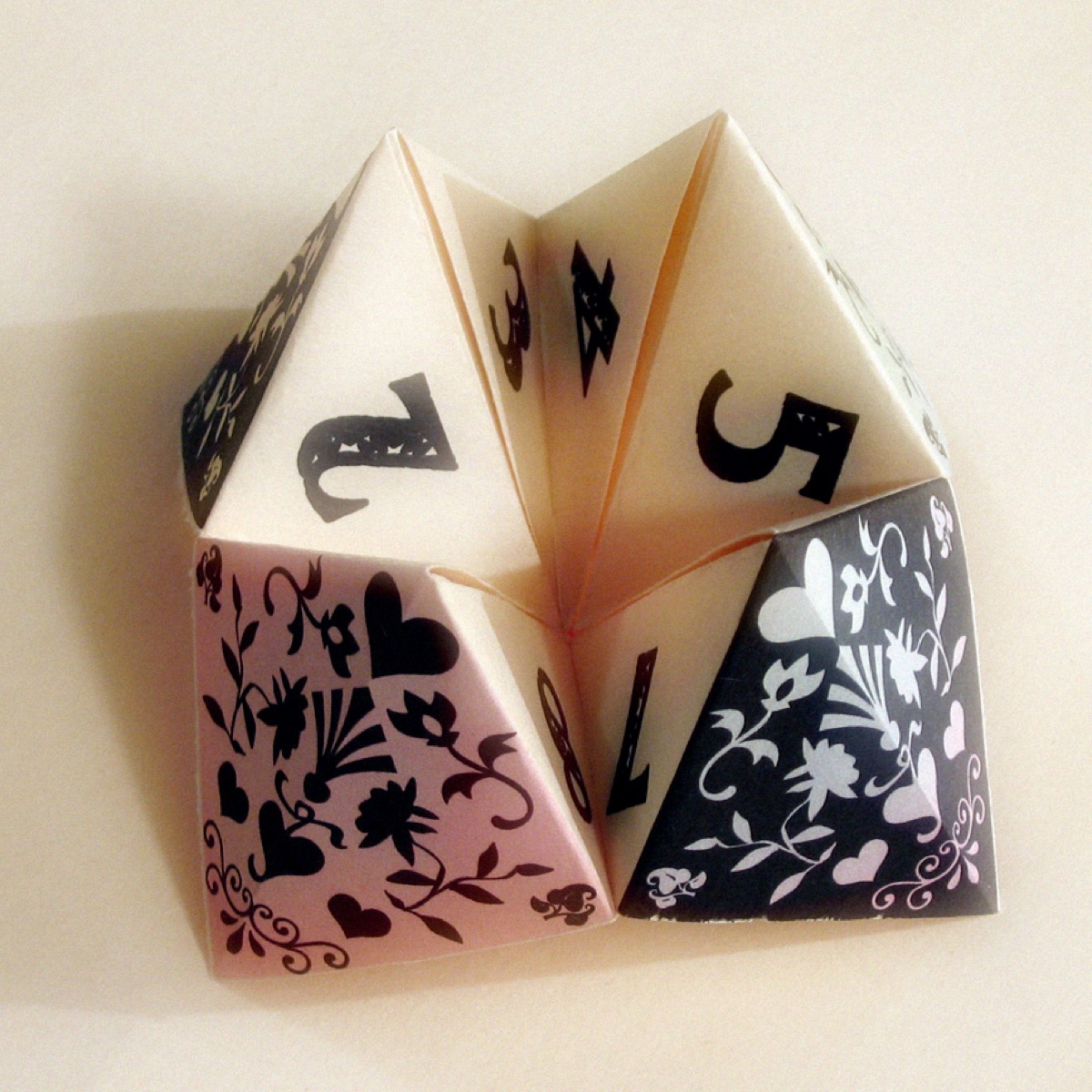
Paper Fortune Tellers
The folded-paper contraption you worked with your fingers to tell someone their future. Pick a color, pick a number, and under the last flap was your fate — who you'd marry, or something rude your friend had written. The classroom fortune-teller you could make out of a single square of notebook paper.

MASH
The pencil-and-paper fortune game that predicted your whole adult life in a few minutes: who you'd marry, what car you'd drive, how many kids you'd have, and — the joke of the whole thing — whether you'd end up in a Mansion, an Apartment, a Shack, or a House.
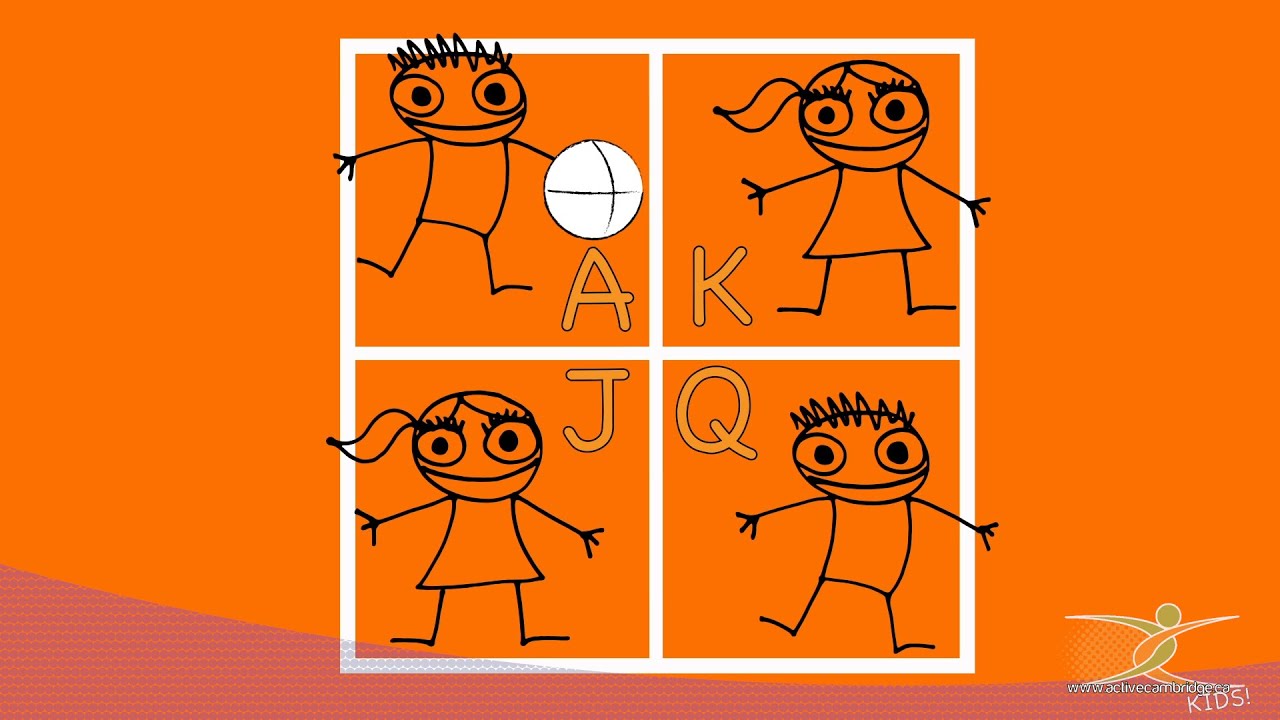
Four Square
The recess court painted in four big squares, ruled by whoever held the top square and whatever house rules they felt like declaring that day. Bounce the rubber ball into someone else's square, they had to hit it on before it bounced twice, and one blown return sent you to the back of the line while everybody moved up.
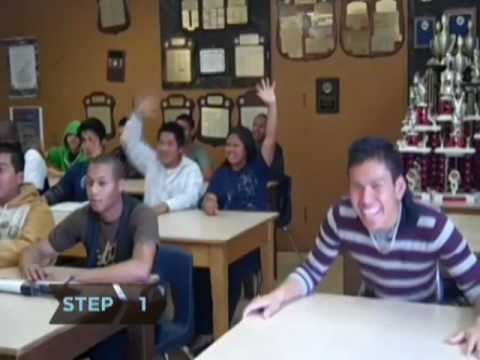
Heads Up, Seven Up
The rainy-day classroom game where seven kids crept up and down the aisles while everyone else put their heads down, eyes closed, one thumb up. Get your thumb pressed and you stood to guess who did it — a correct call and you took their place at the front. It was less a game than a way to survive an indoor recess.