NFL Street
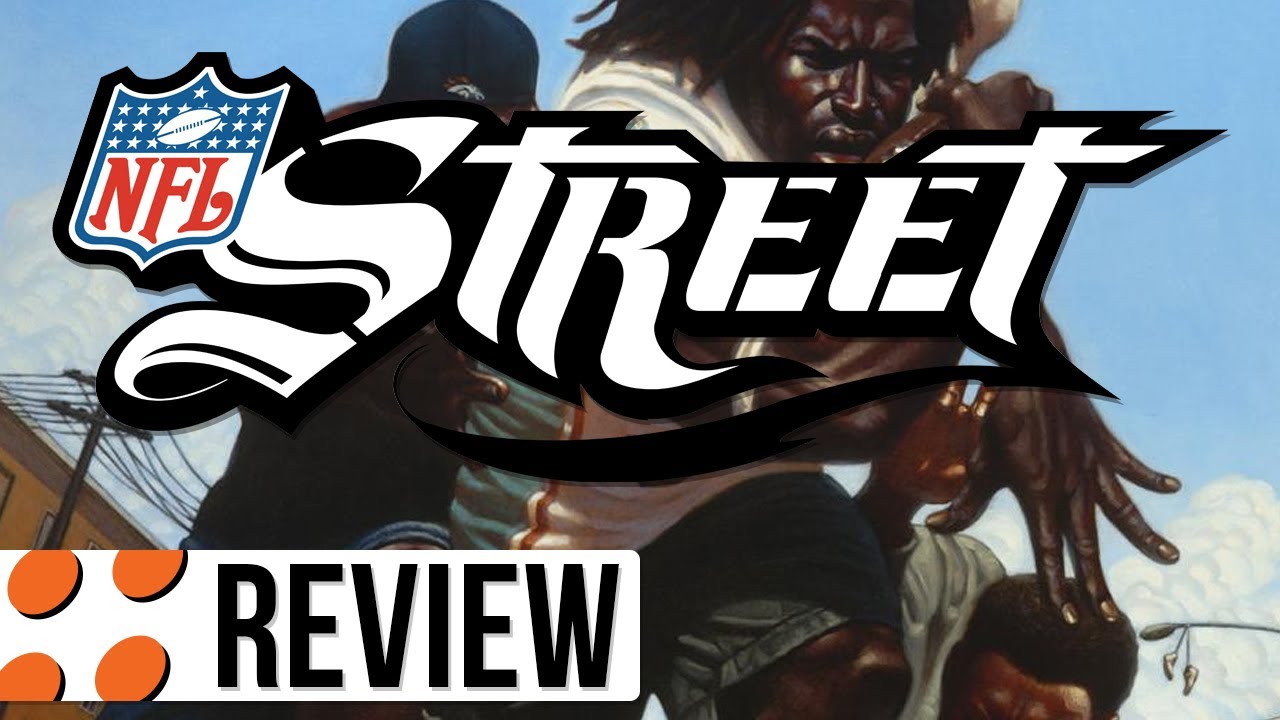
Seven-on-seven football with no penalties, no injuries, and no uniforms — just NFL players in street clothes talking trash on a concrete lot. Taunt the defense while you run and you fill the Gamebreaker meter. EA Sports BIG's 2004 answer to the question of what football looks like with all the rules taken out.
EA Sports BIG had already proven the formula on a basketball court. NBA Street arrived in 2001 under the same label — the division EA used for loud, arcade-styled takes on sports it otherwise simulated seriously — and it worked well enough that a football version was inevitable. NFL Street shipped on 13 January 2004 for PlayStation 2, Xbox, and GameCube.
The pitch was subtraction. It is seven-on-seven football modeled on street football, played without fouls, penalties, or injuries — and without kit, since the NFL players turn out in street clothes rather than uniforms. Taking the rules away makes it far more aggressive than the licensed sport it borrows its players from. The one mechanic everyone remembers is style: pull off big plays and taunt your opponents and you earn style points, which fill a meter and unlock a Gamebreaker. Trash talk isn't flavor text here, it is a button — and it costs you, because taunting while you run slows you down badly. The Gamebreaker itself was lifted wholesale from NBA Street, which EA never hid.
The most quietly funny fact about NFL Street is who made it: EA Tiburon, the studio that builds Madden. The same developer, wearing a different label, put out the game that threw away everything Madden is careful about. The irony is real — but the tidy "anti-Madden" reading is mostly retrospective. Contemporary reviewers reached for Midway's NFL Blitz as the comparison, and when they did invoke Madden it was as a yardstick Street fell short of: the Cincinnati Enquirer wrote that it lacked "the staying power of much deeper football games like EA's own Madden NFL 2004."
It reviewed well and sold well: Metacritic scores of 81 on Xbox and GameCube and 80 on PS2, roughly 950,000 copies of the PS2 version in the US by mid-2006, and around two million across all three platforms. Sequels came quickly — NFL Street 2 in December 2004, then NFL Street 2 Unleashed on PSP in 2005.
And then it simply stopped. NFL Street 3 arrived on 14 November 2006 for PS2 and PSP only; it never made the jump to the Xbox 360 or PlayStation 3, and no fourth game followed. EA never publicly explained the end, and it is worth resisting the tidy explanation: the exclusive NFL license EA signed in December 2004 is often blamed, but that deal locked rivals out of arcade-style football as surely as it did simulations — it protected Street rather than threatening it — and two more Street games shipped under it. What actually happened is less dramatic — the EA Sports BIG franchises mostly ran out of road early in the PS3 and Xbox 360 generation, and the series stayed behind on the consoles it was born on.
Similar items
![Video thumbnail — [Nintendo 64] NFL Blitz TV Commercial](https://i.ytimg.com/vi/KwSb_-1bsFo/hqdefault.jpg)
NFL Blitz
The arcade football game that threw the rulebook in the trash: seven-on-seven, 30 yards for a first down, no penalties, and late hits actively encouraged — you could body-slam a guy well after the whistle. From the NBA Jam bloodline, with the same announcer energy: "DA BOMB!"

NBA Jam
"BOOMSHAKALAKA!" Midway's two-on-two arcade basketball threw out the rulebook — players leapt three times their own height, shoved each other to the floor, and burst into flames after three straight buckets. It was loud, ridiculous, and impossible to walk past without feeding it a quarter.
![Video thumbnail — Playstation 9 - 2000 PS2 Commercial [High Quality]](https://i.ytimg.com/vi/NyvD_IC9QNw/maxresdefault.jpg)
PlayStation 2
The black rectangle that invaded living rooms worldwide as an affordable DVD player and happened to pack the best game library ever assembled. With over 155 million sold—the best-selling console of all time—the PlayStation 2 didn't just dominate gaming; it became the era's default home entertainment hub.

Nintendo GameCube
The small cube-shaped Nintendo console with a built-in carry handle, released November 2001. Indigo or purple exterior, proprietary MINI-DVD discs, and an oversized green A button that defined its controller. Super Smash Bros. Melee, Mario Kart: Double Dash, Metroid Prime, and The Legend of Zelda: The Wind Waker were system-defining hits.