Microsoft Bob

Microsoft's 1995 attempt to replace the Windows desktop with a cartoon house, a dog named Rover talking in speech balloons, and a checkbook on the desk. It sold about 58,000 copies, died within a year, and left behind Clippy and Comic Sans.
Bob was Microsoft's attempt at a computer for people who had never used one: a friendlier layer meant to sit on top of Windows 3.1 and replace the Program Manager. The project, codenamed Utopia, was led by researcher Karen Fries, who had conceived it with Barry Linnett after they finished Microsoft Publisher, and it drew on the work of Stanford professors Clifford Nass and Byron Reeves on how people respond socially to machines. Its marketing manager was Melinda Gates, who had married Bill Gates the year before. Gates himself introduced Bob at the Consumer Electronics Show in January 1995, and it shipped in March for $99.
Instead of a desktop, Bob showed the inside of a house. Rooms held familiar objects that launched programs: a pen and paper for the word processor, a clock for the calendar, a checkbook for the finance app. Users could redecorate and add rooms. Cartoon guides sat in the corner offering advice in word balloons; the default was a dog named Rover, with alternatives including a French cat, a rabbit, a gargoyle, and William Shakespeare. Bob even bundled a dial-up email account through MCI Mail.
The press hated it. The New York Times found the characters irritating and the house the apparent work of an "esthetically challenged sixth-grader"; the Washington Post called the environment "sterile" and "lifeless." Bob needed a 486 with 8 megabytes of RAM and 30 megabytes of disk, and Melinda Gates said years later that it "needed a more powerful computer than most people had back then." Microsoft had hoped for millions of sales like Works or Encarta; PC Data counted about 58,000. It was discontinued in early 1996, and only one add-on, Great Greetings, was ever released.
Bob became the company's most famous flop, seventh on PC World's list of the 25 worst tech products and Time magazine's example of an "operating system designed around Clippy." That is the legacy: Bob's guides inspired Clippit, the Office assistant, and Rover returned as the Windows XP search companion. Designer Vincent Connare, seeing a Bob beta with Times New Roman in the speech balloons, drew a font that fit a cartoon dog; it missed Bob's ship date and debuted elsewhere as Comic Sans. Bob was also, per Microsoft's Raymond Chen, encrypted onto Windows XP CDs as filler to make the discs harder to pirate over dial-up.
Similar items
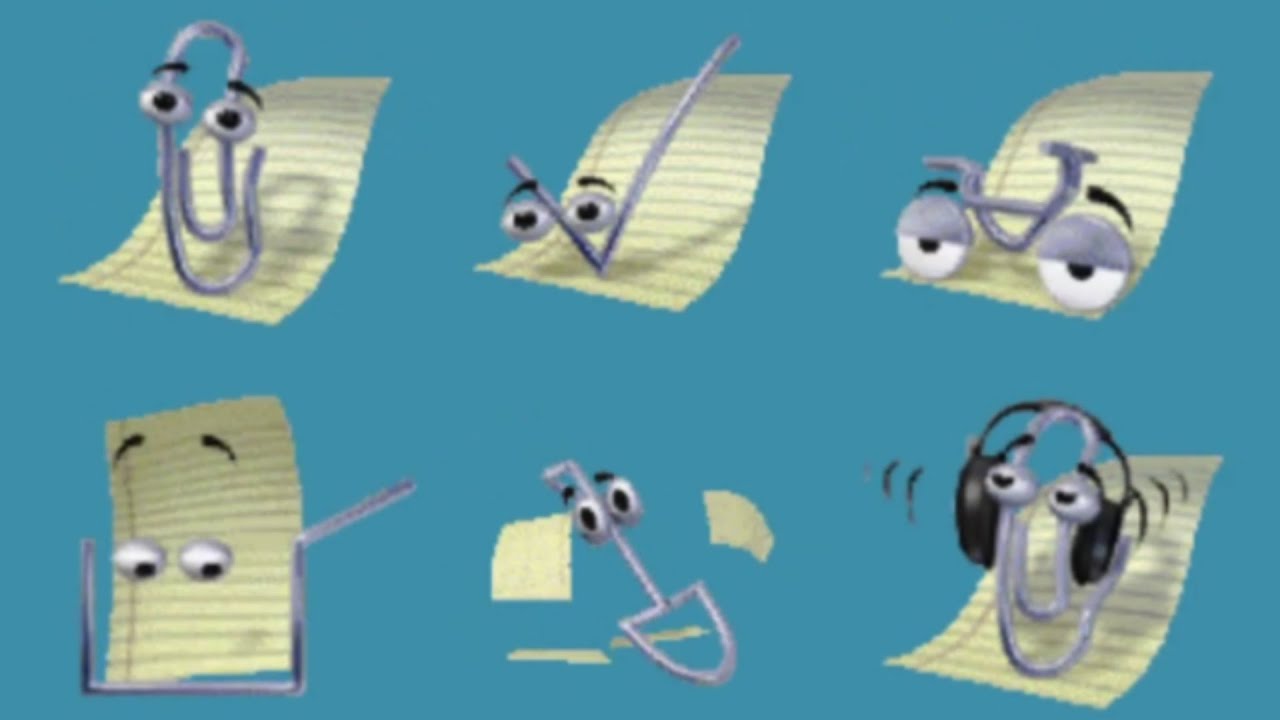
Clippy
"It looks like you're writing a letter. Would you like help?" Clippy, Microsoft Office's animated paperclip assistant, was the most helpful thing nobody asked for — so universally mocked that Microsoft built an ad campaign around firing him, and so fondly remembered that he came back as an emoji.

Microsoft Encarta
The CD-ROM encyclopedia that killed the twenty-volume set on the shelf. Encarta turned book reports into a multimedia experience — clickable maps, audio clips of national anthems and animal sounds, video snippets — and hid the MindMaze trivia game inside for when you were supposed to be studying.

Windows XP
The operating system with the rolling green hill wallpaper—Windows XP arrived in October 2001 with Luna's glossy blue taskbar, the green Start button, and the cheerful startup chime that defined a generation's relationship with computers. It was stable, beloved, and so enduring that users clung to it long after Microsoft stopped supporting it, making it the most iconic OS of the 2000s.

Windows Movie Maker
That star-wipe transition. Title cards in Comic Sans. Every school project, every vacation montage, and countless early YouTube videos were cut in the editor that came free with your computer. Windows Movie Maker didn't invent video editing — it just made it something any kid could actually do.