Mario Paint

The Super Nintendo game that came with a mouse. You drew pictures, animated little loops, swatted flies, and wrote songs by dropping Mario heads and cat meows onto a music staff — and if you were serious, you recorded the results to the VCR. Decades later its goofy little music maker became a YouTube genre all its own.
Mario Paint came out in Japan on July 14, 1992, and in North America that August 17, developed by Nintendo R&D1 and Intelligent Systems, produced by Gunpei Yokoi, whose R&D1 team had made the Game Boy, and directed by Hirofumi Matsuoka. It wasn't really a game so much as a box of art supplies, and the box literally included the Super NES Mouse and a mouse pad, because everything in it was built to be clicked.
There was a drawing board with 15 colors, 75 patterns, pens, an airbrush, stamps and nine different animated ways to wipe the whole canvas; a coloring book; a stamp editor for building your own pixel art; and Animation Land, where you could make four-, six- or nine-frame loops and send them along a path. Finished work could be recorded to a VCR. The undo button was a dog, named Undodog. Even the title screen was a toy — clicking each letter of the logo set off a different gag — and to teach you the mouse there was Gnat Attack, a fly-swatting minigame in which you squashed 100 bugs and then fought a boss named King Watinga.
Then there was the music composer. You placed icons on a staff, where Mario's head was a piano, and the other sounds included a Yoshi "zip," a dog bark, a cat meow, a pig oink and a baby hiccup. There were no sharps or flats, so everything lived in C major or A minor, and you got three notes per beat, maximum. Limitations like that are exactly what make people obsessive.
The Mario Paint package sold more than a million units by March 1993 and over 2.3 million in all, putting it among the best-selling SNES titles. Its afterlife has been stranger and longer. The first Homestar Runner cartoon, in 1996, was animated in Mario Paint. Since the early 2010s, a whole online culture has grown up around covers made in the composer and in fan programs that replicate it, like Mario Paint Composer — a rendition of Daft Punk's "Get Lucky" drew press coverage. Super Mario Maker (2015) was originally envisioned as a Mario Paint title for the Wii U, and brought back both Gnat Attack and Undodog. Nintendo finally re-released the original on its Nintendo Classics service on July 29, 2025.
Similar items

Super Nintendo (SNES)
Nintendo's 16-bit powerhouse that dominated the early 1990s and fought the Sega Genesis for console supremacy. Launched in North America at $199 in August 1991, it came packed with Super Mario World and helped define a generation of gaming with over 49 million units sold worldwide.

Super Mario World
The SNES launch title that introduced Yoshi and redefined what a platformer could be. Mario's dinosaur companion, cape-feather flight, and the hunt for all 96 exit-goals kept millions of players glued to their TVs throughout the decade.

Kid Pix
Broderbund's gloriously chaotic kids' drawing program — the one with the honking sound effects, the rubber stamps, and the stick of dynamite that blew your whole picture apart in a burst of black-and-white circles. For a generation of 90s kids it was the first "art" they ever made on a computer.
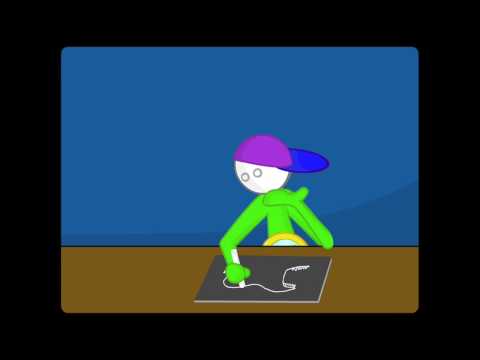
Homestar Runner
The Flash cartoon empire that ran on merch and goodwill — no ads, ever. The Chapman brothers' site built its voice through Strong Bad's absurd email replies, one of which spawned Trogdor the Burninator, a scribbled one-armed dragon that became internet legend.