Mancala
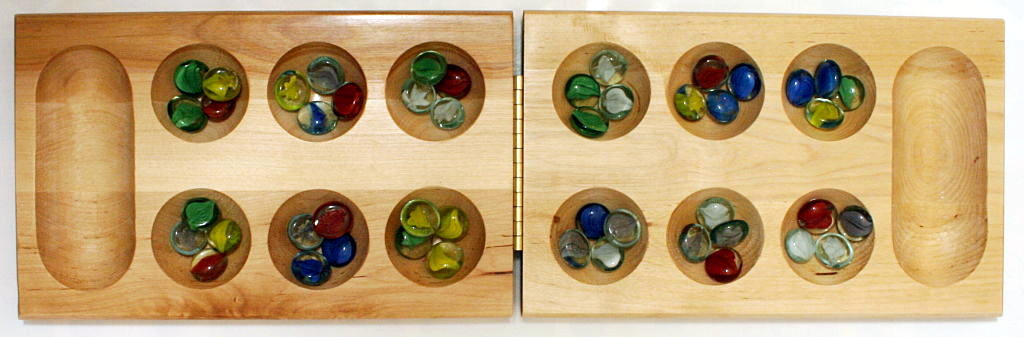
Photo credit: Photo: Cburnett, CC BY-SA 3.0, via Wikimedia Commons
The ancient two-player sowing game with wooden folding boards and little glass gem stones. A classroom staple, a doctor's-office fixture, and proof that you don't need batteries or fancy graphics to spend an afternoon completely absorbed.
Mancala is one of the oldest games in the world — a family of "count and capture" sowing games with ancient roots across Africa and the Middle East. But for kids in the 1990s, it was the wooden folding board with little glass gems sold by makers like Pressman, the ubiquitous US producer. The game turned up everywhere: in elementary school classrooms during indoor recess, in doctors' waiting rooms to keep kids occupied, on the shelves of living rooms as the default rainy-day choice.
The rules are deceptively simple. You scoop stones from one of your pits and "sow" them one by one into the following pits around the board, banking stones in your store (side pit) as you pass — land your last stone there and you earn an extra turn; land it in an empty pit on your side and you capture everything sitting opposite. Whoever collects the most stones wins. No batteries, no timer, no luck at all — it's pure strategy, endlessly replayable, and easy enough for a six-year-old to learn but deep enough to stay engaging. Mancala thrived in the 1990s as the analog counterweight to rising video games: the game that required nothing but two players, a board, and an afternoon.
Similar items

13 Dead End Drive
The booby-trap board game where you inherited a fortune by making sure everyone else met an 'accident' first. A tipping portrait, a falling chandelier, a trap door — you sprang them on your rivals' characters and hoped the detective arrived to find you holding the winning card.

Atmosfear
The VHS board game where the TV was the enemy. A ghoulish host called the Gatekeeper glared out of your screen, barking orders and taunts, while a 60-minute tape counted down and you scrambled to win before he did. You played in the dark, against your own television.
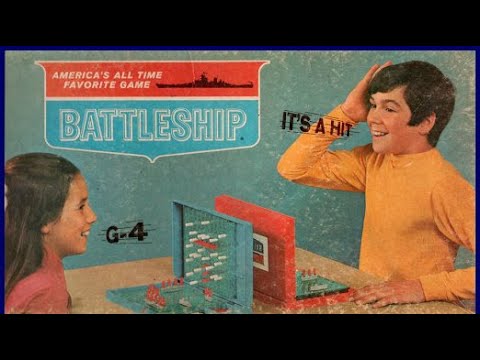
Battleship
B-4. Miss. E-7... hit. The two-player naval standoff of gray plastic ships, red and white pegs, and the flip-up case that hid your fleet from your opponent — capped, if you were lucky, by getting to crow the line from the commercials: "You sank my battleship!"

Connect Four
The upright blue grid, the clack of checkers dropping down the slots, and the gasp when someone spots a diagonal you didn't. Connect Four was the fastest fight you could pick at a kitchen table — and losing meant watching your opponent yank the release bar and rain your defeat onto the floor.