Lolcats / I Can Has Cheezburger?

A grey cat with a caption. In 2007, a website launched around a single image of a cat asking "I can has cheezburger?" — broken English, instant appeal, zero cynicism. Within months the site was pulling over a million hits a day, and a niche 4chan tradition became a phenomenon covered by Time magazine. Lolcats became the grammar of internet humor for a decade, the template for every image macro that followed.
People were captioning cat photos as far back as the 1870s — the practice never really ended. On 4chan in early 2005, it got a schedule: the "Caturday" tradition of posting cats on Saturdays. By June 2006 the word "lolcat" was in use, and the grammar was set: broken English ("I'm in ur base," "oh hai"), simple demands, maximum attitude.
On January 11, 2007, Eric Nakagawa and Kari Unebasami launched I Can Has Cheezburger?, built around a single photo of a grey cat captioned "I can has cheezburger?" — an image traced back to the comedy site Something Awful. Within months the site was peaking at 1.5 million hits a day; by January 2008 it drew around 8,000 caption submissions a day. In September 2007 an investor group bought it for $2 million, and it became the flagship of the Cheezburger Network led by Ben Huh, whose stable also included FAIL Blog and Know Your Meme. Time magazine and the rest of the mainstream press covered the craze through 2007.
The lolcat became the template for the image-macro era — the formula of a photo, broken English, and attitude that worked on cats, dogs, FAIL screenshots, anything. What mattered wasn't the subject but the voice. By the time the peak faded, lolcats had shaped how the internet spoke, and every meme format since owes something to a hungry grey cat.
Similar items
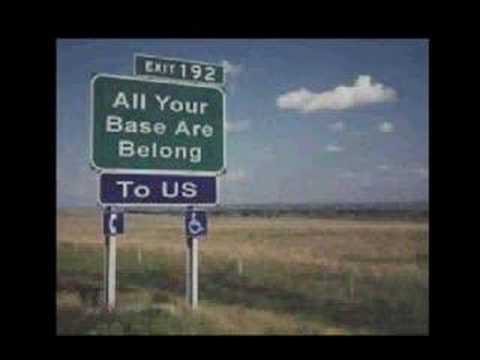
All Your Base Are Belong to Us
A hilariously broken line of video-game English that became one of the internet's first true memes. In February 2001, a techno remix and a Newgrounds video put 'All your base are belong to us' on forum signatures, Photoshopped billboards, and eventually YouTube's own maintenance page.

eBaum's World
The early-2000s comedy and media dump every kid browsed instead of doing homework. Flash cartoons, prank-call soundboards, funny clips, and simple games — all stamped with the site's inescapable watermark, which became the running joke and the scandal at once.

Early YouTube
The video platform that made viral content a daily ritual. YouTube launched in 2005 as low-res, ad-free, and gloriously weird—a space where "Lazy Sunday," "Chocolate Rain," and "Charlie Bit My Finger" became the lingua franca of internet culture.

Chuck Norris Facts
Chuck Norris can divide by zero. The absurdist one-liner engine of 2005 colonized forum signatures, email chains, and lunchrooms — hyperbolic "facts" about one man's toughness that became a shared vocabulary for the whole internet.