Hatchet
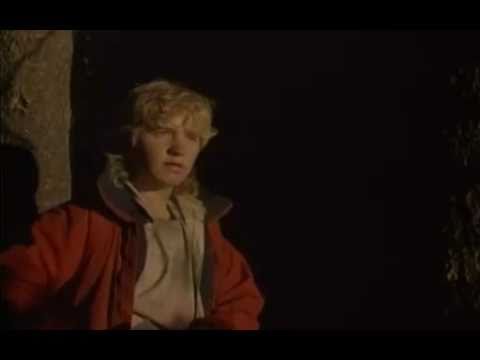
Gary Paulsen's 1987 survival novel about a thirteen-year-old crash-landed alone in the Canadian wilderness with nothing but a hatchet — the book that convinced a generation of middle schoolers they could survive in the woods if they just tried hard enough.
Gary Paulsen's Hatchet, published in September 1987 by Bradbury Press, introduced readers to Brian Robeson, a thirteen-year-old whose small bush plane crashes in the Canadian wilderness. With only the hatchet his mother gave him, he has to figure out fire, shelter, and food while battling mosquitoes, a moose, and his own panic. The book's genius was making survival feel both brutal and achievable — each small victory (a successful fire, his first fish, a workable shelter) arrived after genuine trial and error, not Hollywood montage. Fifty-four days alone in the woods, and Brian learns not just to survive but to think differently about the world.
A Newbery Honor in 1988 helped launch the book, and by the 1990s it was THE middle-school assigned read — the one nearly every American student met in English class. Paulsen had tapped something primal: the fantasy that you could actually do this if you had to. A generation of 90s kids imagined themselves in Brian's position, confident in a way only twelve-year-olds can be that they'd absolutely make it.
Paulsen kept the story alive through the decade and beyond with the Brian's Saga sequels: The River (1991) sent Brian back to the wild, and then came the beloved what-if — Brian's Winter (1996), which imagined he was never rescued before the snow fell, a darker and hungrier extension for readers who'd bonded with him. Brian's Return (1999) and Brian's Hunt (2003) closed the arc, spanning their original readers' own journeys from elementary school into young adulthood.
A 2012 School Library Journal survey ranked Hatchet 23rd among the top 100 children's novels of all time. It remains a curriculum staple — not because of fancy prose, but because it taught a generation what resilience feels like on the page.
Similar items

The Giver
Lois Lowry's 1993 dystopian novel about a boy chosen to receive all of human memory and emotion in a world stripped of both — and the devastating truth he discovers about 'release.' A generation's introduction to questioning authority, delivered via the middle-school curriculum.

The Boxcar Children
Four orphaned Alden siblings turn an abandoned boxcar in the woods into a home — and when their kindly grandfather finds them, he just moves the boxcar to his backyard. Gertrude Chandler Warner's 1924 classic became a 90s classroom juggernaut after ghostwriters revived the series in 1991, on the way to more than 160 titles.

Scholastic Book Club Order Forms
The monthly newsprint order form that landed on your desk — a tabloid catalog of paperbacks you circled with a stubby pencil, then begged your parents to fund. Ordering meant handing your teacher the torn-off form and some crumpled bills; the payoff was delivery day, when a stack of new books arrived with your name on it.

Cloudy with a Chance of Meatballs
The picture book about the town of Chewandswallow, where the weather came three times a day as food falling from the sky. Breakfast, lunch, and dinner rained down until the portions got dangerously big. A read-aloud staple that every elementary-school kid seemed to meet at some point.