Free Nights & Weekends

The entire cell-phone economy of the 2000s, distilled into one ritual: watching the clock tick toward 9 p.m. so a call wouldn't burn a daytime minute. Anytime minutes were precious. Nights and weekends were free. Every family had someone doing the math.
Throughout the 2000s, cell plans were built on scarcity: a small bucket of "anytime minutes" for peak hours, plus unlimited — or nearly unlimited — minutes on nights and weekends. The boundary, typically 9 p.m., shaped household behavior. Families rationed daytime calls and queued up conversations for 9:01; blowing past the anytime bucket meant brutal overage charges on the family bill, and the monthly reckoning — "who used all the minutes?!" — became a standing domestic argument. Some carriers even sold an earlier nightfall, 7 p.m., as a premium upgrade: actual money, paid to move dinnertime.
Texting spread through the same years partly because it lived outside the minute meter — a generation learned to type instead of call. By the end of the decade the scarcity model itself collapsed as unlimited-talk plans took over, and the whole ecosystem of clock-watching quietly vanished. What endures is the muscle memory: standing in the kitchen at 8:58, phone in hand, waiting for the minutes to become free.
Similar items
![Video thumbnail — Jamster Sweety the Chick Mobile Ringtone commercial [2005, HQ]](https://i.ytimg.com/vi/DZr8xVZATk8/maxresdefault.jpg)
T9 Texting & Ringtones
Typing "home" and getting "good," texting blind from inside your pocket, and a computerized frog selling ringtone subscriptions between every cartoon. The whole keypad-phone universe, in one glorious, beeping memory.
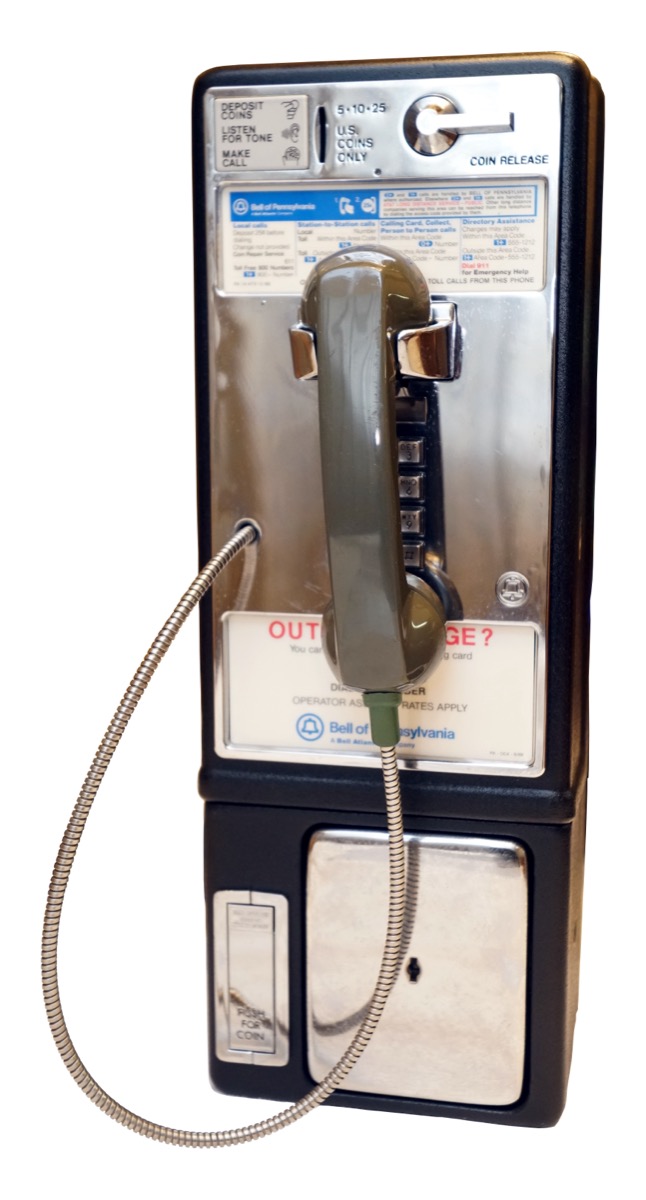
Pay Phones
Coin-operated public telephones on street corners, in malls, and outside every gas station — the fallback when you needed to call home or were out of pocket change. At their 1990s peak, the US had over 2 million payphones; by the 2010s, they'd nearly vanished.

Nokia 3310
The brick phone that became a meme—Nokia's 3310 was the phone that survived drops that would kill any modern device. Released in 2000 and sold over 126 million times, it was famous for its indestructibility, the built-in Snake II game, interchangeable colored covers, and the iconic Nokia tune ringtone. It was the anti-smartphone years before the smartphone era, representing the peak of durable simplicity.

Motorola Razr
The Razr V3 launched in late 2004 as the world's thinnest clamshell phone at a shocking $500. Its anodized-aluminum body, laser-etched keypad, and impossible thinness made it a fashion statement. When the price dropped in 2005–2006, everyone had one—and snapping it shut after a call was the whole point.