Dippin' Dots
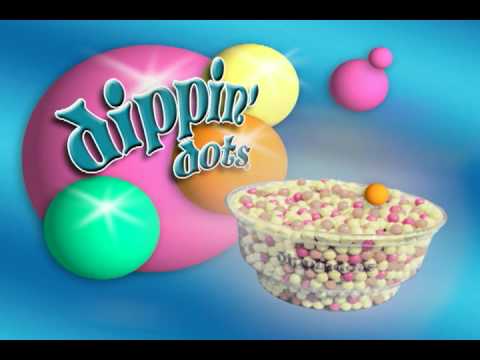
Beaded "ice cream of the future" invented in 1988 by microbiologist Curt Jones, who flash-froze ice cream mix in liquid nitrogen into tiny spheres. Served in a cup and eaten with a spoon, Dippin' Dots became a quintessential 1990s amusement park and mall treat — a novelty that felt futuristic and tasted like the 90s.
Curt Jones invented Dippin' Dots while researching cryogenic processing for cattle feed. The breakthrough came when he realized the same flash-freezing technique used to preserve cattle feed could transform ice cream into tiny, uniform beads that stayed frozen far longer than conventional scoops. The mix was flash-frozen in liquid nitrogen (around −321°F), and the finished beads then had to be stored and shipped at extremely cold temperatures (well below −40°F, far colder than a conventional grocery-store freezer), so they couldn't be sold through traditional grocery-store channels. Instead, Jones pioneered a new vending model: specialized freezer carts and kiosks stationed at high-traffic locations where the novelty factor justified the premium price.
Dippin' Dots hit the market in 1988, but the brand exploded during the 1990s. By 1995, Jones had opened 150+ outlets across 33 states, with a heavy concentration in malls, amusement parks, county fairs, and sports stadiums. The product's appeal was threefold: the futuristic aesthetic (marketed as "ice cream of the future"), the novelty of the texture and the ritual of eating them with a spoon, and the premium pricing that made them a special-occasion treat. The brand became synonymous with 90s mall culture and carnival nostalgia—a signifier of childhood wandering and treat purchases.
While the initial boom cooled in the early 2000s, Dippin' Dots never fully disappeared. The company adapted, expanded its flavor palette, and remained a fixture at theme parks and fairgrounds. The brand is still operating today, though its peak cultural moment was undoubtedly the 1990s, when the term "ice cream of the future" felt aspirational rather than ironic.
Similar items
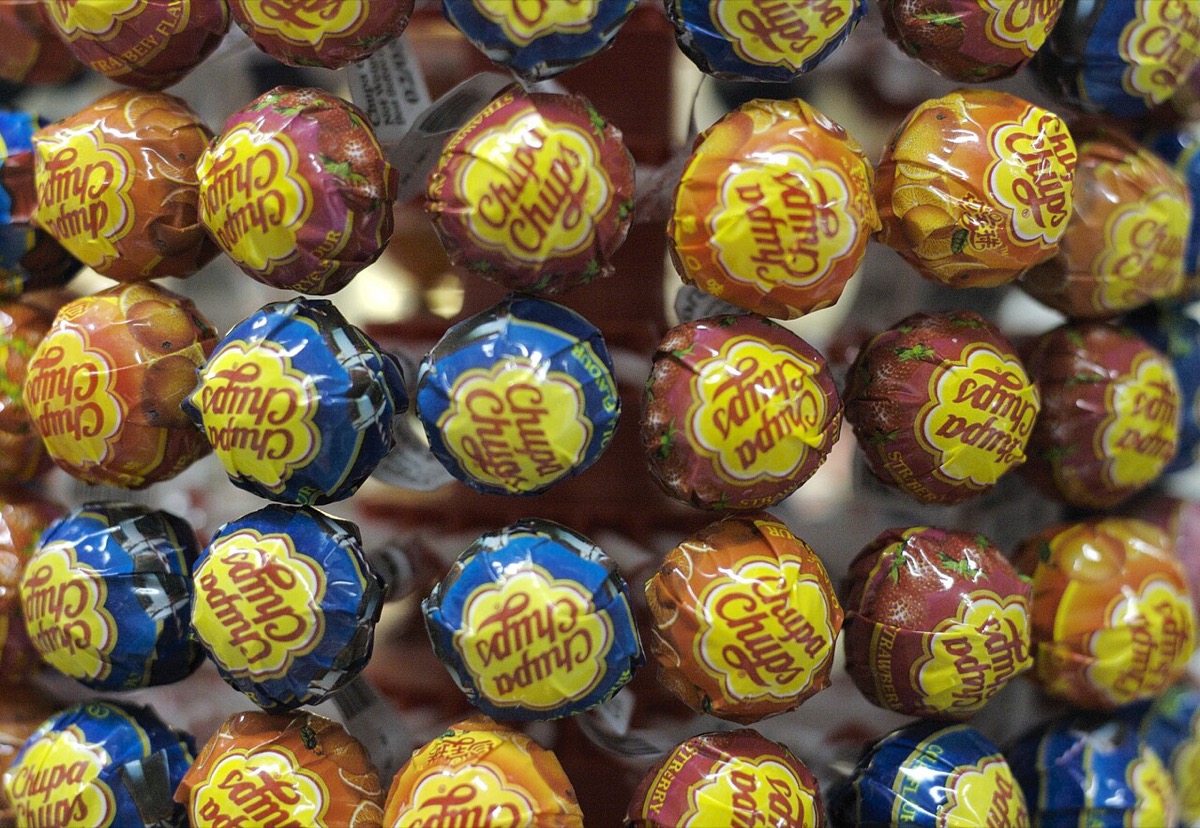
Chupa Chups
The Spanish lollipop with the unforgettable daisy-shaped logo designed by Salvador Dalí. The round candy on a stick solved a kid's eternal problem — no sticky hands — and the distinctive red-and-white wrapper with a centered daisy became one of the world's most recognizable candy marks.

Mountain Dew Baja Blast
A teal-colored tropical-lime Mountain Dew created by PepsiCo and born as a Taco Bell fountain exclusive in 2004. The exclusivity gave it instant cult appeal—you could only get it at the Bell, which made every trip feel like a special occasion. Fans begged for wider release, clamored online, and eventually got their wish: bottled and retail runs, though the Taco Bell version remained the holy grail. A pure 2000s fast-food icon.

Bubble Play
Good Humor's baseball-glove ice-cream pop, with a bubble-gum "baseball" tucked in the mitt. A mid-'90s ice-cream-truck treat that paired a frozen cherry glove with a gumball prize — then quietly vanished.

Chipwich
Two thick chocolate-chip cookies hugging a slab of vanilla ice cream. Invented by a New York lawyer and launched off a fleet of Manhattan street carts, the Chipwich made the ice cream sandwich a handheld event.