Digg

The social-news front page of the mid-2000s web, where users submitted links and "dugg" them up or buried them. A single spot on the front page could bury a small website under a flood of traffic — and then a redesign everyone hated handed Digg's entire audience to Reddit.
Kevin Rose co-founded Digg with Owen Byrne, Ron Gorodetzky, and Jay Adelson, launching it on December 5, 2004. The pitch was democratic news: users submitted links, everyone voted them up ("digg") or down ("bury"), and the most-dugg stories rose to a front page curated entirely by the crowd instead of editors.
By 2008 Digg's homepage drew over 236 million visitors a year, and a front-page link could unleash the "Digg effect" — a traffic surge that routinely knocked smaller sites offline. Its community showed its teeth in May 2007, when Digg tried to delete posts sharing the AACS encryption key used to crack HD DVD copy protection; users buried the entire site in the forbidden number until management reversed course and let it stand.
The end came from within. The August 25, 2010 "v4" redesign stripped out beloved features, broke constantly, and looked to many like it favored big publishers over ordinary users. The backlash was instant: Reddit's traffic grew 230% that year while Digg's cratered, and by mid-2012 its monthly visitors had collapsed roughly 90% from their peak. Betaworks bought the gutted brand for $500,000 in 2012. Kevin Rose and Reddit co-founder Alexis Ohanian repurchased Digg years later and relaunched it, but the thing it defined — social news, crowd-voted, before the algorithms took over the feed — belongs to the 2000s.
Similar items

MySpace
MySpace launched in August 2003 and became the social network that swallowed the mid-2000s internet — where everyone's first friend was Tom. Top 8 rankings sparked drama, profile songs played on auto-load, and DIY HTML customization meant glitter graphics and autoplay music ruled. Bands broke careers there; it was the most-visited website in the US by 2006.

FML (FMyLife)
"Today, [something humiliating happened]. FML." The confessional site where strangers shared their tiny daily disasters as one-sentence anecdotes, and you voted on whether their life truly sucked — or whether they totally deserved it. The three-letter sign-off outgrew the website and became everyday slang.

AltaVista
The search engine everyone used before Google — fast, powerful, and the first with a full-text, boolean-searchable index of the web. It also gave the world Babel Fish, the free page-translator named after the fish from The Hitchhiker's Guide to the Galaxy.
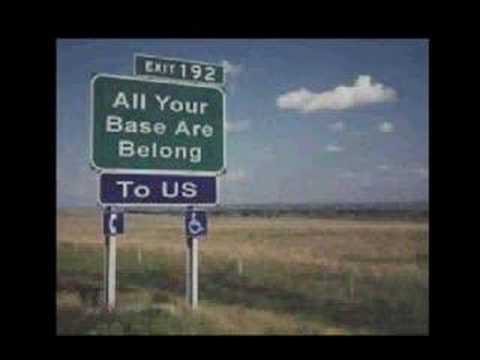
All Your Base Are Belong to Us
A hilariously broken line of video-game English that became one of the internet's first true memes. In February 2001, a techno remix and a Newgrounds video put 'All your base are belong to us' on forum signatures, Photoshopped billboards, and eventually YouTube's own maintenance page.