Dashboard Confessional

One guy, one acoustic guitar, and a room full of teenagers singing "Screaming Infidelities" louder than he could. Chris Carrabba was the poster boy of early-2000s emo, and the sing-along at a Dashboard show was the whole point.
Chris Carrabba was born April 10, 1975, in West Hartford, Connecticut, moved to Boca Raton, Florida, at 16, studied education at Florida Atlantic University and spent several years working at a South Florida elementary school while fronting the band Further Seems Forever. Dashboard Confessional began as a side project away from that band: "I was going through something really tough at the time and since I don't write in a journal, this is what I did with it," he said. A friend with a small label talked him into recording, and The Swiss Army Romance came out on Fiddler Records in March 2000 in a run of 1,000 copies. The name came from a lyric on it, "On the way home, this car hears my confessions."
Fiddler's owner, Amy Fleisher, sold the album on to Drive-Thru Records, then went to work at Vagrant and pressed her boss, Rich Egan, to listen; he called it the most refreshing indie rock he had heard in forever, Carrabba signed with Vagrant, and Drive-Thru threatened to sue. He left Further Seems Forever in October 2000, and The Places You Have Come to Fear the Most, released March 20, 2001, became Vagrant's best-selling record. "Screaming Infidelities" reached number 22 on the alternative chart in May 2002 and won the MTV2 award at that year's Video Music Awards, beating Norah Jones, the Strokes and the Hives.
What happened at the shows was the real story. "At Dashboard shows, everyone sings along with Carrabba at absurd volume," Spin wrote in a 2003 cover story. "Carrabba runs his voice ragged and lets a roomful of fans find theirs." MTV2's Alex Coletti marveled at "thousands of kids who know every word without any radio play," and Carrabba became the first artist without a platinum record to tape an MTV2 Unplugged 2.0 episode; the album, released December 17, 2002, topped the Heatseekers and independent charts. With a full band of Scott Schoenbeck, John Lefler and Mike Marsh now official, A Mark, a Mission, a Brand, a Scar peaked at number two in 2003 behind "Hands Down," a song Carrabba introduces on stage as being about the best day and date he ever had. In 2004 he wrote "Vindicated" in ten minutes after a screening of Spider-Man 2, and it played over the end credits.
Dusk and Summer, produced by Daniel Lanois, arrived June 27, 2006, and the band has kept releasing records through 2022's All the Truth That I Can Tell. AllMusic calls Carrabba "the poster boy for a generation of emo fans in the early 2000s"; Variety went with "crowned king of the sad boys." Both are right.
Similar items
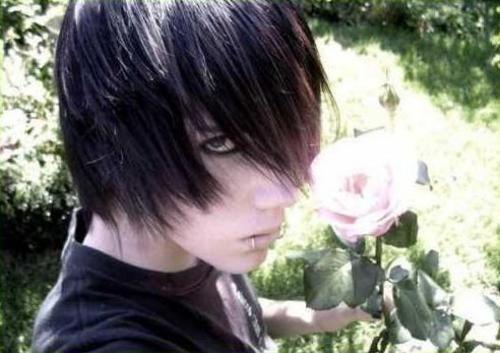
Emo / Scene-Kid Wave
The mid-to-late-2000s youth subculture built around emo and pop-punk bands like My Chemical Romance, Fall Out Boy, Panic! at the Disco, and Dashboard Confessional. The look: long side-swept bangs over one eye, black skinny jeans, band tees, studded belts, thick eyeliner, Converse, and dyed or straightened hair. It lived on MySpace through dramatic high-angle selfies and Top 8 drama, shaping a generation's teenage aesthetic.
Taking Back Sunday
Two singers shouting over each other and "Cute Without the 'E'" blasting from every car in the high-school lot. The Long Island band at the center of the early-2000s emo boom, feuds, walkouts and all.

MTV Unplugged
The stool, the acoustic guitar, the candles: the MTV series that had rock stars strip their hits down to wood and strings, and turned a few of those nights into era-defining albums. Eric Clapton's 1992 set became the best-selling live album ever, and Nirvana's November 1993 session, staged with lilies and black candles "like a funeral," became the band's farewell.

Spider-Man
Sam Raimi's 2002 Spider-Man was the superhero film that launched a thousand blockbusters — a scarlet-and-blue origin story with real stunts, genuine emotion, and Tobey Maguire's earnest Peter Parker. The upside-down rain kiss, Willem Dafoe's scenery-chewing Green Goblin, and 'with great power comes great responsibility' became templates for how to do superhero cinema.