Beavis and Butt-Head Do America

MTV's cackling couch potatoes trade their couch for a cross-country road trip when their TV gets stolen. It's chaotic, it's vulgar, and it opened #1 with the biggest December weekend any film had ever managed at the time. Mike Judge's feature debut turned a controversial TV phenomenon into a theatrical event that felt impossibly big.
Beavis and Butt-Head Do America premiered on December 20, 1996, directed by Mike Judge. The MTV show that spawned it had spent 1993–94 at the center of a national moral panic—parents blamed it for kids setting fires, leading MTV to move the series to a later time slot and edit out fire references. By the time the movie hit theaters, the show was controversial, popular, and forbidden enough to feel genuinely transgressive to the kids who loved it. That cultural charge was part of why the film event felt so seismic.
Made for $12 million, the movie opened at #1 with a $20.1 million weekend—the highest December opening weekend for any film at the time—and held the December record for an animated film until The Princess and the Frog in 2009. The plot: the boys' TV is stolen, and a motel owner (voiced by Bruce Willis) mistakes them for the hitmen he hired to murder his wife (Demi Moore), launching a cross-country road trip filled with a peyote-hallucination sequence, a near-disaster at the Hoover Dam, and Beavis ascending fully into Cornholio at the White House. Cloris Leachman and Robert Stack (as the deadpan Agent Flemming) voiced supporting roles that grounded the mayhem.
Critics surprised everyone: the film earned a 70% on Rotten Tomatoes, and Roger Ebert praised it as vulgar satire of American youth—a genuine endorsement that the movie was more than just shock value. It was satirical, pointed, and yes, obscene, but it was also a time capsule of mid-90s teen culture and MTV's place in it.
Similar items

MTV
MTV's 1990s golden era transformed the channel from music-video jukebox into a cultural force, with Total Request Live (TRL), The Real World, Beavis and Butt-Head, MTV Unplugged, and a rotation of music videos that defined the decade's soundtrack. Music Television delivered exactly what it promised: a place where youth culture, music, and rebellion converged on cable.
King of the Hill
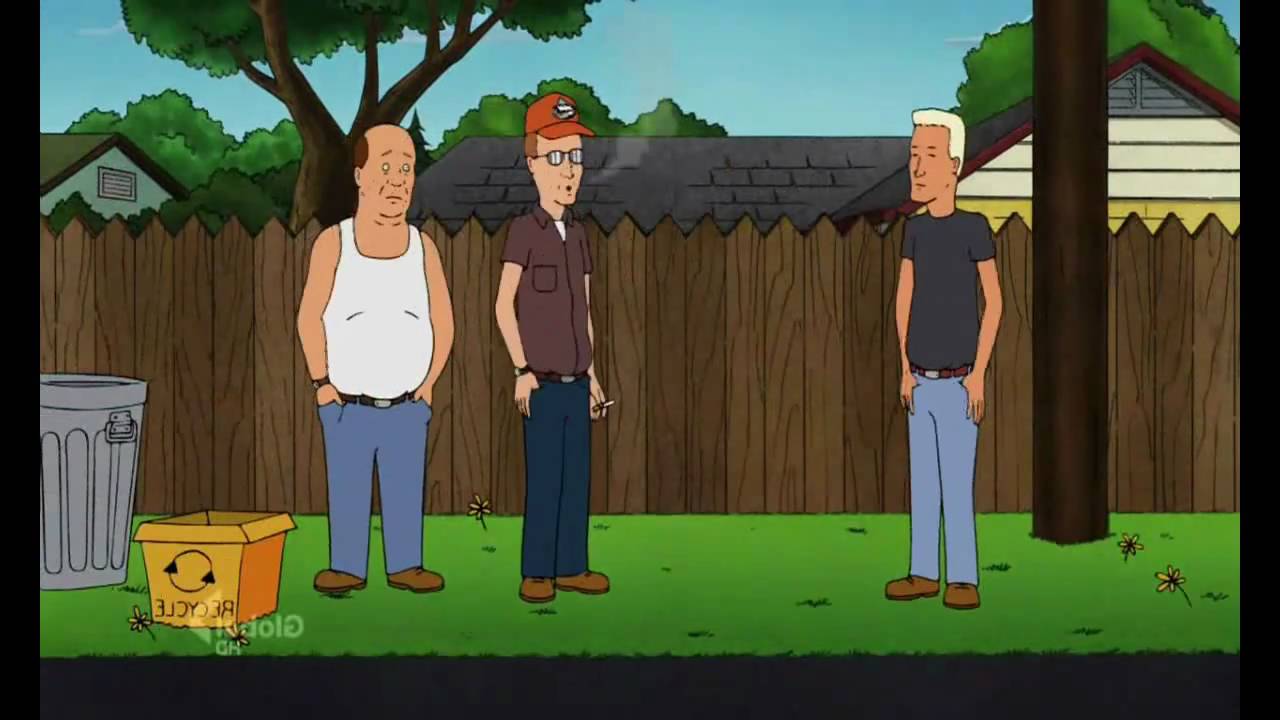
In the fictional Texas suburb of Arlen, Hank Hill tends his post as assistant manager at Strickland Propane—where he sells 'propane and propane accessories' with the understated decency that defines him. Mike Judge and Greg Daniels created a grounded animated comedy that treated its working-class characters with genuine affection, centered on the beer-drinking alley banter of Hank and his neighbors. Premiering on Fox in 1997, King of the Hill won an Emmy in 1999 and became a quiet landmark of late-90s television, proving that a show about a propane salesman could outrun trends and speak to the heart of American ordinariness.

Daria
Daria Morgendorffer—deadpan, sardonic, and thoroughly unimpressed—became the patron saint of 1990s teen-girl outsiderdom. Spun off from Beavis and Butt-Head, this MTV series followed Daria through the town of Lawndale alongside her artsy best friend Jane Lane, her popularity-obsessed sister Quinn, and her perpetually frustrated parents. Created by Glenn Eichler and Susie Lewis Lynn, Daria captured the 90s teen experience with sharp-edged humor and surprising emotional depth. Two final TV movies, 'Is It Fall Yet?' and 'Is It College Yet?', capped off a beloved five-season run.

Mystery Science Theater 3000
A guy in a jumpsuit and two wisecracking robots, silhouetted against the worst movies ever made, talking back to the screen so you didn't have to. Mystery Science Theater 3000 turned bad cinema into appointment comedy — and taught a generation that heckling could be an art form.