Chutes and Ladders

Spin the spinner, climb the ladders, and pray you don't land on square 87 — the long chute that undid your whole game. A hundred squares of pure luck, plus the quiet lesson baked into the art: good deeds go up, mischief goes down.
Chutes and Ladders is among the oldest things on this entire site. It descends from Moksha Patam, an ancient Indian morality game rooted in Hindu and Jain philosophy, where ladders were virtues like generosity and humility, snakes were vices like anger and theft, and the board deliberately had more snakes than ladders — a built-in sermon that the path of good is much harder to walk than the path of sin. The game reached England around 1892 as Snakes and Ladders, re-moralized in Victorian terms (ladders of Thrift and Industry, snakes of Illness and Disgrace) and softened to an even count of each.
Milton Bradley Americanized it in 1943 with one famous editorial decision: the snakes had to go, on the theory that children disliked them, replaced by playground slides — chutes. The MB version settled into the form every American kid knows: a 100-square board, a spinner instead of dice (the spinner that never, ever lands where you want), and artwork that quietly carries the ancient DNA — at the bottom of every ladder a good deed with its reward pictured at the top, at the top of every chute some act of mischief with its consequence waiting below. Millennia of theology, flattened into a rec-room lesson in consequences.
It has simply never left the preschool shelf. Through the Hasbro era the same spinner-and-playground formula kept being reissued decade after decade — the 90s box was the same game your parents played — with licensed Dora the Explorer and Sesame Street editions eventually joining the line. It's the purest luck game there is: no strategy, no choices, just the spinner, the board, and the character-building experience of hitting the long chute on square 87 with the finish in sight.
Similar items

Candy Land
Draw a color, move to the color — no reading, no counting, no mercy when the card sent you all the way back down the rainbow trail. Candy Land was almost everyone's very first board game, and the world it happened in (King Kandy! Queen Frostine! Gramma Nutt!) was pure sugar.
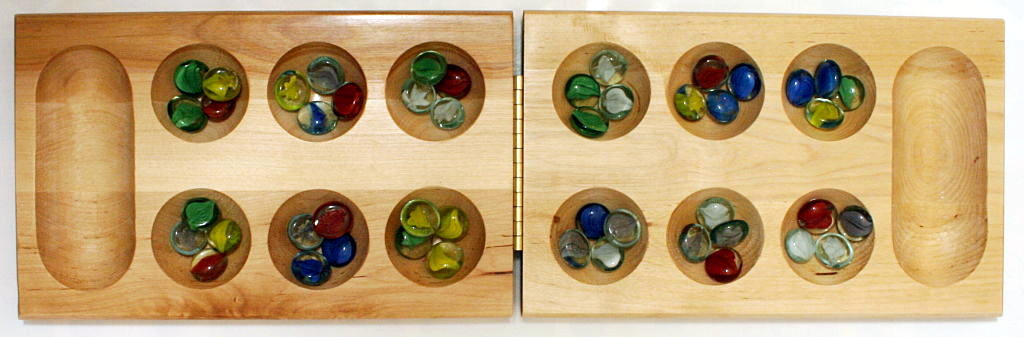
Mancala
The ancient two-player sowing game with wooden folding boards and little glass gem stones. A classroom staple, a doctor's-office fixture, and proof that you don't need batteries or fancy graphics to spend an afternoon completely absorbed.

Guess Who?
Two players staring across identical boards of cartoon faces, taking turns asking yes-or-no questions and flipping down the eliminated suspects. Deduction distilled to its purest form: the click-clack of a plastic tile, the rush of a question that erases half the board, the smug certainty of "I know who it is." A 90s rainy-recess and family-game-night ritual.
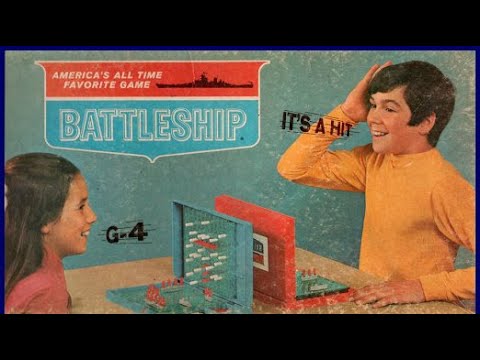
Battleship
B-4. Miss. E-7... hit. The two-player naval standoff of gray plastic ships, red and white pegs, and the flip-up case that hid your fleet from your opponent — capped, if you were lucky, by getting to crow the line from the commercials: "You sank my battleship!"