Choose Your Own Adventure
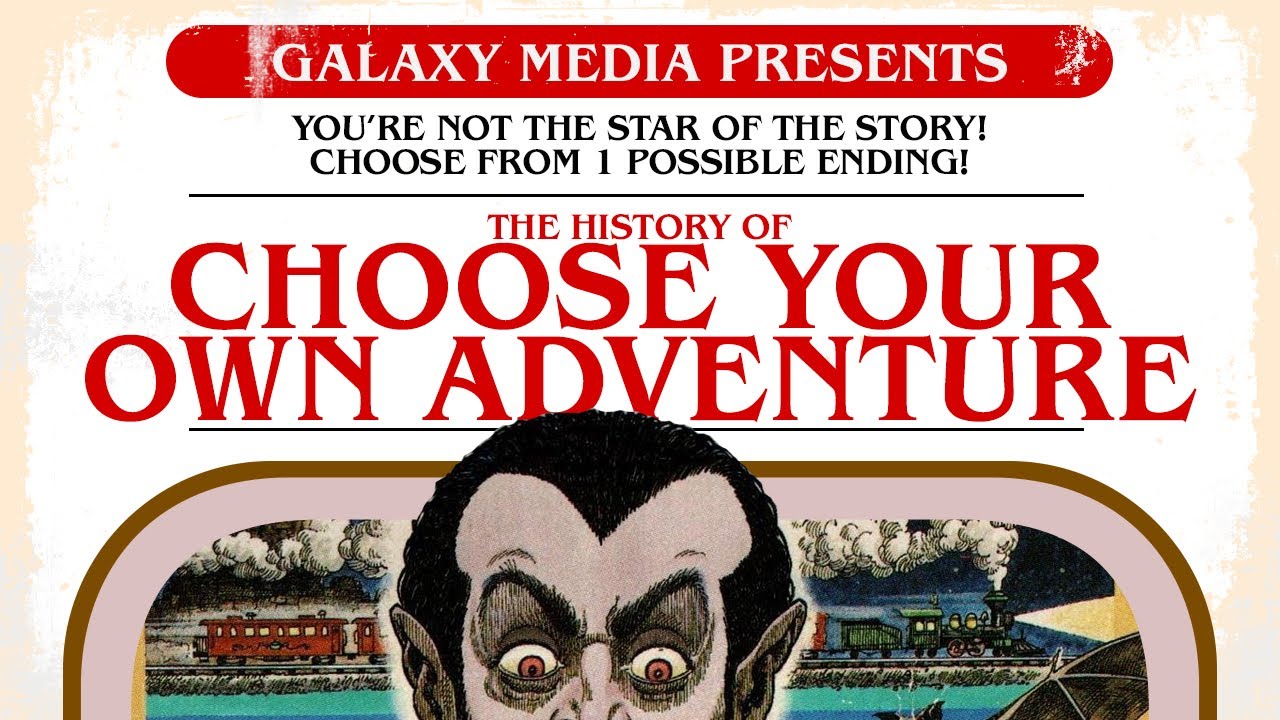
"If you open the door, turn to page…" These were the skinny paperbacks where YOU were the hero, every few pages forked, and a startling number of forks ended with you dead. The series dates to 1979 and was an 80s sensation first — but the books were still on every classroom and library shelf through the 90s, read with one finger holding the last safe page.
The idea came out of bedtime stories. Edward Packard used to tell his two daughters about a character named Pete, and one night, running out of things for Pete to do, he asked the girls what they would do. They picked different paths, he made up an ending for each, and he realized it could be a book. Publishers disagreed: starting in 1970, his manuscript, The Adventures of You on Sugar Cane Island, was rejected by nine of them and shelved. In the mid-1970s R. A. Montgomery, co-owner of the tiny Vermont Crossroads Press, finally published it as Sugarcane Island. It sold 8,000 copies — a lot for a small local press — and Montgomery eventually landed the concept a contract with Bantam Books.
Bantam launched Choose Your Own Adventure in 1979 with Packard's The Cave of Time. The books were written in the second person: you were the private eye, the mountain climber, the spy, and every few pages you chose between two or three options that sent you to different pages and, eventually, to one of many endings — as many as 44 in the early titles, as few as 7 later on. Packard and Montgomery both wrote for the series, along with contracted authors. A 1981 New York Times article and a Today Show interview with Packard supplied free publicity, and the thing took off.
The authors liked to play tricks. Inside UFO 54-40 has a "paradise planet" ending that no choice in the book leads to — the only way to reach it is to cheat, or to land on the page by accident. And as anyone who read them remembers, plenty of the endings were abrupt and fatal, which is why a generation learned to keep a finger tucked in the previous page.
Bantam published 184 titles between 1979 and 1998 and put more than 250 million copies into print, in 38 languages, making it one of the most popular children's series of the 1980s and 1990s; other series picked up the format, Give Yourself Goosebumps among them. By the 90s, though, it was losing readers to computer games, and the series was discontinued in 1999. After Bantam let the trademark lapse, a new company called Chooseco relaunched it in 2003 — and in January 2019 Chooseco brought a trademark challenge against Netflix over the interactive film Black Mirror: Bandersnatch, which Netflix settled in November 2020.
Similar items

Goosebumps
R.L. Stine's mass-produced horror series for kids, where every book's drippy cover could stop your heart in the school library. Goosebumps sold roughly 4 million copies a month at its mid-90s peak and by 1996 accounted for nearly 15% of Scholastic's entire revenue.

Animorphs
The Scholastic sci-fi series that hooked '90s kids on something surprisingly dark: five teens who can 'morph' into any animal to fight a secret alien invasion. The covers where a kid transformed mid-photo were the whole hook.

Scholastic Book Fairs
The ritual: your school gym transforms overnight into a pop-up bookstore of rolling display cases, and you wander the aisles with a wish list and a budget. Scholastic Book Fairs dominated the 90s market, though what kids actually bought — glittery gel pens, novelty pencils, poster books — often had nothing to do with the Goosebumps stacks they wandered past.

Diary of a Wimpy Kid
Middle-schooler Greg Heffley's hand-lettered diary, drawn in stick figures, became the book that made reluctant readers into readers. Every school library's most dog-eared spine.