Cats

Andrew Lloyd Webber's cat musical ran so long it stopped being a show and became furniture: the yellow cat's-eyes logo, the slogan "Now and Forever," and "Memory" belted from a junkyard set. It opened in 1981, but the 1990s are when it became the thing everyone had heard of — the tourist-Broadway default your parents took you to. In June 1997 it passed A Chorus Line to become the longest-running show in Broadway history, and its Broadway run closed in 2000 after 7,485 performances.
T.S. Eliot published Old Possum's Book of Practical Cats in 1939 — light verse he had written for his godchildren, with no plot and no Grizabella (she came later, out of Eliot's unpublished drafts). Andrew Lloyd Webber had loved the poems since childhood and began setting them to music in 1977. Nobody thought it would work: Cameron Mackintosh struggled to raise the money and Lloyd Webber mortgaged his home to help capitalize it. Trevor Nunn agreed to direct on the condition that Judi Dench be cast — and Dench ruptured her Achilles tendon in rehearsal, a week before the first preview, handing Grizabella to Elaine Paige. "Memory" still had no finished lyric that late; Nunn eventually wrote one out of Eliot's poem "Rhapsody on a Windy Night," having rejected a draft by Tim Rice as too depressing. It opened at London's New London Theatre on 11 May 1981 and at Broadway's Winter Garden on 7 October 1982, to mixed reviews.
The marketing is half the memory. There were no pull quotes and no star names on the poster — just two yellow cat's eyes and the words "now and forever," which made the show itself the star. It worked well enough that Cats became a fixture rather than an event, and Playbill could describe it in 1997 as one of New York's most popular tourist attractions. The magazine also explained why, which is more interesting than the fact: between the closing of the original Annie and the opening of Beauty and the Beast, parents bringing children to Broadway didn't have much else to choose from, and Cats could be followed without understanding every lyric. Meanwhile a single touring company — Cats National IV — crossed America continuously from March 1987 to December 1999, which is to say it was on the road for essentially the entire decade.
The record came on 19 June 1997, at the 6,138th performance, when Cats passed A Chorus Line's final tally of 6,137 to become the longest-running show in Broadway history. Playbill, marking the occasion, was moved to correct the record on one point: Cats was not actually the first of the British megamusicals it is credited with launching — that was Evita. By the late 90s Cats was less a hit than a landmark, the kind of institution you had certainly heard of, had probably been taken to, and might be faintly tired of. That is the texture of the 90s memory — not excitement, but total ubiquity.
For a lot of American kids, the version they actually saw was the tape. In 1998 a filmed Cats arrived direct to video, with Elaine Paige reprising Grizabella and Ken Page — Broadway's original Old Deuteronomy — returning as well. It wasn't a movie adaptation and it wasn't quite a live capture either: David Mallet restaged the show at London's Adelphi Theatre with no audience, shot it with sixteen cameras, and cut it to under two hours. It went out on tape that October and premiered on PBS's Great Performances on 2 November 1998. Rented, taped off PBS, and shown in school music rooms, it is why a generation knows every word without ever having bought a Broadway ticket.
The end was its own event. A closing was announced in February 2000 for that June, and the announcement sold so many tickets that the run was extended eleven weeks. The final performance, invitation-only, came on 10 September 2000 — 7,485 performances and seven Tony Awards after it started. The Winter Garden was renovated and Mamma Mia! moved in. London held on until 11 May 2002, closing on its twenty-first anniversary. And on 9 January 2006, at its own 7,486th performance, The Phantom of the Opera took the record away by exactly one.
Similar items

"1985" by Bowling for Soup
Pop-punk's sneakiest hit started as an SR-71 album track before Bowling for Soup rebuilt it into a double-Platinum sing-along about a suburban mom stuck in the era of "Springsteen, Madonna, way before Nirvana." The cruel joke wrote itself: the song about being nostalgic for the wrong decade is now the thing you're nostalgic for.
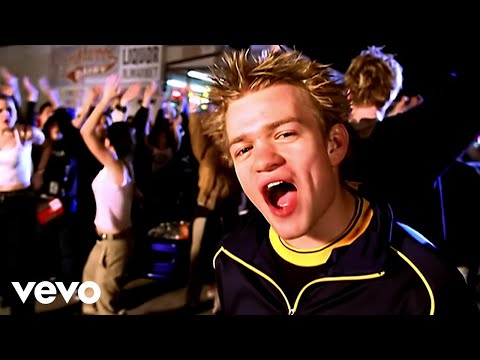
"Fat Lip" by Sum 41
Three voices trading off one bratty anthem — "storming through the party like my name was El Niño." It ruled MTV and every skate video in 2001, went 2× Platinum, and the band never even meant for it to be a single.
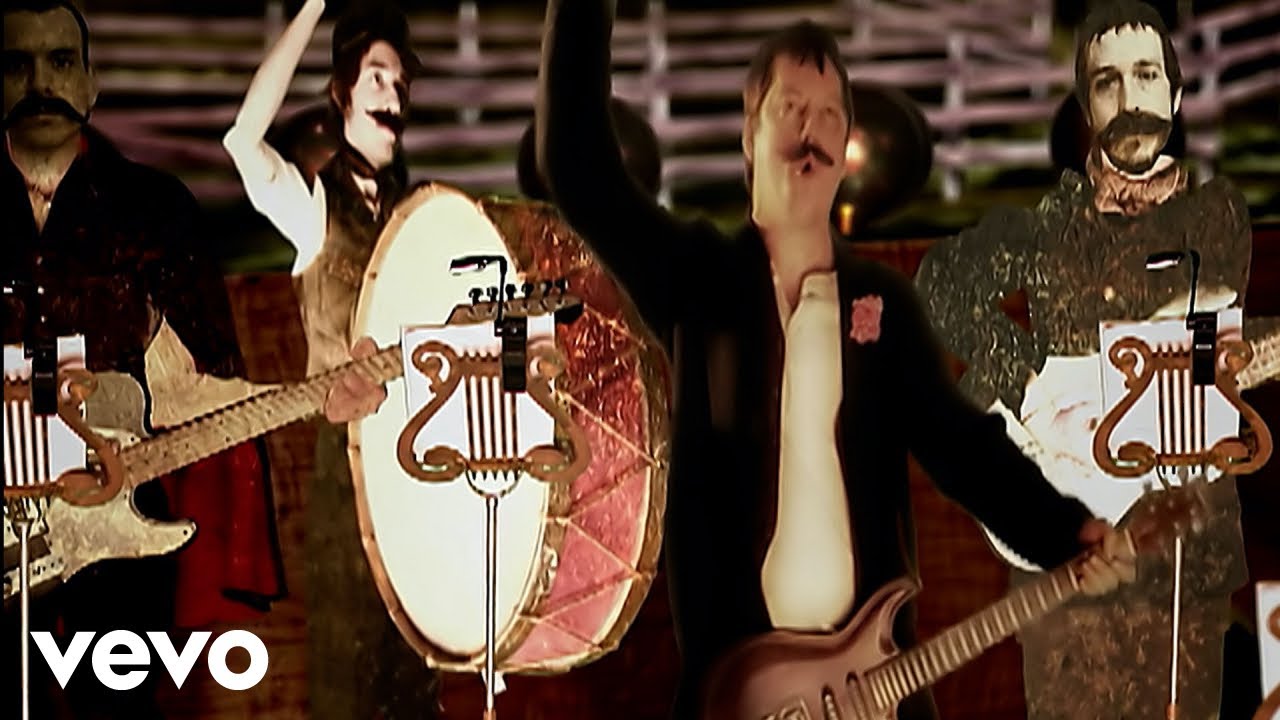
"Float On" by Modest Mouse
"And we'll all float on, okay?" — the shrugging, off-kilter singalong that carried indie rock onto every radio station, mall speaker, and burned CD of 2004. A decade-old cult band from Washington state suddenly had the most reassuring song in America.

Alanis Morissette — Jagged Little Pill
Alanis Morissette's international debut detonated on alternative radio with "You Oughta Know" and never let up. At 21, she won the 1996 Grammy for Album of the Year, becoming the youngest recipient of that award at the time and selling over 33 million copies worldwide.