Candy Cigarettes
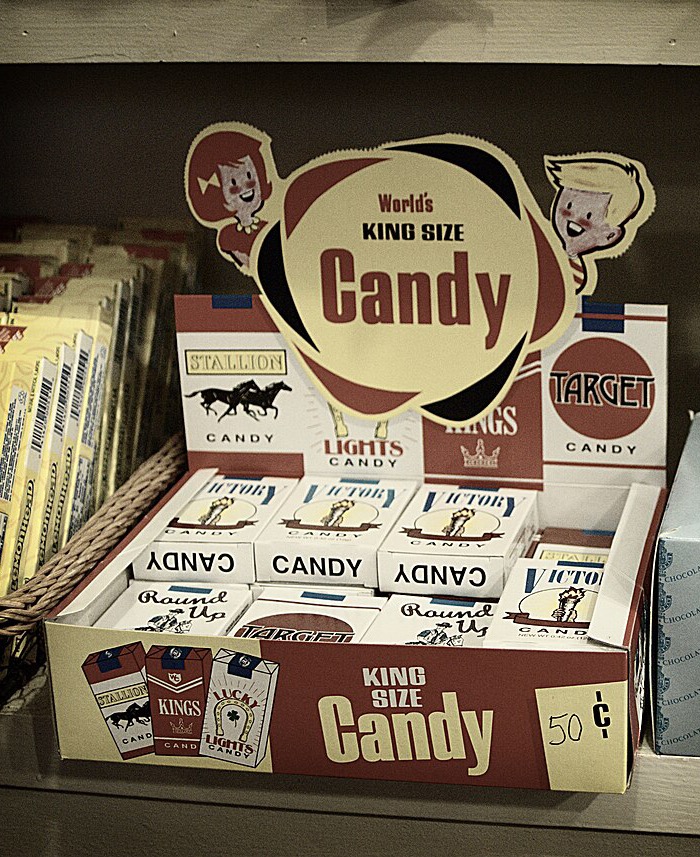
Chalky sugar sticks with a painted red tip, sold in cigarette-style packs straight to kids at the corner store — plus bubble-gum versions whose paper wrappers let you puff out powdered-sugar "smoke." The most "you had to be there" candy of the entire era.
Candy cigarettes date to the late 19th century, and for most of the next hundred years nobody blinked: chalky sugar sticks with a red-painted tip, packed in boxes styled after real cigarette brands, sold to children for pocket change. The bubble-gum variety upped the theater — each piece came wrapped in paper, and a sharp puff blew out a little cloud of powdered sugar. World Confections, Inc. of New Jersey grew into the largest US maker.
The controversy eventually caught up. Under decades of mounting criticism, manufacturers rebranded their products as "candy sticks" and dropped the red tips — the Popeye brand did exactly that — while several countries, including Australia, Brazil, Finland, Norway and Sweden, banned candy cigarettes outright. Research gave the critics ammunition: a 1990 study found sixth-graders who ate candy cigarettes were twice as likely to smoke, and a 2007 study of roughly 26,000 US adults found 88% of current and former smokers remembered eating them, versus 78% of never-smokers.
The United States never actually banned them — reports of a federal ban around 2010 were wrong; the law in question covers flavored tobacco cigarettes, not candy — though in practice they can no longer be labeled as cigarettes. They survive quietly on candy racks as "candy sticks," red tips long gone, a relic of an era that sold kids the full smoking pantomime for a quarter.
Similar items
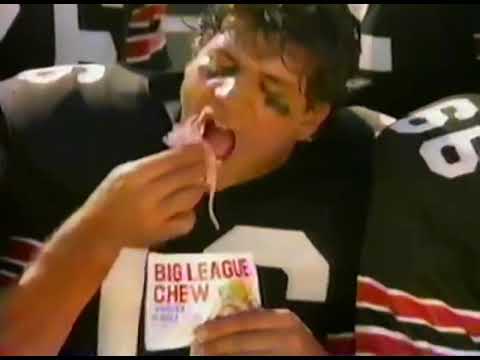
Big League Chew
Shredded bubble gum packaged in a foil tobacco-style pouch — dreamed up in the Portland Mavericks bullpen by pitcher Rob Nelson and launched in 1980 with backing from ex-Yankee Jim Bouton. A staple of 80s and 90s little-league dugouts where kids mimicked the professional players they idolized.

Binaca
The pocket breath spray with the click-and-blast ritual — a slim canister of concentrated mint that delivered instant confidence before any moment that mattered. Born from Swiss pharma giant Ciba's oral-care line, it found American cult status with smokers, daters, and sitcom writers (Seinfeld and Taxi both got jokes out of spraying it in someone's face). By the 1990s it was the pre-date essential; by 1993, some schools were banning it from campuses.

Charms Blow Pops
The two-stage candy: a hard sour shell you worked through to reach the bubble gum hiding in the middle. Sour Apple if you were smart, Blue Razz if you were right. The teacher's candy jar and the corner store were never without them.
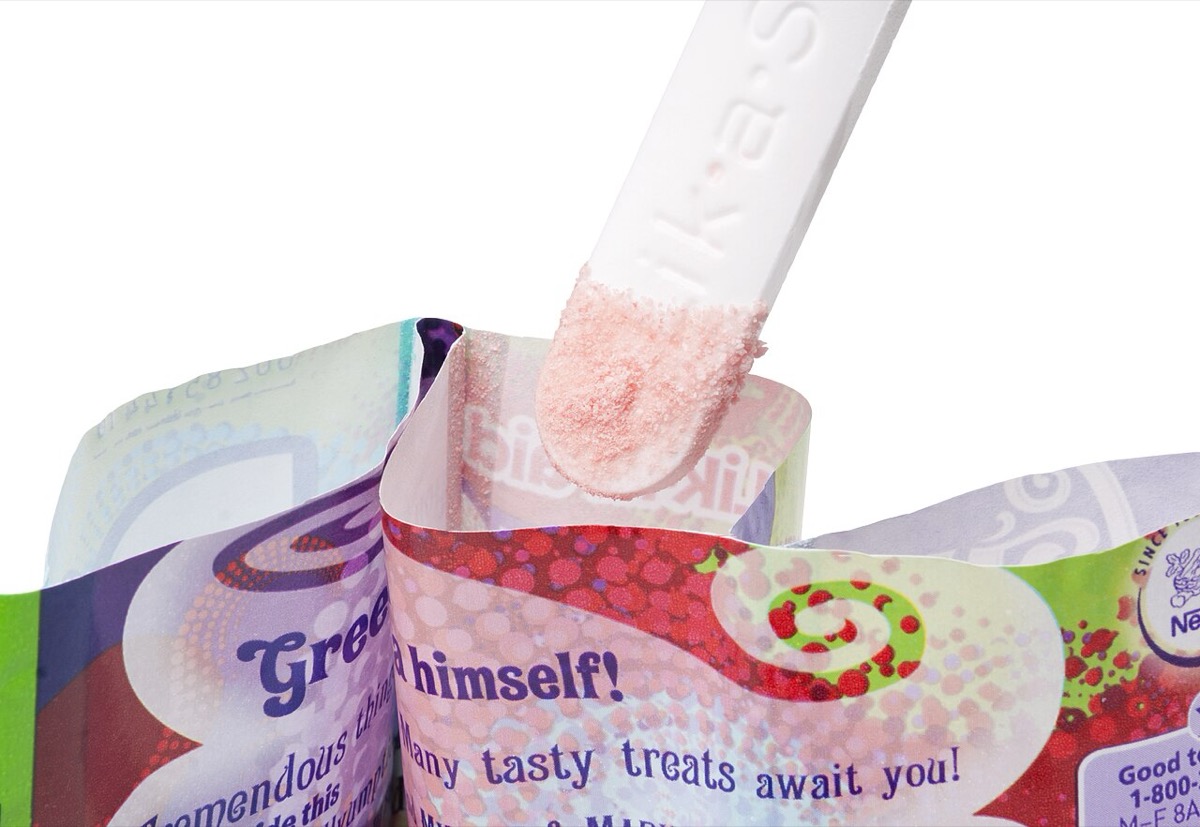
Fun Dip
A pouch of intensely flavored colored sugar and a chalky Lik-A-Stix to dip into it — lick, dip, repeat, until your tongue was stained blue and the stick itself became the last course. Peak checkout-lane sugar delivery.