Brain Age

The game that put a Nintendo DS in your mom's hands. You held the DS like a book, scribbled math answers with the stylus, and a floating polygonal professor told you your brain was 47 years old — so you came back tomorrow, and so did every parent and grandparent in America.
Brain Age: Train Your Brain in Minutes a Day! arrived in Japan in May 2005 and reached North America on April 16, 2006, as part of Nintendo's Touch! Generations line — a deliberate push past traditional gamers toward everyone else. It was built on the work of Dr. Ryuta Kawashima, a real Tohoku University neuroscientist who appears in the game as a cheerfully stern floating polygonal head, guiding sessions, dispensing encouragement, and occasionally asking you to draw a person or place from memory. You held the DS sideways like a book, wrote answers directly on the touch screen, or spoke into the microphone — no buttons, no manual, nothing to intimidate someone who had never held a controller.
The exercises were almost aggressively humble — Stroop color tests, rapid-fire arithmetic, word memory, and a full Sudoku mode — but the hook was ruthless: the game computed your "brain age," with 20 as the best possible score and 80 the worst, per Kawashima's framing that the brain stops developing at 20. A bad number stung. A good one got announced at dinner. And the daily calendar stamps guilt-tripped you into streaks as effectively as anything a fitness app would manage a decade later.
It sold more than 19 million copies worldwide and became one of the DS's defining hits — the game bought for the household rather than the kid, played over reading glasses next to the crossword. Brain Age 2 followed in 2007, and the series eventually resurfaced on the Switch in Japan in 2019. But the 2000s moment belongs to the original: the little clamshell that made "my brain age is 23" a legitimate household boast.
Similar items

Nintendo DS
The clamshell handheld that split gaming in two — literally. Nintendo's dual-screen DS added a touch-sensitive bottom screen and stylus, backward compatibility with Game Boy Advance cartridges, and era-defining hits like Nintendogs, Brain Age, and Mario Kart DS that proved touch controls weren't a gimmick.

Nintendogs
You pet the puppy with the stylus, you called its name into the microphone, and it learned to sit — Nintendogs made grown adults coo at a plastic clamshell on the bus. The virtual puppy that sold the Nintendo DS to everyone's mom ended up one of the best-selling games ever made.

Wii Fit
Nintendo released a scale that played minigames, and somehow convinced the whole family to step on it every morning as entertainment. Yoga in the living room, soccer-ball heading by leaning, and a daily Body Test with opinions about your BMI — the fitness moment of 2008, long before the home-workout industrial complex.
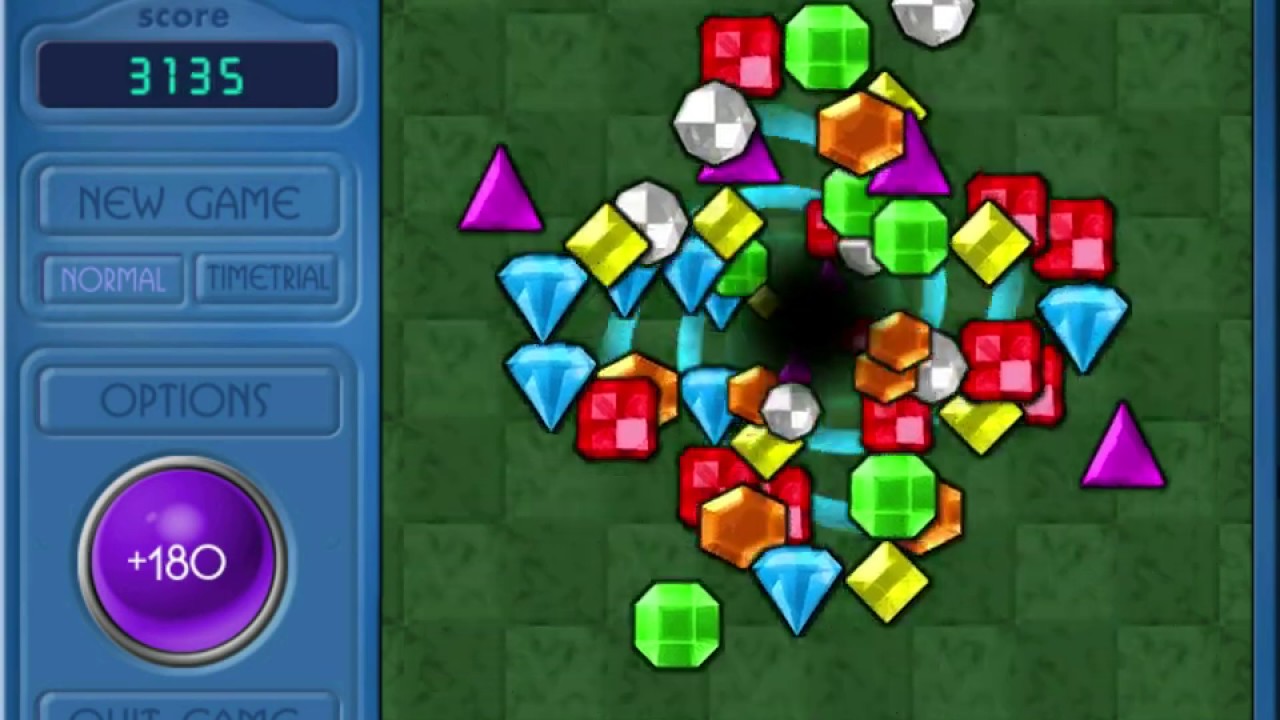
Bejeweled
Swap two gems, line up three, watch them vanish and the rest cascade down. PopCap's match-three puzzle turned a simple web game into one of the most-copied ideas in casual gaming.