Blingee

Upload a photo, bury it in animated glitter, sparkles, blooming roses and possibly a dancing Snoop Dogg, and post the result to your MySpace. Blingee was the free GIF maker behind the most gloriously over-decorated images of the 2000s web — and when it announced its own death in 2015, its fans talked it out of dying.
Blingee launched in 2006, aimed squarely at young people who wanted personalized imagery for their MySpace pages. It worked in the browser, by drag and drop, for free: you uploaded a photo and layered it with animated decorations called "stamps," many of them made and uploaded by other users — glitter, sparkles, hearts, blooming roses. The finished pieces were called Blingees. Unlike most web-based GIF editors, the site doubled as a small social network, with profiles and the ability to rate other people's creations.
The look it produced — every surface shimmering, nothing left undecorated — became a visual shorthand for the whole MySpace-era web, and it outlasted MySpace's moment by years. On August 14, 2015, Blingee announced it would close on August 25. "The primary reason for our decision is financial – the site is no longer profitable," a representative of Picadelic, the company that ran it, explained. By then users had made more than 130 million Blingees in nine years, and the tech press ran eulogies; The Next Web's was headlined "RIP Blingee, the pioneer of the sparkly GIF."
Then the fans revolted. After an outcry from its users, Blingee announced on August 19 — five days after the death notice — that it had secured the funding to keep going, and made several formerly premium features free. It ran for years more. In 2024 the original site finally went dark, replaced by a holding page thanking users for "17 great years of Blingee" and promising "something new." Its afterlife is secure in stranger places: internet artists including Olia Lialina and Lorna Mills have used Blingee in their work or treated it as an object of study.
Similar items

MySpace
MySpace launched in August 2003 and became the social network that swallowed the mid-2000s internet — where everyone's first friend was Tom. Top 8 rankings sparked drama, profile songs played on auto-load, and DIY HTML customization meant glitter graphics and autoplay music ruled. Bands broke careers there; it was the most-visited website in the US by 2006.

Photobucket
The image host that decorated the entire early internet — MySpace profiles, forum signatures, eBay listings. Photobucket's ten billion images were invisible infrastructure, right up until June 2017, when a paywall turned millions of embedded pictures into upgrade-nag placeholders all at once.
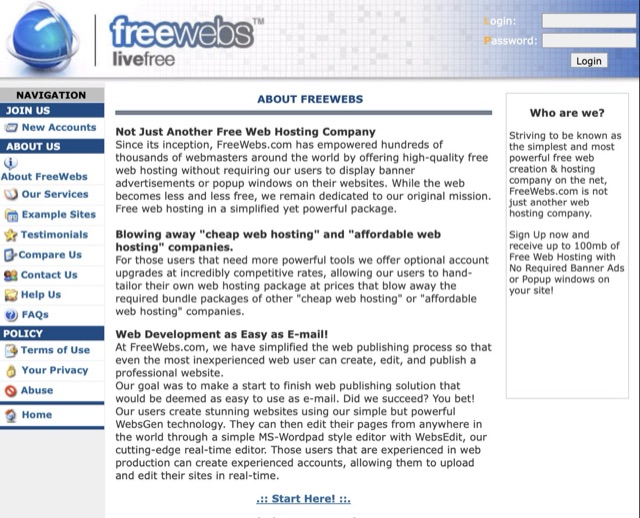
Freewebs
Before anyone had heard the word "platform," there was Freewebs — the place where a twelve-year-old could build a real website in an afternoon. Guestbooks, glitter cursors, tiled backgrounds, an autoplay MIDI you couldn't turn off: if you had a fan site, a clan page, or a shrine to your Neopets in the mid-2000s, there's a decent chance it lived at freewebs.com slash something.

Hot or Not
Upload your photo, get rated 1 to 10 by strangers, then rate a few hundred strangers yourself. Hot or Not was the web's first great time-waster of the 2000s — almost two million page views a day within a week of launch — and the founders of YouTube have said their site started out as an attempt to do the same thing with video.