Battletoads
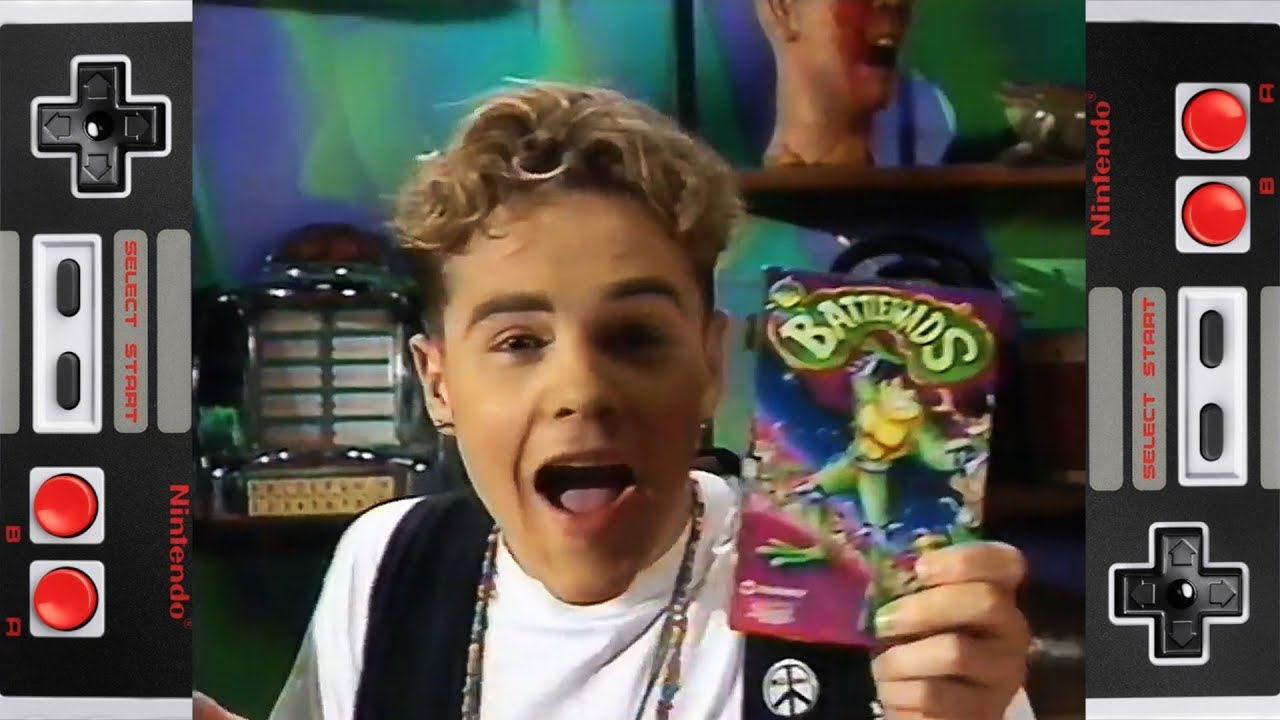
Rash, Zitz and Pimple, Rare's answer to the Ninja Turtles, in the NES game blamed for more broken friendships and controllers than almost any other. Nobody talks about beating Battletoads. They talk about the Turbo Tunnel.
Battletoads was developed by Rare and published by Tradewest for the Nintendo Entertainment System in June 1991, reaching Japan that December and Europe in 1993. Rare founders Tim and Chris Stamper conceived it as a response to the Teenage Mutant Ninja Turtles craze, and artist Kevin Bayliss has said the toads were designed from the start to "produce merchandise" the way Batman had. The three warriors got dermatological names, Rash, Zitz and Pimple, and a working title, Amphibianz, before the game shipped as Battletoads. To stand apart from the crowd of beat 'em ups, Rare mixed in racing and climbing stages, and kept the art cartoony both to distance itself from the Turtles and to satisfy Nintendo's rules on violence.
The difficulty was a decision, not an accident. Bayliss has said Rare made the game "crazy hard" on purpose to stretch its longevity, and that programmer Mark Betteridge could be heard screaming after failing levels he had built himself. The result is a game that does not ramp: the first stages are a quirky brawler, and then the third level, the Turbo Tunnel, straps the toads onto speed bikes and hurls walls at them faster than most players can react. A 1991 consumer guide already called it "one of the toughest challenges of any NES game," and it has topped hardest-game lists ever since. With few continues, no passwords and a two-player mode in which partners could punch each other, and in which one player running out of lives sent both back to the start of the level, it was as famous for ruining co-op sessions as for the tunnel.
It sold anyway. Tradewest had moved about 1.25 million NES cartridges in the United States by September 1992, and Nintendo Power's 1991 awards named it the year's best NES game outright. Critics praised the graphics and the constant changes of pace, while arguing about whether the challenge was fair. The Japanese Famicom version was tuned slightly easier, and its Turbo Tunnel runs slower with extra ramps.
Ports followed on the Genesis, Game Gear, Game Boy and Amiga through 1994, and an animated pilot aired once, over Thanksgiving weekend 1992, and was never picked up. The original returned in Rare Replay in 2015, which finally fixed a bug that had made the eleventh level unplayable for player two, and it reached the Nintendo Classics service in November 2025.
Similar items

Teenage Mutant Ninja Turtles Arcade
Konami's 1989 beat-em-up starred four turtles, infinite pizza, and quarter-guzzling boss fights. Teenage Mutant Ninja Turtles Arcade was a four-player coin-op sensation: pick a turtle, bash foot soldiers, work through a story ripped straight from the cartoon. The 1990 NES port added new levels and Pizza Hut advertisements, securing its place in gaming legend.

Nintendo Power
Nintendo's official magazine and the pre-internet bible for stuck kids everywhere. Nintendo Power came packed with glossy fold-out maps, pull-out strategy guides, previews of games you couldn't afford yet, and the exact secret you needed to get past that one impossible level.

Killer Instinct
The loudest cabinet in the arcade. Rare's 1994 fighter had pre-rendered graphics and a double health bar, but what everyone remembers is the announcer roaring "C-C-C-COMBO BREAKER!" — the line a whole generation learned to yell at each other.

Super Nintendo (SNES)
Nintendo's 16-bit powerhouse that dominated the early 1990s and fought the Sega Genesis for console supremacy. Launched in North America at $199 in August 1991, it came packed with Super Mario World and helped define a generation of gaming with over 49 million units sold worldwide.