24
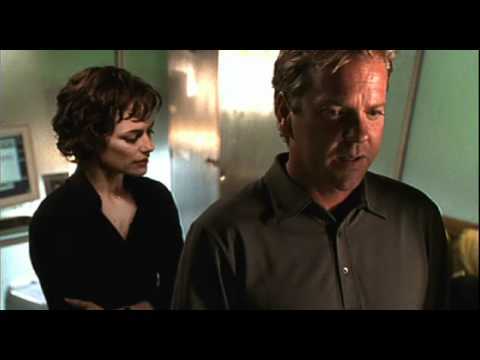
A high-octane Fox thriller that premiered November 2001, starring Kiefer Sutherland as CTU (Counter-Terrorism Unit) agent Jack Bauer. Each season depicts a single continuous 24-hour day with one episode per hour, complete with a ticking on-screen clock and split-screen "meanwhile" shots. The show's relentless pacing, cliffhangers, and post-9/11-era terrorism plots made it a cultural phenomenon that redefined the thriller format for television.
24 debuted two months after 9/11 on November 6, 2001, arriving at a moment when terrorism and counter-terrorism were at the forefront of American consciousness. The conceit — one season = one day, one episode = one hour, real time—was audacious and technically novel. Fox marketed the ticking clock and split-screen format as revolutionary, and audiences responded. Kiefer Sutherland's portrayal of the exhausted, morally compromised Jack Bauer became iconic; his chain of increasingly desperate decisions and the catchphrase "We're running out of time" entered the cultural lexicon.
The show's first season was a near-flawless execution of the format, with genuine mystery about the identity of the terrorist threat and relentless pacing that kept viewers on edge. The real-time structure forced a discipline: episodes had to deliver narrative momentum every 42 minutes (minus commercials), and the format didn't allow for filler or slowness. Subsequent seasons varied wildly in quality—some felt repetitive (another nuclear threat? another mole in CTU?)—but the core formula remained compelling. The show ran for eight seasons through 2010, spanning 192 episodes, all 24 hours per day. A later series revival followed in 2014.
24's influence on television was profound. It demonstrated that a high-concept gimmick could sustain a series if paired with solid writing and a committed cast. It also crystallized debates about the depiction of torture in entertainment; the show's frequent use of torture and extreme interrogation techniques drew criticism from human-rights groups, and some scholars credit it with normalizing such tactics in the post-9/11 security apparatus. Nevertheless, it remained a ratings success and a cultural touchstone for a decade.
Similar items

Lost
The ABC serial drama that turned network TV into a mystery box for six seasons. When Oceanic Flight 815 crashed on a mysterious island, survivors discovered that their new home held impossible secrets—a smoke monster, a hidden hatch, a shadowy group called "the Others"—and a mythology so complex that fans spent years theorizing about every detail.

Survivor
The CBS reality-competition show that premiered in 2000 and kicked off the modern reality-TV boom. Contestants are stranded in remote locations, split into rival tribes, and compete in challenges while voting each other out at Tribal Council. Host Jeff Probst's iconic catchphrase "The tribe has spoken" and the show's tagline "outwit, outplay, outlast" became part of the cultural lexicon.

The Bourne Identity
A man is pulled from the Mediterranean with two bullets in his back and no memory — but his hands remember everything. Matt Damon's amnesiac assassin made spy movies fast, grounded, and paranoid — and the decade's action cinema followed his lead.

Antitrust
A tech-industry thriller starring Ryan Phillippe as a young programmer recruited by a charming but sinister software CEO (Tim Robbins) who steals code and eliminates threats. Released with Microsoft's real antitrust battle still in the headlines, it became a cult artifact of the dot-com era despite critical and commercial failure.