X-Men

The summer 2000 movie that made superheroes respectable — black leather instead of spandex, Patrick Stewart and Ian McKellen lending Shakespearean gravity, and an unknown Australian named Hugh Jackman popping the claws. The modern comic-book boom starts here.
When X-Men opened on July 14, 2000, superhero movies were considered a risky bet, and Fox hedged its own with a comparatively modest $75 million budget. Director Bryan Singer played it straight: Patrick Stewart as Professor Xavier, Ian McKellen as Magneto, and a mutant-registration story that treated the material as allegory rather than camp. The bet returned $296.3 million worldwide, and critics who expected embarrassment found a smart ensemble picture instead.
The casting story became Hollywood legend. Wolverine went first to Dougray Scott, who had to drop out when Mission: Impossible 2 ran long — and Hugh Jackman, an unknown Australian stage actor initially waved off as too tall, was cast as his replacement three weeks into filming. Russell Crowe, Singer's original pick, had passed to make Gladiator and pointed the production toward Jackman instead. The last-minute substitute walked away with the movie, and the role carried him through nearly two decades of sequels and spin-offs.
For kids who grew up on the '90s animated series, seeing Storm, Cyclops, Jean Grey, Rogue, and Mystique in live action was the event of the summer — even if the leather uniforms sparked eternal playground debate about the missing yellow spandex. The film's real legacy is structural: its success greenlit X2 in 2003 and convinced studios that superhero universes were bankable, a formula critics have traced forward through every comic-book blockbuster since. Spider-Man arrived two years later, the arms race was on, and movie theaters have never really looked the same.
Similar items

Spider-Man
Sam Raimi's 2002 Spider-Man was the superhero film that launched a thousand blockbusters — a scarlet-and-blue origin story with real stunts, genuine emotion, and Tobey Maguire's earnest Peter Parker. The upside-down rain kiss, Willem Dafoe's scenery-chewing Green Goblin, and 'with great power comes great responsibility' became templates for how to do superhero cinema.

The Matrix
The Wachowskis' sci-fi thriller rewired action cinema with bullet-time, philosophical depth, and Keanu Reeves as an accidental messiah in a simulation. Released March 1999, The Matrix became an instant cultural landmark, launching a franchise and spawning endless "red pill" debates in college dorms.

Gladiator
Ridley Scott's Roman revenge epic — the general who became a slave, the slave who became a gladiator, and the movie every dad quoted for a decade. Five Oscars, including Best Picture, and a Hans Zimmer score that turned every commute into a chariot ride.
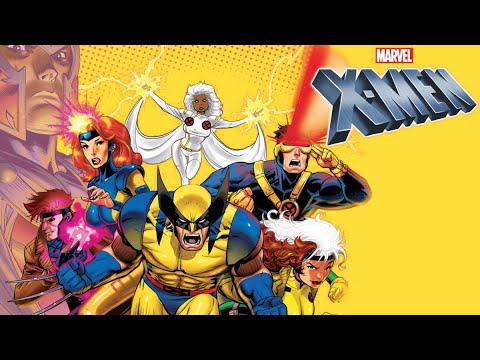
X-Men: The Animated Series
To a generation of Saturday-morning kids, this was the real X-Men: five seasons on Fox Kids, one impossibly urgent guitar theme, and stories lifted straight from the comics. Wolverine, Rogue, and Gambit were household names years before Hollywood caught up.