Wonderbra "Hello Boys"

Eva Herzigová in a black Wonderbra, looking down at herself, under two words: Hello Boys. The 1994 billboard was blamed, in legend at least, for car crashes, got hung in a museum, and turned the push-up bra into the year's must-have.
The Wonderbra was Canadian long before it was scandalous. Moe Nadler's Canadian Lady Corset Company in Montreal licensed the name in 1939, and in 1961 his designer Louise Poirier developed the Model 1300, a deeply plunged push-up bra that is essentially the Wonderbra still sold today. It was licensed to Gossard in Britain from 1964 and sat quietly in the range for decades. Then, around 1992, British women rediscovered it. Between 1991 and 1993 UK sales of the style quadrupled to $28 million, helped by a Vogue piece on the return of the padded bra and a Vivienne Westwood-driven taste for corsetry. Sara Lee, which owned the brand, let Gossard's licence lapse and took it back.
The relaunch needed a poster. Trevor Beattie at TBWA/London delivered one in 1994: a close-up of the 21-year-old Czech model Eva Herzigová in a black Wonderbra gazing down at her own cleavage, with the caption "Hello Boys." It went up on billboards across Britain and became one of the most celebrated ads of its era. Urban myth credits it with a rash of traffic accidents from distracted drivers, a story that has never been pinned down. The poster was shown at the Victoria and Albert Museum, placed tenth in a poster-of-the-century contest and in 2011 was voted the most iconic outdoor ad of the previous five decades.
The American launch came in late 1994, through Sara Lee's Playtex division, with Herzigová appearing in Times Square and a $25 million campaign of tamer lines like "who cares if it's a bad hair day." By then Gossard had rushed out its Ultrabra and Victoria's Secret was pushing the Miracle Bra, and U.S. push-up bra sales rose 43 percent by the end of the year. Wonderbra grew into a full lingerie label, Canadians later voted it the fifth-greatest Canadian invention, and the brand passed to HanesBrands in 2006. What everyone remembers is the two words.
Similar items
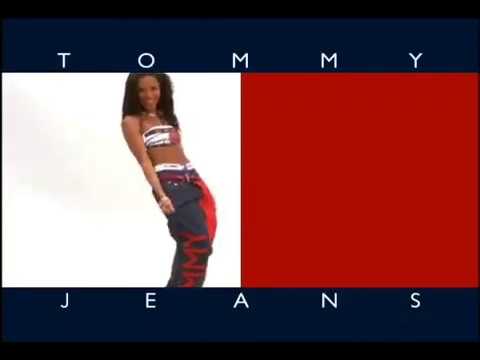
Tommy Hilfiger
Prep meets hip-hop: the flag logo of a 1985 New York label, co-opted by Snoop Dogg, Aaliyah, and every mall kid of the 90s who wore it oversized and felt instantly cooler. The red-white-and-blue became a uniform.

The Rachel (haircut)
The bouncy, choppy, face-framing layered cut Jennifer Aniston wore on Friends became the most requested haircut in America — photos of Rachel Green handed across a million salon counters. The punchline: Aniston herself hated it, and almost nobody else's version behaved like the one on TV.

Guess Jeans
Before the mall had logos, it had THE logo: the triangle with the question mark. Guess jeans were the begged-for denim of late-80s and 90s cool, sold by smoldering black-and-white ads that invented the whole idea of the "Guess Girl."
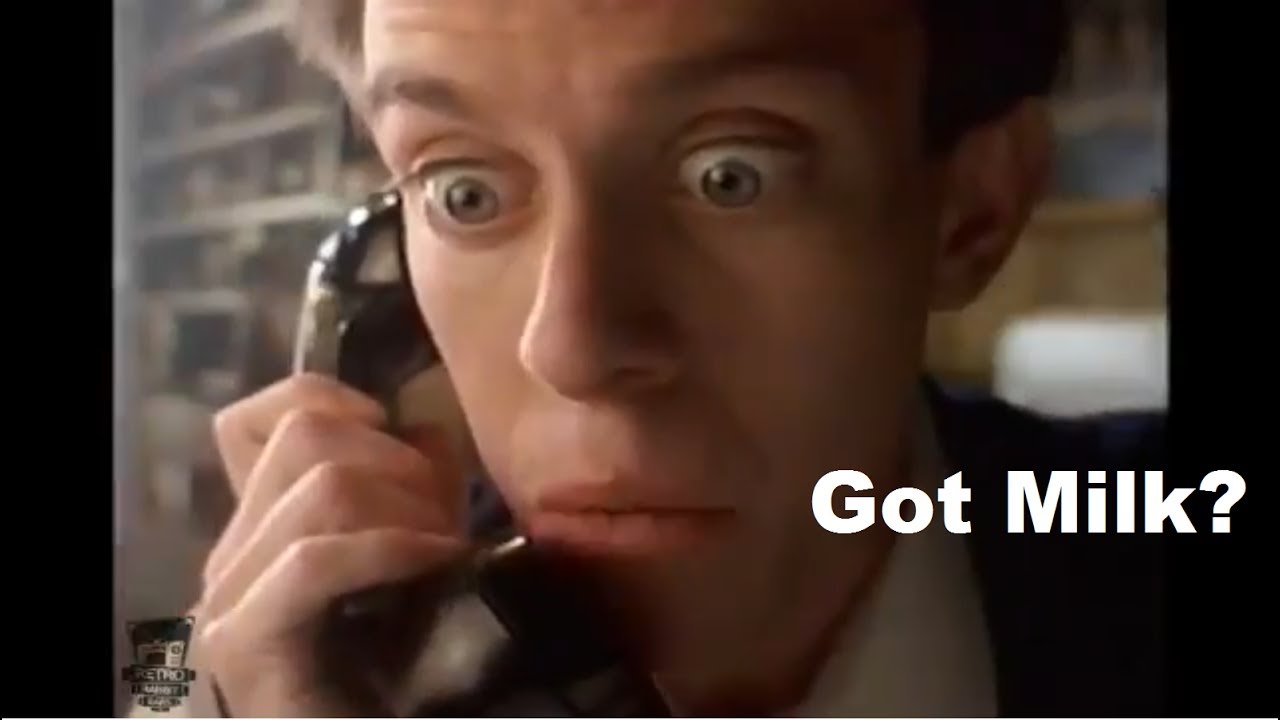
Got Milk?
The iconic 'Got Milk?' campaign launched October 1993 with a TV spot directed by Michael Bay, but the cultural phenomenon exploded with the celebrity milk-mustache print ads that started in 1995. Hundreds of celebrities posed with white mustaches across magazine spreads; kids collected and pinned the pages like trading cards.