Uno
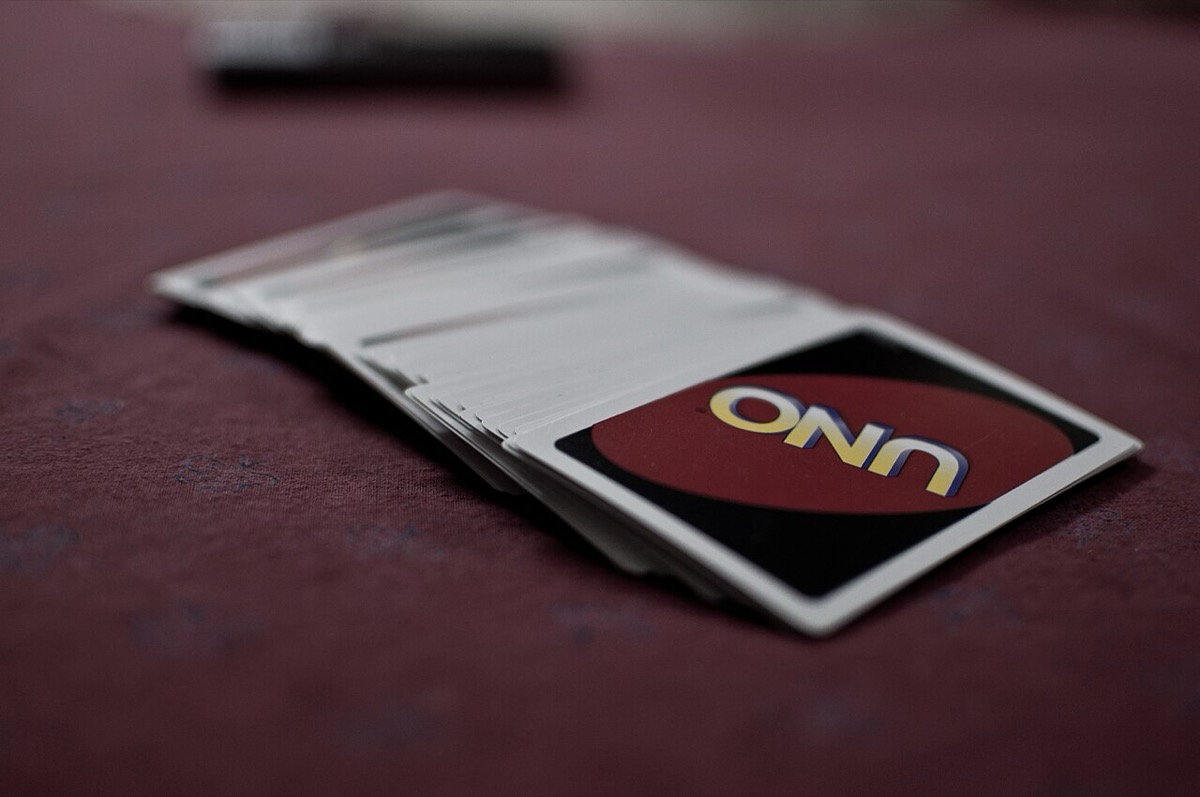
Match the color or the number, hit your sister with a Draw Four, and scream "UNO!" before anyone catches you at one card. A barber's 1971 invention became the most contentious deck in the 90s family junk drawer—because every single household played by different rules.
Merle Robbins was a barber in Reading, Ohio, when a rules argument about Crazy Eights with his son Ray—a teacher—inspired him to design a cleaner game. That was 1971. The family mortgaged their home to raise $8,000, printed the first 5,000 Uno decks, and sold them out of the barber shop. Robbins later sold the rights for $50,000 plus a ten-cents-a-game royalty to a group led by Robert Tezak, a funeral-home owner in Joliet, Illinois, who formed International Games Inc. to take Uno wide.
Mattel bought International Games on January 23, 1992, and the 90s became Uno's living-room era: a deck in every kitchen drawer, beach bag, and minivan seat pocket. The rules were simple—match color or number, deploy Draw Twos, Skips, Reverses, and Wilds, yell "UNO!" at one card—but the real game was the house rules. Could you stack a Draw Two on a Draw Two and pass four cards of pain down the line? Depended entirely on whose house you were in.
The stacking question stayed a cheerful family argument until 2019, when Mattel tweeted that the official rules have never allowed it—and the internet briefly lost its mind. Generations who grew up stacking felt personally betrayed, which only proved the point: everyone's real Uno was the one they learned at somebody's kitchen table. The game itself never left; it just keeps getting new houses to argue in.
Similar items
Mancala
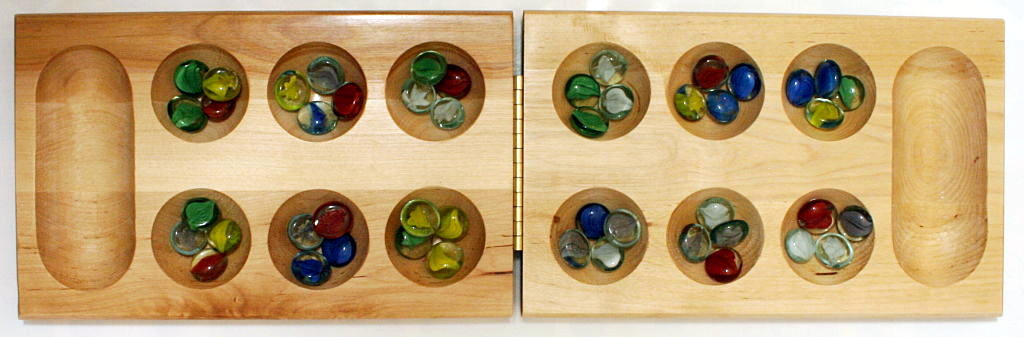
The ancient two-player sowing game with wooden folding boards and little glass gem stones. A classroom staple, a doctor's-office fixture, and proof that you don't need batteries or fancy graphics to spend an afternoon completely absorbed.

Perfection
The frantic tabletop game where you race against a 60-second timer to fit 25 small shaped plastic pieces into their matching holes in a tray—before the spring-loaded tray POPS up, launching all the pieces into the air. Originally released in 1973 and later produced by Milton Bradley, it remained a nerve-wracking living-room staple through the 1990s.

Apples to Apples
The party card game that turned judgment calls into comedy—a deceptively simple game about matching nouns to adjectives, where the humor lives entirely in the judge's increasingly baffled decisions. Published in 1999 and an instant hit, Apples to Apples became the default game of 2000s classrooms, youth groups, and family gatherings, the one clean party game everybody's parents would allow. The golden rule taught a generation: the judge is always right, no matter how absurd.

Let's Go Fishin'
A motorized pond of 21 plastic fish snapping their mouths open and shut while four players jab tiny rods at them. The whirr, the clatter, the frantic scramble—Pressman's fishing game was pure sensory chaos on every 90s living-room floor.