The Rise of the UFC

From "human cockfighting" banned in 36 states to a reality show on Spike TV that saved the company with one brawl. Griffin versus Bonnar, April 9, 2005: the night cage fighting became something you watched with your roommates.
The Ultimate Fighting Championship was created in 1993 by Art Davie, Rorion Gracie, and the film director John Milius, with the pay-per-view company SEG behind it, as a tournament to settle which martial art actually worked: no weight classes, almost no rules, first event in Denver. Senator John McCain saw a tape in 1996, called it "human cockfighting," and wrote to the governors of all fifty states asking for a ban; thirty-six states outlawed no-holds-barred fighting, New York on the eve of UFC 12, and the promotion was reduced to DirecTV and small-town arenas. It added weight classes, gloves, and five-minute rounds, and referee John McCarthy and commissioner Jeff Blatnick spent years on the road writing a rulebook and persuading athletic commissions; New Jersey sanctioned its first UFC in November 2000.
By then SEG was nearly bankrupt, and in January 2001 casino executives Frank and Lorenzo Fertitta bought the whole thing for $2 million, formed Zuffa, and installed their business partner Dana White as president. Lorenzo's lawyers told him he was crazy; what he was buying, he said, was "those three letters: UFC," plus a wooden octagon and about a dozen fighter contracts. UFC 40 in 2002, Tito Ortiz against Ken Shamrock, sold 150,000 pay-per-views, double anything Zuffa had done, and got the company into ESPN and USA Today, but by 2004 the owners were more than $30 million in the hole.
The gamble was a reality show. Every network passed on The Ultimate Fighter until Spike TV agreed to air it if Zuffa paid the $10 million production bill itself. It premiered January 17, 2005, in the slot after WWE Raw, with sixteen fighters living in a house and Chuck Liddell and Randy Couture coaching, and ended with a live finale on April 9, the first UFC fight ever shown live outside pay-per-view. Forrest Griffin and Stephan Bonnar fought a back-and-forth brawl; Griffin won the decision, both men got six-figure contracts, the broadcast pulled a 1.9 rating, and White has called it the most important fight in UFC history. He says season two was agreed on a napkin outside the arena that night.
The numbers went vertical. Liddell–Couture II sold 300,000, the Ortiz–Liddell rematch at UFC 66 in December 2006 passed a million, and the company's 2006 pay-per-view revenue, more than $222 million, beat both WWE and boxing. Liddell was on the cover of ESPN The Magazine and Roger Huerta on Sports Illustrated in 2007, Zuffa bought Japan's Pride promotion, and UFC 100 in 2009, headlined by Brock Lesnar, sold 1.6 million. McCain, for his part, eventually softened. The Fertittas sold in 2016 for just over $4 billion.
Similar items

WWE Attitude Era
When the World Wrestling Federation traded superhero theatrics for raunchy, anything-goes storylines and boundary-pushing characters, it conquered Monday night television. Stone Cold Steve Austin's catchphrase "Austin 3:16 says I just whipped your ass!" and The Rock's trash-talk became playground gospel, and a glass-shatter entrance sound defined a generation's ritual.
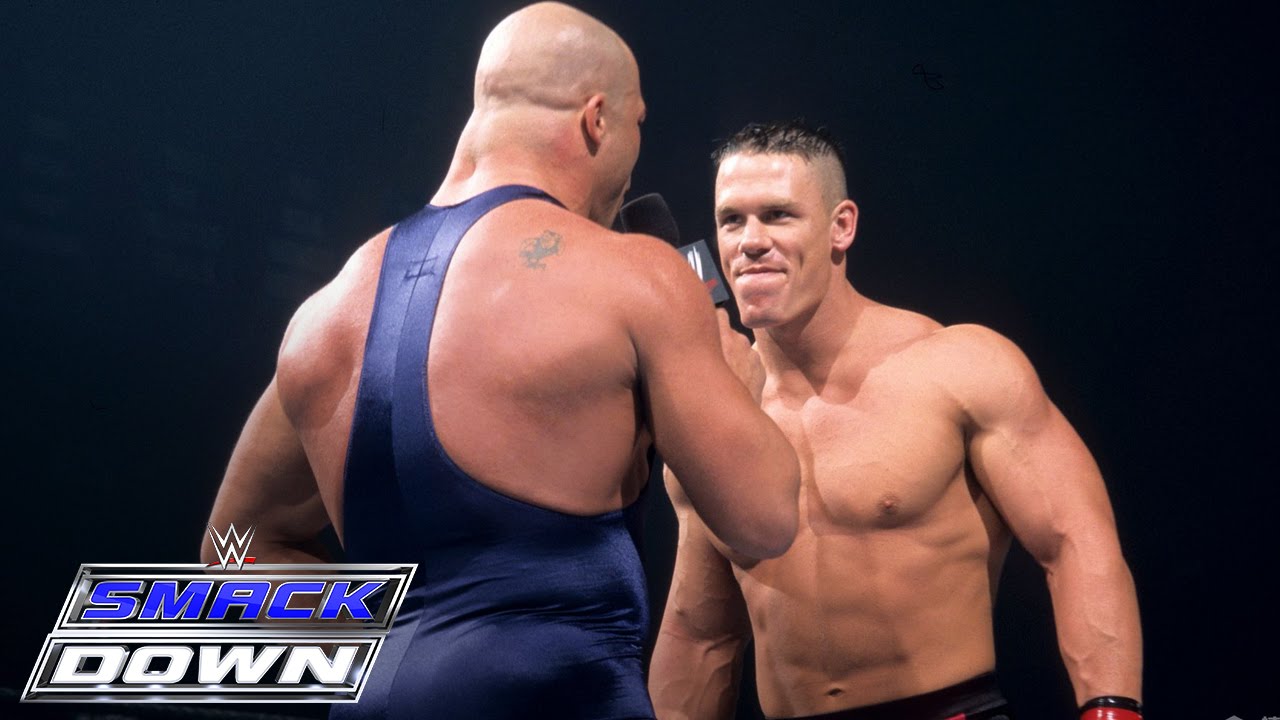
John Cena
A white rapper in a throwback jersey and a padlock chain who became the face of WWE for a decade, a Make-A-Wish record holder, and the reason every kid's shirt said "Hustle, Loyalty, Respect." You can't see me.

Texas Hold'em Poker Boom
Chris Moneymaker's real name was actually Chris Moneymaker, and when the amateur accountant won $2.5 million at the 2003 World Series of Poker, every dorm and living room in America suddenly had a card table, a clay chip set, and a dream.

Chicago Bulls (1990s dynasty)
Six rings in eight years as two three-peats: the defining sports dynasty of the 1990s. Jordan, Pippen, Phil Jackson's triangle, the 72–10 season, 'I'm back,' and the lights-out 'Sirius' intro every kid recreated in the driveway.