Twin Peaks

In April 1990, a logging town in the Pacific Northwest became the mystery the whole country was trying to solve. An FBI agent, a damn fine cup of coffee, and one question — "Who killed Laura Palmer?" Twin Peaks proved network television could be genuinely strange, elegantly cinematic, and popular all at once — at least until the answer came, and the spell broke.
On April 8, 1990, David Lynch and Mark Frost sent FBI Special Agent Dale Cooper (Kyle MacLachlan) into the small town of Twin Peaks to investigate the murder of homecoming queen Laura Palmer. The pilot drew a 21.7 rating and nearly 35 million viewers — the highest-rated TV movie of the 1989–90 season — and "Who killed Laura Palmer?" became the question, the obsession, the reason people gathered in front of their sets.
The show created its own language quickly: Cooper's ritual love of damn fine coffee and cherry pie; the Log Lady, a town fixture who carried an actual log everywhere she went. At the 42nd Primetime Emmy Awards, Twin Peaks pulled in 14 nominations, including Outstanding Drama Series. But the mystery was the engine, and midway through season two the killer's identity was revealed. The audience evaporated; Lynch later said solving the murder "killed the goose that laid the golden egg." The show was canceled in 1991.
A prequel film, Twin Peaks: Fire Walk with Me, arrived in 1992, after the cultural moment had closed. The show returned for a third season on Showtime in 2017, greeted by an audience that had spent the intervening decades catching up to it. The legacy never dimmed: a devoted cult following, and proof that network television could dare to be strange — that one question, posed the right way, could hold a nation's attention for a whole season.
Similar items

The X-Files
Fox's paranoia engine: FBI agents Mulder and Scully investigating UFOs, monsters, and government cover-ups one case file at a time. Created by Chris Carter, The X-Files turned "I Want to Believe" into a mantra and proved that prime-time TV could do serialized mythology decades before the streaming age demanded it.
Unsolved Mysteries
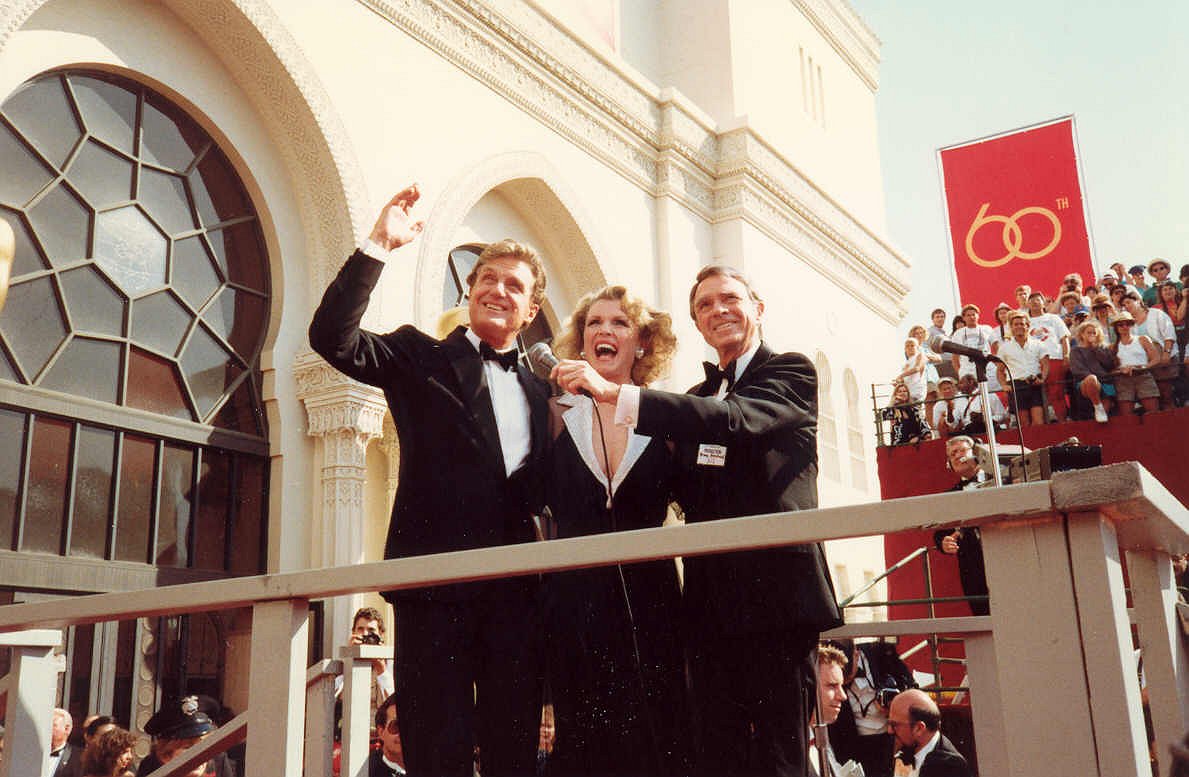
You'd see the preview for Unsolved Mysteries and know you wouldn't sleep that night. Robert Stack in a dark trench coat, a synth theme that still echoes, re-enacted crimes and missing people and things that made no sense — and Stack's voice promising you could call in with a tip. A generation learned to fear its own hallway from this show.
Desperate Housewives
Wisteria Lane looked perfect — the lawns, the casseroles, the cul-de-sac waves — and every bit of it was a cover story. Narrated by a neighbor who takes her own life in the show's first minutes, ABC's suburban satire-soap made Sunday night appointment television again and turned four housewives into the biggest stars on TV.

Lost
The ABC serial drama that turned network TV into a mystery box for six seasons. When Oceanic Flight 815 crashed on a mysterious island, survivors discovered that their new home held impossible secrets—a smoke monster, a hidden hatch, a shadowy group called "the Others"—and a mythology so complex that fans spent years theorizing about every detail.