Unsolved Mysteries
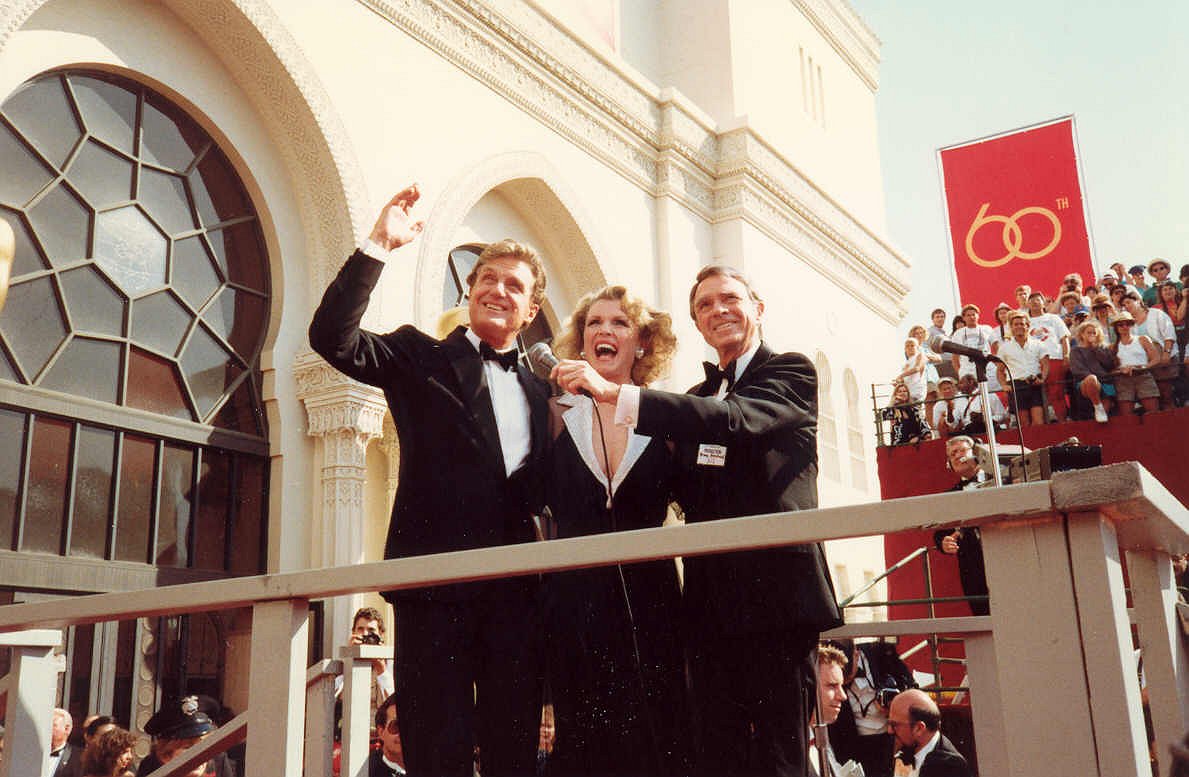
Photo credit: Photo: Alan Light, CC BY 2.0, via Wikimedia Commons
You'd see the preview for Unsolved Mysteries and know you wouldn't sleep that night. Robert Stack in a dark trench coat, a synth theme that still echoes, re-enacted crimes and missing people and things that made no sense — and Stack's voice promising you could call in with a tip. A generation learned to fear its own hallway from this show.
Unsolved Mysteries began as NBC specials starting January 20, 1987, first hosted by Raymond Burr, then Karl Malden twice, then Robert Stack four times. But it was Stack who owned the show when it became a weekly series on October 5, 1988. The format was documentary-style re-enactments of unsolved crimes, disappearances, conspiracy theories, and paranormal cases — aliens, ghosts, UFOs — all with viewer tip lines and periodic "update" segments showing cases that got solved. Stack's trench coat and the synthesizer theme became the sound of legitimate dread for a whole era.
The show moved to CBS on November 13, 1997, after a nine-season NBC run. CBS brought in Virginia Madsen as co-host in an attempt to boost ratings, but the network canceled it in June 1999 after two seasons. Lifetime revived the series in 2001–2002, a run that ended on September 20, 2002, around the time of Stack's illness and death. A later revival with Dennis Farina recycled old segments, running until April 2010.
But Stack's era — his face, his gravity, that theme — is what lodged in people's memory. The format gave the show a peculiar power: it presented the inexplicable as real, solvable, and close enough to touch, then invited you to help. Decades later, people still remember the physical dread of hearing the theme start and having to walk to their bedroom afterward. Netflix rebooted the series in 2020, but nothing has quite replicated the original's grip on the American nervous system.
Similar items

The X-Files
Fox's paranoia engine: FBI agents Mulder and Scully investigating UFOs, monsters, and government cover-ups one case file at a time. Created by Chris Carter, The X-Files turned "I Want to Believe" into a mantra and proved that prime-time TV could do serialized mythology decades before the streaming age demanded it.

Twin Peaks
In April 1990, a logging town in the Pacific Northwest became the mystery the whole country was trying to solve. An FBI agent, a damn fine cup of coffee, and one question — "Who killed Laura Palmer?" Twin Peaks proved network television could be genuinely strange, elegantly cinematic, and popular all at once — at least until the answer came, and the spell broke.

Friends
NBC's ten-season juggernaut turned Central Perk into a real place and gave six 20-something New Yorkers the kind of friendship every 90s kid wanted. Rachel's haircut, Monica's apartment, Ross and Rachel's will-they-won't-they, and that theme song — an inescapable cultural monument that redefined the sitcom.

Seinfeld
"A show about nothing" created by Jerry Seinfeld and Larry David became everything. NBC's quirky hit turned observational humor about minutiae—shirt buttons, parking spots, the mechanics of social obligation—into the decade's most quotable comedy.