Northern Exposure

A moose wanders down the main street of Cicely, Alaska, and a neurotic New York doctor is stuck there for four years to pay off his medical school. CBS's summer filler of 1990 became an Emmy-winning hit about a town of philosophers, pilots and an ex-astronaut with his own radio station.
Northern Exposure began as an eight-episode summer replacement on CBS in July 1990, created by Joshua Brand and John Falsey of St. Elsewhere. Rob Morrow played Dr. Joel Fleischman, a New Yorker whose medical-school tuition had been paid by the State of Alaska in exchange for four years of practice there. He expected a modern hospital in Anchorage; he got Cicely, a remote town that had never had a doctor, and spent the first season trying to get out of his contract. Seven more episodes ran in spring 1991, and by the 1991–92 season the show was a regular part of the schedule and a top-ten draw among viewers aged 18 to 49.
The town took over the show. Barry Corbin's Maurice Minnifield was a millionaire ex-astronaut who owned the radio station, the newspaper and 15,000 acres he hoped to turn into the "Alaskan Riviera." Janine Turner's Maggie O'Connell was a bush pilot whose boyfriends kept dying in bizarre ways, one of them under a falling satellite. John Corbett's Chris Stevens, an ex-convict who had read his way through prison, ran the morning show on KBHR and worked Whitman, Tolstoy and Jung in between the records — reading Leaves of Grass on air and noting that Whitman was gay got him punched and fired by Maurice. The moose in the opening titles was named Mort, borrowed from a captive herd at Washington State University; the crew fenced off Roslyn, Washington, where most of the series was filmed, let him loose and lured him around with food.
The third season averaged a 16.3 rating, and one episode drew 26 million viewers. The show won the 1992 Emmy for Outstanding Drama Series, Golden Globes for best drama in 1992 and 1993, and back-to-back Peabody Awards. Then it came apart. Brand and Falsey left in 1994, the same year a writer won a lawsuit claiming the premise had been his; Morrow, after a long contract fight, left midway through the sixth season, with Joel "going native" in a remote Native village. CBS moved the show from Monday to Wednesday in January 1995 and cancelled it that May. The last of 110 episodes aired July 26, 1995 — and for years the DVDs swapped most of the original music for generic cues to save on licensing, a sore point with fans ever since.
Similar items

Twin Peaks
In April 1990, a logging town in the Pacific Northwest became the mystery the whole country was trying to solve. An FBI agent, a damn fine cup of coffee, and one question — "Who killed Laura Palmer?" Twin Peaks proved network television could be genuinely strange, elegantly cinematic, and popular all at once — at least until the answer came, and the spell broke.

The Sopranos
Tony Soprano walks into a psychiatrist's office with panic attacks—and changed television forever. HBO's landmark 1999 drama paired mob violence with suburban therapy, making prestige TV a thing.

ER
Michael Crichton's high-velocity emergency-room drama gave network television permission to be dense, technical, and chaotic. Gurneys crashing, doctors walking and talking through hallways, trauma in real time — it changed what television drama could do.
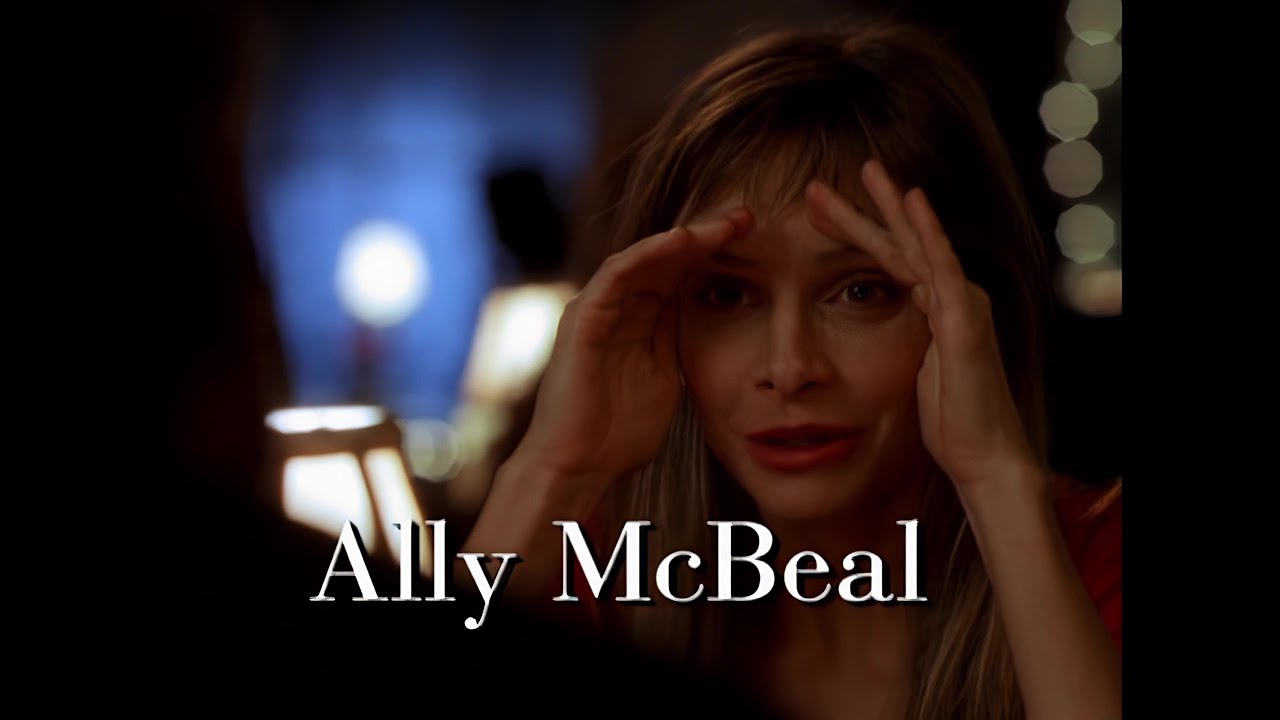
Ally McBeal
A neurotic Boston lawyer's inner life plays out as bizarre fantasies at Fox's weirdly winning legal dramedy. The dancing baby became one of the internet's earliest viral images; the show became a feminist flashpoint.