The Iron Giant

A fifty-foot robot from space crash-lands in 1957 Maine and befriends a nine-year-old boy, who teaches him he can choose who he wants to be. Brad Bird's feature directorial debut was adored by critics and ignored at the box office — then a second life on home video and cable turned it into the cartoon that makes grown adults cry at one word: "Superman."
The Iron Giant started life in 1994 as a musical, with Pete Townshend of the Who involved, loosely based on Ted Hughes's 1968 novel The Iron Man. By 1996 Brad Bird had signed on to direct his first feature, with Tim McCanlies writing the screenplay, and the songs were gone. Warner Bros. Feature Animation made it mostly the old way, hand-drawn, with computer animation reserved for the Giant himself. The crew was understaffed, and by Bird's account had a third of the money of a Disney or DreamWorks film and half the schedule. Michael Kamen wrote the score.
The story is set in 1957, in the Cold War town of Rockwell, Maine. Nine-year-old Hogarth Hughes (Eli Marienthal) finds a metal-eating giant from outer space (Vin Diesel) and hides him with help from Dean, a beatnik artist with a scrapyard (Harry Connick Jr.), while a paranoid federal agent named Kent Mansley (Christopher McDonald) closes in. Jennifer Aniston voices Hogarth's mother. The Giant was built as a weapon; Hogarth shows him comic books and tells him he can choose who he wants to be. When a missile heads for the town, the Giant flies up to meet it — "Superman."
Critics loved it. Audiences mostly never heard about it. Warner Bros., skittish after Quest for Camelot flopped the year before, didn't give the film a release date until April 1999, and by Bird's account produced exactly one poster — this for a movie whose test screenings, he says, scored the studio's highest in 15 years. It opened nationwide on August 6, 1999, at number nine with $5.7 million and finished with roughly $31 million worldwide against a budget reported around $50 million. It also won nine Annie Awards out of 15 nominations.
Then came the rescue. Warner revamped the marketing for the November 1999 VHS and DVD release, and in 2000 Cartoon Network and TNT bought the TV rights — Cartoon Network went on to run the film as 24-hour marathons on holidays like Thanksgiving and the Fourth of July. That is where most of its fans actually found it. It is now widely regarded as a modern animated classic: a remastered, extended Signature Edition played theaters in 2015, and the Giant himself turns up in Steven Spielberg's Ready Player One (2018).
Similar items

Space Jam
Michael Jordan teams with Bugs Bunny and the Looney Tunes to beat a squad of talent-stealing aliens, the Monstars. A live-action/animation hybrid with a monster soundtrack, it made the Tune Squad jersey a playground staple.

The Incredibles
Pixar's 2004 superhero film about a family forced to hide their powers in suburban normalcy — Mr. Incredible, Elastigirl, and their kids Violet, Dash, and baby Jack-Jack. They're drawn out of retirement to battle the villain Syndrome, and the film balances family comedy with genuine action and heart. The Academy Award–winning film proved animation could deliver both laughs and thrills.

Warner Bros. Studio Store
The 90s moment when Looney Tunes was streetwear — Taz on denim jackets, Tweety on tees, Superman holding up the elevator. The Warner Bros. Studio Store was the studio's answer to the Disney Store, and it vanished almost overnight when the corporate weather changed.
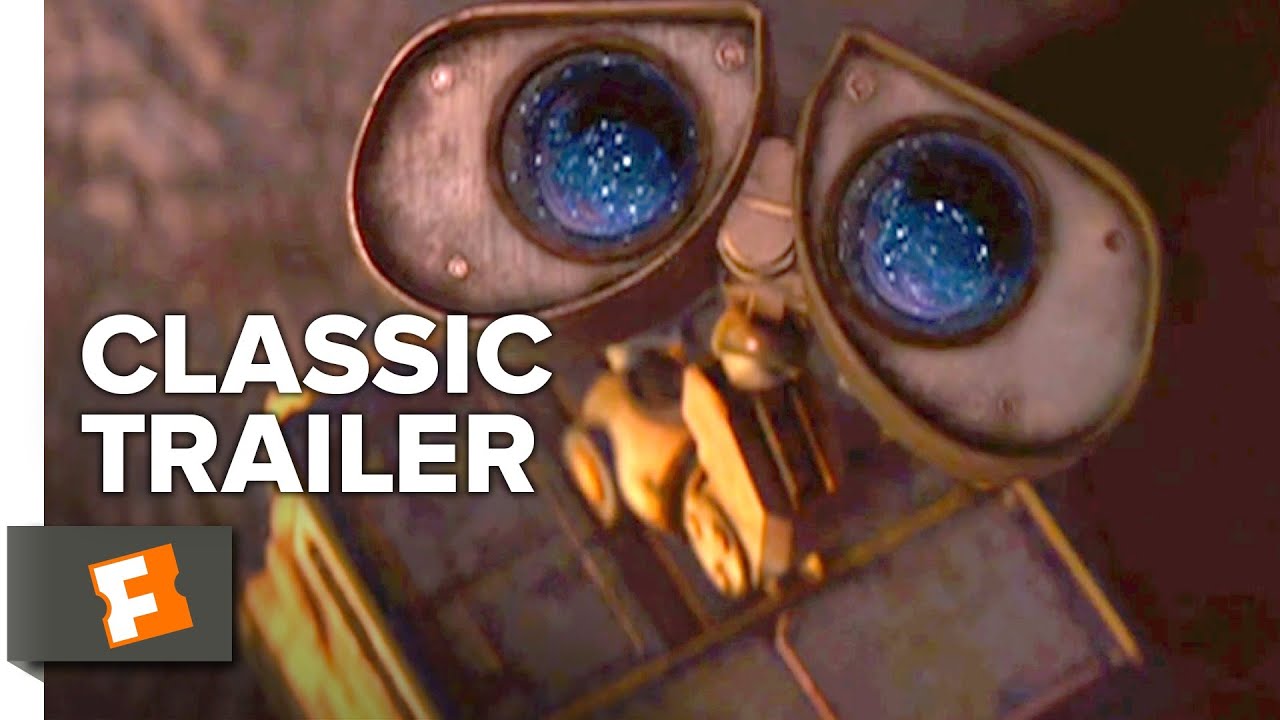
WALL-E
A trash-compacting robot alone on a garbage planet, a cockroach for a pet, a tape of Hello, Dolly! watched on repeat and a sleek white probe named EVE. Pixar's 2008 film barely speaks for its first act, cost a then-record $180 million, won the animated-feature Oscar and was called the best film of the decade by Time's critic.